

Pipe fitting pressure rating and pipe schedule are two different systems, and treating them as one is the most common source of mismatched orders in piping procurement. Schedule describes the wall thickness of pipe. Pressure class — 150, 300, 600, 900 — describes the rating of flanges and valves at a given temperature. A butt weld elbow carries no class at all: under ASME B16.9 it is dimensioned to match the wall of the pipe it welds to. Problems start when a line class sheet says "Class 300" and a buyer assumes the fittings must also be "Class 300", or when someone orders Schedule 40 elbows for a line whose flanges are Class 600 without checking the wall at the weld. This guide separates the two systems, shows where they physically meet, and sets out what to write on the inquiry so they do not drift apart.
What Pipe Schedule Actually Controls
Schedule is a wall thickness designation tied to a nominal pipe size. For carbon and alloy steel pipe, ASME B36.10M lists the combinations of NPS (nominal pipe size) and schedule that define outside diameter and wall thickness. Stainless steel pipe follows ASME B36.19M, which uses the "S" schedules — 5S, 10S, 40S, 80S — because the corrosion allowance on stainless is handled differently and thinner walls are common.
Three things about schedule cause most of the confusion in day-to-day purchasing:
- The number is a label, not a dimension. Schedule 80 is not twice Schedule 40. At NPS 2, Schedule 40 wall is 3.91 mm and Schedule 80 is 5.54 mm; at NPS 12 the same two schedules are 6.35 mm and 9.53 mm. Schedules refer to a wall series, not a ratio.
- Outside diameter is fixed by size, not by schedule. A 6 inch pipe is 168.3 mm OD whether the wall is Schedule 10 or Schedule 160. Only the inside diameter and the weight change.
- Legacy designations still appear on drawings. STD, XS and XXS survive in older specifications and correspond to specific schedule values at specific sizes, which is why they must never be converted by assumption.
For a pipe, schedule is enough to calculate weight, flow area and the pressure the wall can hold. For a fitting, schedule only answers one question: how thick is the end that has to be welded.
What Pressure Class Actually Controls
Class belongs to components with a sealing face or a body cavity — flanges, flanged valves, and some threaded and socket weld fittings. ASME B16.5 covers pipe flanges and flanged fittings from Class 150 through Class 2500; ASME B16.34 covers valve pressure-temperature ratings using the same class series.
A class number is a pressure-temperature rating, not a wall thickness. The allowable pressure falls as temperature rises, and the rate of fall depends on the material group. A Class 300 carbon steel flange that is comfortable at ambient temperature carries a materially lower allowable pressure at 400 °C. This is why a line class sheet always pairs a class with a design temperature and a material — the number alone is not a rating.
The practical consequence for a buyer is simple: class tells you what the joint can hold and what the gasket and bolting must suit. It tells you nothing about the wall thickness of the pipe or fitting welded to it.
Why Butt Weld Fittings Do Not Have a Class
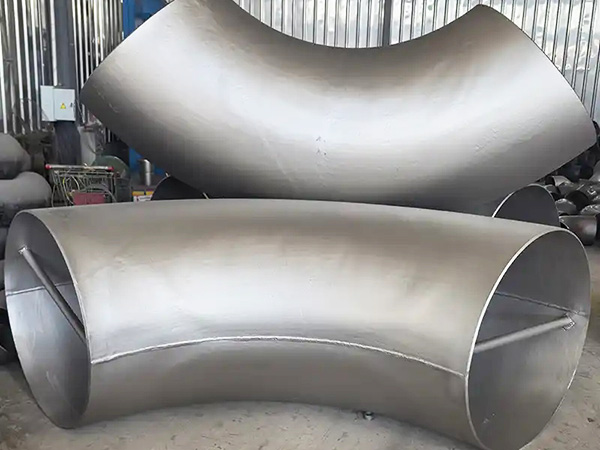
ASME B16.9 covers factory-made wrought butt welding fittings — elbows, tees, reducers, caps — in sizes from NPS 1/2 to NPS 48. The standard fixes centre-to-end dimensions, bevel geometry, tolerances, marking and material requirements. It does not publish a pressure class table for the fitting itself, because the fitting's pressure capability is derived from the pipe wall it is welded to.
Two details matter when you inspect what arrives:
- Wall thickness at the weld end. B16.9 permits the fitting wall to be slightly under the nominal pipe wall within a defined tolerance, which is why a Schedule 40 elbow can measure a little thin at the bevel and still be correct. Checking a fitting against the pipe nominal wall with no tolerance in mind produces false rejections.
- Marking and traceability. Each fitting should carry the size, wall thickness or schedule, material specification, heat number and manufacturer's mark. A fitting with no heat number cannot be tied to a mill test certificate, and that becomes a problem at handover, not at delivery.
Materials follow the same logic. Carbon steel fittings are typically supplied to ASTM A234 (WPB being the common grade), stainless to ASTM A403, and low temperature service to A420. The material specification and the wall designation together define what the fitting is; there is no separate class to quote.
Where the Two Systems Physically Meet
The confusion disappears once you look at the component instead of the paperwork. A single spool has three different interfaces, and each one is governed by a different document:
- The weld end — governed by pipe schedule. The fitting bevel must match the pipe wall so the two can be fused without a step.
- The flange face — governed by class, facing and gasket. A Class 300 raised face flange is a Class 300 joint regardless of what wall is welded behind it.
- The valve end — governed by class and end type. A Class 300 valve body has a Class 300 rating; its weld ends still have to match the pipe schedule if it is a weld-end valve.
So a line can legitimately be built from Schedule 40 pipe, Schedule 40 butt weld elbows and tees, and Class 300 weld neck flanges. Nothing is mismatched — the schedule controls the welds, the class controls the joints. The mismatch only exists when someone tries to force one number onto the other component.
What a line class sheet should tell you
A well-built line class sheet is the document that prevents this entire problem, because it states each requirement separately rather than collapsing them into one number:
- Nominal size range and pipe schedule
- Pipe material specification and grade
- Fitting material specification and grade
- Flange class, facing type and flange standard
- Valve class and body material
- Gasket type and bolting grade
- Design pressure and design temperature
- Corrosion allowance, where applicable
When a sheet omits the schedule and gives only a class — or the reverse — that is the point to ask, not the point to assume. On a replacement spool the same rule applies in a different form: measure the wall at the bevel and identify the actual schedule before ordering, because the original drawing may no longer describe the line as built.
Six Matching Failures That Reach the Site
- Class quoted as schedule. A requisition asks for "Class 300 elbows". There is no such fitting; the supplier either guesses a wall or quotes a flange, and the spool is short of fittings when it arrives.
- Schedule assumed from size. "6 inch, standard wall" is read as Schedule 40 without checking, when the line is actually Schedule 20 or Schedule 80.
- Thickness checked without tolerance. A correct B16.9 fitting is rejected at goods-in because its bevel measures under nominal pipe wall.
- Schedule converted across materials. Schedule 40 carbon steel is applied to a stainless line where the drawing specified 40S, and the wall does not match the stainless pipe.
- Flange class changed to match the fitting. A fabricator "corrects" a Class 600 flange down to Class 300 because the pipe is Schedule 40 — the joint rating, not the wall, was the governing requirement.
- No heat number on the marking. The fittings pass dimensional inspection and fail documentation review, because the mill certificate cannot be tied to the delivered pieces.
Which Situation Are You In?
Case A — new construction with a line class sheet. Work from the sheet, not from habit. Order pipe and butt weld fittings by schedule and material, order flanges and valves by class, and keep the two lists separate on the purchase order. Add the design temperature to the flange and valve lines, because the class alone does not fix the allowable pressure.
Case B — replacement, spool repair or a line with no reliable drawing. Measure before you order. Take the outside diameter to confirm the size, measure the wall at the bevel in at least four points, and identify the schedule from the measured wall rather than from the drawing revision. Where the wall falls between two schedules, order to the measured value and state it in millimetres on the inquiry — a supplier can work to a dimension, but cannot work to an ambiguity.
What to Put on the Inquiry
Most quotation errors on fittings trace back to an inquiry that left one field open. A usable inquiry for butt weld fittings and flanges carries:
- Product and type — for example 90 degree long radius elbow, equal tee, concentric reducer
- Nominal size, and the reducing size where applicable
- Schedule or wall thickness in millimetres, stated explicitly
- Material specification and grade — A234 WPB, A403 WP316L, A420 WPL6
- End type and bevel requirement, plus any special tolerances
- Quantity, and whether mill test certificates to EN 10204 3.1 are required
For flanges and valves, replace the schedule line with class, facing and standard. Stating both the schedule and the class in the same line is what causes a supplier to quote one component against the other's requirement.
Documents Worth Asking For
Dimension and wall are only half of what a fitting has to prove. For any line where traceability matters, request the mill test certificate with heat numbers matching the marking on the pieces, plus a dimensional inspection record for centre-to-end, bevel angle and wall. For stainless and alloy grades, add a positive material identification check, because visual inspection cannot separate 316L from 304 or confirm a low temperature grade.
Frequently Asked Questions
Can I use a Schedule 40 elbow with a Class 300 flange?
Yes, and it is normal practice. The elbow is governed by the pipe wall it welds to; the flange is governed by the pressure-temperature rating of the joint. The two numbers describe different things and do not need to be equal. What does need to match is the wall at the weld end, and the flange bore to the pipe outside diameter.
Does a higher schedule mean a higher pressure rating?
Only indirectly. A heavier wall raises the pressure the pipe itself can contain, but the rating of the joint is set by the flange or valve class at the design temperature. Increasing the schedule does not upgrade a Class 150 flange, and installing a Class 600 flange does not make a thin-wall pipe suitable for the same pressure.
What does "Schedule 80 fitting" mean on a quotation?
It means the fitting's weld ends are dimensioned for Schedule 80 pipe of that nominal size. It does not mean the fitting has a Class 80 rating, and it says nothing about the flange or valve it will be bolted to. Confirm the size as well, because the same schedule number corresponds to a different wall at every size.
How do I match a fitting to an existing pipe with no documents?
Measure the outside diameter to confirm nominal size, then measure wall thickness at four points around the bevel and use the lowest reading. Compare that against the schedule tables in ASME B36.10M or B36.19M. If the measured wall does not sit cleanly on a schedule, specify the millimetre value on the order instead of forcing it into a schedule number.
Conclusion
Schedule and class are not competing answers to the same question. Schedule fixes the wall that has to be welded; class fixes the pressure-temperature rating of the joint. Butt weld fittings are specified by size, schedule and material, while flanges and valves are specified by size, class and material — and a line built from both is correct as long as each component is ordered against its own system. The buyer's protection is a line class sheet that states both, and an inquiry that never leaves the wall thickness or the design temperature to inference.
References
- ASME B16.9 — Factory-Made Wrought Buttwelding Fittings
- ASME B16.34 — Valves, Flanged, Threaded and Welding End
- ASTM A234/A234M — Piping Fittings of Wrought Carbon Steel and Alloy Steel
- ASTM A106/A106M — Seamless Carbon Steel Pipe for High-Temperature Service
- ASTM A105/A105M — Carbon Steel Forgings for Piping Applications
Related products from Hebei Tianyuan Pipeline Equipment Co., Ltd.: butt weld elbow, high pressure elbow, equal tee, reducing tee, weld neck flange, and seamless steel pipe.