

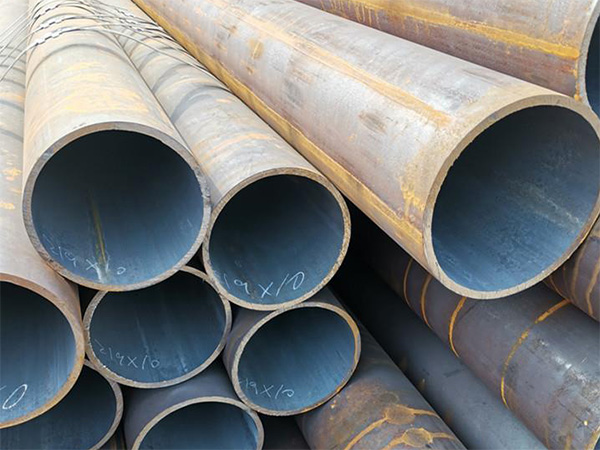
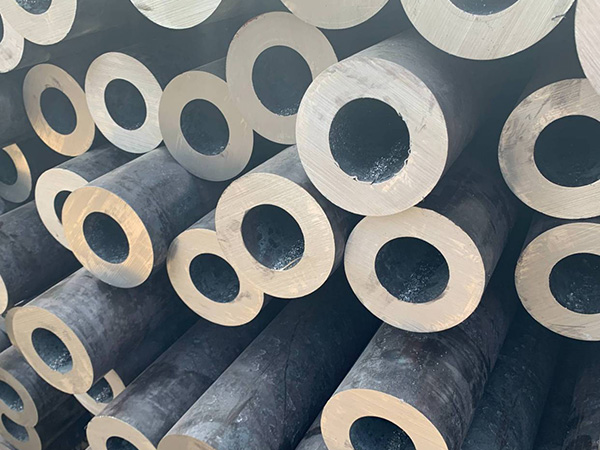
A Seamless Steel Pipe for Construction is widely recognized as a reliable structural and fluid transportation material in modern infrastructure development. Due to its high strength, pressure resistance, and structural uniformity, seamless steel pipe is commonly used in commercial buildings, bridges, industrial plants, and large-scale engineering projects.
Compared with welded pipe systems, seamless pipes provide enhanced mechanical performance and improved operational reliability under demanding construction conditions.
Introduction to Seamless Steel Pipe for Construction
Seamless steel pipes are manufactured through hot rolling, cold drawing, or extrusion processes without welded joints. This continuous structure improves the pipe’s overall integrity and reduces the risk of weak points under mechanical stress.
A professional Seamless Steel Pipe for Construction solution is particularly suitable for applications requiring:
High structural strength
Pressure-bearing capability
Corrosion resistance
Long-term durability
These characteristics make seamless pipes essential in modern construction engineering.
Structural Strength and Load-Bearing Capacity
One of the most significant advantages of seamless steel pipes is their superior load-bearing performance. Because the pipe body has no welded seam, stress distribution remains more uniform under heavy structural loads.
In construction projects involving steel frameworks, piling systems, and support structures, seamless pipes help maintain stability under both static and dynamic loading conditions.
Engineering studies indicate that seamless pipe structures often demonstrate improved fatigue resistance compared with certain welded alternatives.
Corrosion Resistance in Construction Environments
Construction environments frequently expose steel materials to moisture, chemicals, temperature variation, and atmospheric corrosion. A high-quality Seamless Steel Pipe for Construction can be manufactured using corrosion-resistant materials or protective coatings to improve service life.
Galvanization, epoxy coatings, and alloy steel compositions are commonly used to enhance environmental durability.
This is particularly important for:
Underground pipelines
Coastal construction projects
Industrial buildings
Water transportation systems
Dimensional Accuracy and Installation Efficiency
Dimensional consistency directly affects installation quality in large-scale construction projects. Seamless pipes generally provide stable wall thickness and roundness, which helps reduce alignment issues during assembly.
Accurate dimensional control improves:
Welding precision
Pipe fitting compatibility
Structural alignment
Installation efficiency
These advantages help reduce labor costs and project delays.
High Pressure and Safety Performance
A Seamless Steel Pipe for Construction is often selected for high-pressure systems such as:
Fire protection pipelines
HVAC systems
Hydraulic systems
Industrial fluid transportation
The seamless structure improves pressure resistance and reduces the possibility of leakage or structural failure under demanding operational conditions.
Safety performance is especially critical in high-rise buildings and industrial facilities where pipeline reliability directly affects operational security.
Applications in Modern Infrastructure
Seamless steel pipes are widely used in:
Commercial construction
Bridge engineering
Stadium structures
Energy facilities
Municipal infrastructure projects
Their versatility allows engineers to use them for both structural and fluid transportation purposes.
Material Standards and Engineering Compliance
A professional Seamless Steel Pipe for Construction supplier typically follows international manufacturing standards such as:
ASTM
API
EN
ASME
JIS
These standards ensure material consistency, mechanical performance, and inspection reliability.
Long-Term Cost and Maintenance Advantages
Although seamless steel pipes may involve higher initial procurement costs, their durability and reduced maintenance requirements often lower long-term operational expenses.
Benefits include:
Longer service life
Reduced leakage risk
Lower repair frequency
Improved structural reliability
This makes seamless pipes a cost-effective solution for long-term infrastructure investments.
Conclusion
A high-quality Seamless Steel Pipe for Construction provides exceptional structural strength, dimensional stability, and pressure resistance for modern engineering projects. Its reliability, durability, and compliance with industrial standards make it one of the most trusted materials in the global construction industry.
As infrastructure projects continue to demand higher safety and performance standards, Seamless Steel Pipe for Construction systems will remain a critical component in advanced structural engineering.
References
ASM Handbook – Steel Structures and Pipe Manufacturing
Journal of Constructional Steel Research
ASTM Steel Pipe Standards Documentation
Kalpakjian, S., Manufacturing Engineering and Technology