

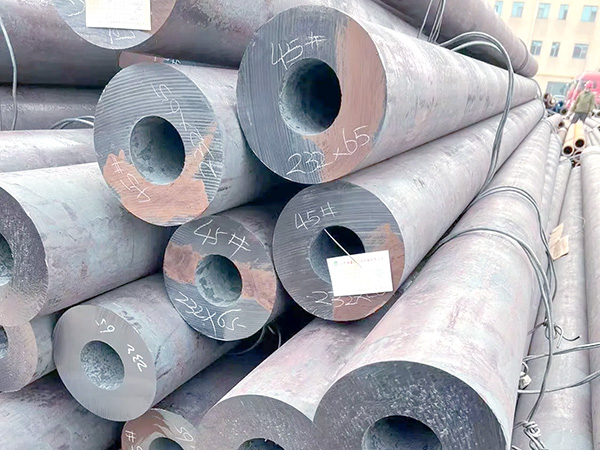
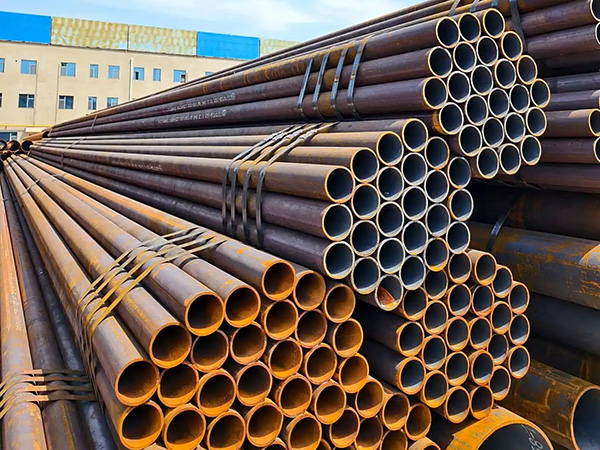
A Seamless Steel Pipe for Machinery manufacturing is designed to deliver high mechanical strength, dimensional precision, and long-term reliability in industrial equipment applications. Machinery systems often operate under heavy loads, high pressure, and continuous motion, making material quality critical for operational stability.
Compared with welded tubing, seamless steel pipes offer improved structural integrity and more consistent mechanical performance.
Why Machinery Manufacturing Requires Seamless Steel Pipe
Modern machinery manufacturing requires materials capable of handling:
Dynamic loading
Mechanical vibration
Hydraulic pressure
Rotational stress
A Seamless Steel Pipe for Machinery provides a uniform structure without welded seams, reducing the possibility of stress concentration and structural weakness.
This is particularly important in precision industrial equipment.
Mechanical Properties and Structural Performance
Seamless pipes demonstrate strong tensile strength and fatigue resistance, making them suitable for demanding industrial applications.
Engineering performance characteristics include:
High yield strength
Pressure resistance
Impact toughness
Structural stability
These properties allow machinery components to maintain dimensional integrity under repeated operational cycles.
Precision Dimensional Control for Machinery Systems
Machinery manufacturing frequently requires tight dimensional tolerances to ensure accurate assembly and motion control.
Cold drawn seamless pipes are especially valued for:
Precise outer diameter
Stable wall thickness
Improved concentricity
Smooth internal surface finish
These characteristics improve compatibility with hydraulic cylinders, bearings, and precision mechanical systems.
Material Selection for Industrial Equipment
Different machinery applications require specific steel grades depending on pressure, wear resistance, and environmental exposure.
Common materials include:
Carbon steel
Alloy steel
Stainless steel
Chromium-molybdenum steel
Selecting the correct Seamless Steel Pipe for Machinery depends on operational conditions and engineering requirements.
Heat Treatment and Surface Quality
Heat treatment processes such as normalizing, quenching, and tempering improve mechanical performance and reduce internal stress.
Surface quality also affects:
Wear resistance
Corrosion performance
Hydraulic sealing capability
Machining efficiency
High-quality seamless pipes generally undergo strict surface inspection procedures.
Applications in Machinery Manufacturing
Seamless steel pipes are widely used in:
Hydraulic cylinders
Agricultural machinery
Construction equipment
CNC machinery
Heavy industrial equipment
Automotive mechanical systems
Their structural consistency supports reliable equipment performance over long operational periods.
International Standards and Quality Inspection
A reliable Seamless Steel Pipe for Machinery supplier should comply with:
ASTM standards
DIN standards
EN standards
JIS specifications
Quality inspection procedures typically include:
Ultrasonic testing
Mechanical property analysis
Dimensional inspection
Surface defect examination
Selecting the Right Seamless Pipe Supplier
Choosing a qualified supplier involves evaluating:
Manufacturing capability
Material traceability
Inspection systems
Production consistency
Technical support services
Reliable suppliers help reduce production risk and improve equipment reliability.
Conclusion
A professional Seamless Steel Pipe for Machinery solution offers superior mechanical strength, dimensional precision, and operational durability for modern industrial equipment manufacturing.
As machinery systems continue to evolve toward higher precision and heavier operational demands, seamless steel pipes remain essential for ensuring long-term mechanical reliability and engineering performance.
References
ASM Handbook – Mechanical Tubing and Pipe Systems
Journal of Materials Engineering and Performance
ASTM A519 Mechanical Tubing Specification
Manufacturing Processes for Engineering Materials