

The oil, gas, and petrochemical industries operate under demanding regulatory and engineering frameworks that leave no margin for material uncertainty. API seamless steel pipe is purpose-built to this environment—manufactured, tested, and certified under the American Petroleum Institute's rigorous quality standards to ensure reliable performance in hydrocarbon production, transportation, and processing applications worldwide. This guide explains the API specification framework, grade designations, and application guidance that B2B procurement professionals need for confident sourcing.
Understanding the API Specification Framework
The American Petroleum Institute publishes multiple specifications governing tubular products for petroleum and natural gas industries. API 5L is the primary line pipe specification covering seamless and welded pipe used for pipeline transportation systems for oil and gas. API 5CT addresses casing and tubing for downhole applications. API 5DP covers drill pipe specifications. Each specification establishes detailed requirements for chemistry, mechanical properties, dimensions, testing, and certification that constitute the minimum acceptable standard for petroleum industry service.
API specifications are developed through industry consensus involving operators, manufacturers, and regulatory bodies, and they carry quasi-regulatory status in many jurisdictions. Pipeline operators typically require API 5L certification as a baseline准入条件, with additional project-specific requirements layered on top. Understanding the specification hierarchy helps buyers specify precisely what their applications require without over- or under-engineering material selection.
API 5L Grade Designations and Strength Levels
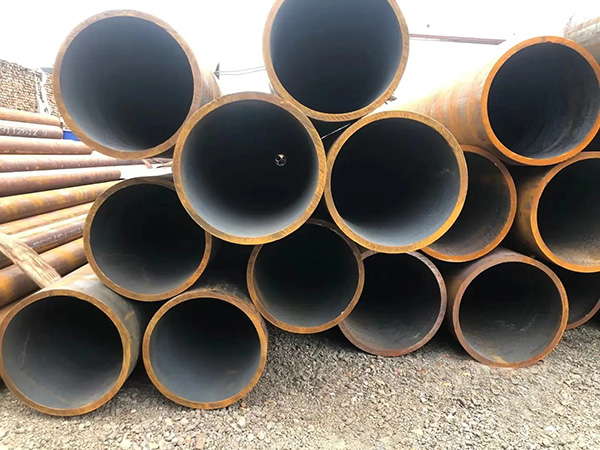
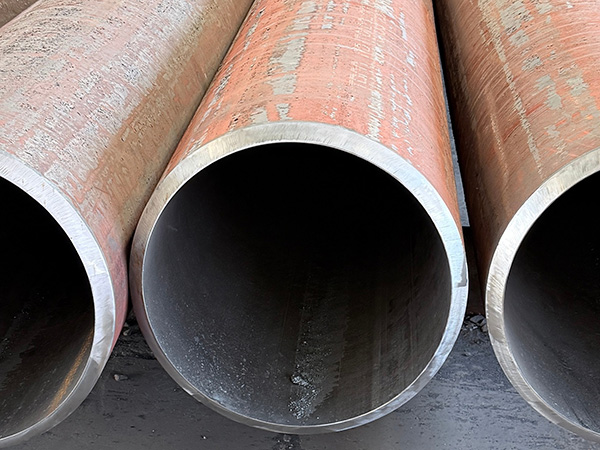
API 5L seamless steel pipe grades follow a systematic strength-based nomenclature. The letter L indicates line pipe, while the numeric value represents approximately the minimum yield strength in PSI multiplied by 1,000. Thus, API 5L Grade X42 specifies minimum yield strength of 42,000 PSI, Grade X52 specifies 52,000 PSI, and so forth through Grade X80. Grades up to X120 have been produced for specialized ultra-high-pressure applications.
Higher-strength grades enable thinner walls for equivalent pressure ratings, reducing material weight and cost in long-distance transmission pipelines. Grade X52 through X65 serve the majority of conventional transmission applications; X70 and X80 have gained substantial adoption in large-diameter, high-pressure trunk lines where the material premium is offset by wall thickness savings and construction productivity improvements.
Each grade is further subdivided into two Product Specification Levels—PSL 1 and PSL 2. PSL 2 imposes more restrictive chemistry limits, requires minimum yield and tensile strength ranges rather than minimum-only values, and mandates Charpy impact testing for all sizes. For any application involving sour service, high pressure, low temperature, or demanding fracture toughness requirements, PSL 2 specification is effectively mandatory.
Manufacturing Process and Quality Requirements
API 5L seamless pipe is produced exclusively through hot-working processes that ensure homogeneous wall structure throughout the cylindrical cross-section. The manufacturing sequence—billet selection, heating, rotary piercing, elongation rolling, sizing, and heat treatment—proceeds under systematic quality control documented through the specification's inspection and test requirements.
Chemical composition controls are grade-specific, with maximum carbon, manganese, phosphorus, sulfur, and silicon contents established for each PSL level. PSL 2 imposes tighter limits and restricts residual element concentrations that could compromise weldability or toughness. Ladle analysis reported on Mill Test Reports provides the documented verification of compliance.
Mechanical testing encompasses tensile properties—yield strength, tensile strength, and elongation—for each heat and each pipe length. Flattening tests assess ductility and weld integrity in the longitudinal orientation. Guided bend tests evaluate weld zone soundness for PSL 1 requirements. Hydrostatic testing at specified pressures confirms leak-tight integrity before shipment.
Sour Service and Harsh Environment Considerations
Applications involving hydrogen sulfide (H2S) exposure require additional material controls beyond standard API 5L requirements. NACE MR0175 and its companion standard ISO 15156 define acceptable material configurations for H2S-containing petroleum and natural gas industry environments, addressing both metallurgical requirements and environmental severity boundaries.
Sour service API seamless steel pipe must meet controlled hardness limits—typically maximum 22 HRC or 237 HB in the body and weld zone—to minimize sulfide stress cracking susceptibility. Chemistry restrictions, heat treatment requirements, and specific acceptable grades are codified in these standards, which are effectively mandatory for any H2S-containing service regardless of project-specific preferences.
Buyers must clearly specify sour service requirements at inquiry stage, as these restrictions limit available grades and may require specialized mill sourcing. Failure to communicate sour service requirements risks receiving material that cannot safely perform in the intended service.
Key Application Sectors
API 5L seamless steel pipe serves the full upstream-to-downstream petroleum industry value chain:
In upstream production, wellhead piping, flow lines, and gathering systems transport produced fluids from the wellhead to processing facilities. Pressures and temperatures vary widely depending on reservoir characteristics, with conventional fields typically requiring API 5L X42-X60 in NPS 2 through NPS 12 sizes. High-pressure, high-temperature (HPHT) wells may demand PSL 2 grades in X65 or higher with sour service compliance.
Midstream transmission pipelines represent the highest-volume application for API seamless steel pipe. Long-distance crude oil, natural gas, and refined product pipelines spanning hundreds to thousands of kilometers operate at design pressures of 1,000-2,200 PSI in large diameters (NPS 16 to NPS 48). Seamless construction provides the burst strength and fatigue resistance that pipeline integrity demands over multi-decade operating lives.
Downstream refining and petrochemical processing employ API 5L seamless pipe for feedstock delivery, utility systems, and process piping in refinery units. Corrosion service may require additional specification controls beyond API 5L baseline, such as restricted chemistry for hydrocracker or delayed coker applications where hydrogen and sulfide exposures combine.
Procurement and Specification Best Practices
Effective API pipe procurement requires unambiguous communication of requirements at every stage. Purchase orders and inquiry packages should address:
API specification number and edition (e.g., API 5L 47th Edition)
Grade designation and PSL level (e.g., API 5L Grade X65M PSL 2)
Size range: nominal diameter (NPS), wall thickness, and length requirements
End preparation: plain end, beveled, or threaded as applicable
Coating and/or lining requirements: FBE, 3LPE, coal tar enamel, cement mortar, or bare
NDT examination requirements beyond standard specification minimums
Impact testing requirements including test temperature and minimum absorbed energy
Marking and traceability requirements
Mill Test Report content and distribution requirements
Ambiguous specifications generate cost uncertainty, delivery delays, and potential material mismatches. Taking time to develop complete specifications upfront pays dividends throughout procurement and execution.
Conclusion
API seamless steel pipe represents a mature, well-defined product category backed by decades of industry experience and systematic standards development. The API specification framework—covering chemistry, mechanical properties, dimensional tolerances, and testing protocols—provides the quality assurance foundation that petroleum industry operations depend upon.
B2B procurement professionals who understand the API specification hierarchy, communicate requirements precisely, and verify supplier capability against project demands consistently achieve successful outcomes. Whether sourcing for upstream gathering systems, midstream transmission pipelines, or downstream process units, disciplined adherence to API standards and specification completeness deliver the material reliability that critical petroleum infrastructure requires.
Frequently Asked Questions
Q: What is the difference between API 5L PSL 1 and PSL 2?
A: PSL 2 imposes more stringent requirements than PSL 1: tighter chemistry limits, specified minimum and maximum yield and tensile strength ranges (not just minimums), mandatory Charpy impact testing for all sizes, and restrictions on yield-to-tensile ratio. PSL 2 is the appropriate choice for high-pressure, low-temperature, sour service, or any application with demanding toughness requirements.
Q: When is API seamless steel pipe required versus commercial ASTM grades?
A: API 5L is specifically developed for pipeline transportation of oil and gas and carries regulatory recognition in petroleum industry jurisdictions. For pipeline, flow line, and gathering system applications, API 5L is typically specified by pipeline codes and operator standards. ASTM A106 and A333 serve process and utility piping applications not governed by pipeline codes. Using the correct specification for the application avoids specification mismatches during engineering review and construction inspection.
Q: What does the "M" designation mean in API 5L grade designations?
A: The "M" suffix indicates metric dimensions per API 5L Annex F, as opposed to inch-pound dimensions per Annex E. Grades such as X65M and X70M use metric-specified outside diameters and wall thicknesses. Most international projects specify metric grades; North American projects typically use imperial dimensions. Confirm dimension system with project engineering before ordering.
Q: What additional requirements apply for sour service applications?
A: Sour service requires compliance with NACE MR0175/ISO 15156, which restricts acceptable grades, chemistry, hardness, and heat treatment conditions. Maximum hardness limits of 22 HRC or 237 HB apply to pipe body and weld zone. Only certain API 5L grades are acceptable for sour service, and suppliers must demonstrate compliance through supplementary testing and documentation beyond standard API 5L requirements.
Q: How do I verify API 5L compliance on delivery?
A: Request the manufacturer's API 5L monogram license certificate from the American Petroleum Institute, confirming current license validity. Mill Test Reports should reference the API 5L specification, document heat chemistry, mechanical test results, flattening or bend test results, and hydrostatic test data—all traceable to specific pipe lengths. Positive material identification at receiving provides additional confirmation.
References
American Petroleum Institute. (2024). API Spec 5L, 47th Edition: Specification for Line Pipe. Washington, DC.
NACE International. (2024). NACE MR0175/ISO 15156-2024: Petroleum and Natural Gas Industries—Materials for Use in H2S-Containing Environments. Houston, TX.
American Society of Mechanical Engineers. (2022). ASME B31.8-2022: Gas Transmission and Distribution Piping Systems. New York, NY.
Glover, A. (2024). "Evolution of High-Strength Line Pipe Steels for Large-Diameter Transmission Pipelines." Journal of Pipeline Engineering, 23(3), 42-58.
API. (2023). API 5L User's Manual: Application Guidelines for API 5L Specification for Line Pipe. Washington, DC.