

Pipeline transportation of crude oil, natural gas, and refined products depends on tubular products manufactured to globally recognized standards that ensure consistent quality, predictable performance, and regulatory acceptance across international jurisdictions. API 5L seamless steel pipe represents the petroleum industry's foundational specification—covering chemistry, mechanical properties, dimensional tolerances, and testing requirements that pipe must satisfy to earn API certification and industry acceptance. This comprehensive guide provides B2B procurement professionals with the complete technical context needed to specify, source, and verify API 5L seamless pipe with confidence.
API 5L Specification Overview
API 5L, published by the American Petroleum Institute, establishes the requirements for seamless and welded line pipe used in pipeline transportation systems for the petroleum and natural gas industries. The current 47th Edition represents decades of accumulated industry experience, research, and operational learning distilled into manufacturing and testing requirements that ensure reliable pipeline performance over multi-decade service lives.
The specification addresses the full product lifecycle from raw material through finished pipe, covering steelmaking practice, seamless and welded manufacturing processes, chemical composition limits, mechanical property requirements, dimensional tolerances, non-destructive examination protocols, and documentation standards. API 5L compliance serves as the baseline entry point for virtually all petroleum pipeline projects worldwide.
Two Product Specification Levels—PSL 1 and PSL 2—provide graduated quality assurance tiers. PSL 1 establishes the minimum acceptable standard with basic chemistry, tensile, and hydrostatic requirements. PSL 2 adds enhanced chemistry controls, specified yield and tensile strength ranges, mandatory Charpy impact testing, and additional examination requirements for applications with elevated performance demands.
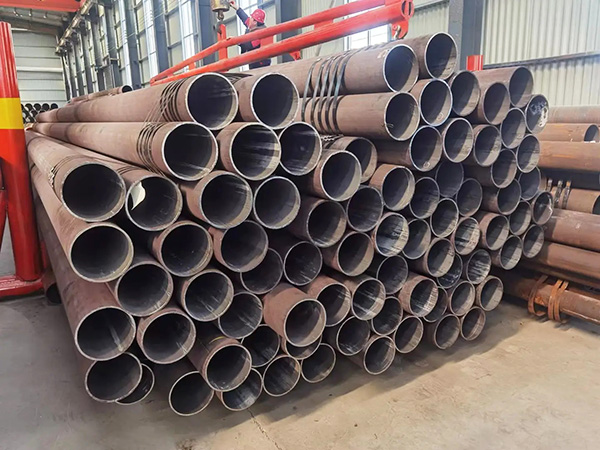
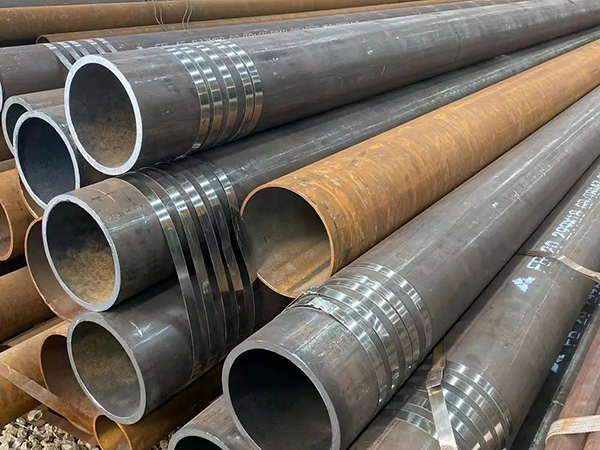
Understanding API 5L Grade Designations
API 5L grades communicate minimum yield strength through a systematic alphanumeric code. The prefix "L" designates line pipe; the numeric value indicates minimum yield strength in PSI multiplied by 1,000. API 5L seamless steel pipe is available from Grade L175 (informally A25) through L830 (X120), spanning yield strengths from 25,000 to 83,000 PSI.
Grades L245 through L830 are further designated with a letter suffix indicating the type—R for rollered, CW for continuous weld (though rarely used for seamless), and implicit seamless for standard grades. The "X" designation (X42, X52, X65, etc.) remains in common industry usage despite API's transition to "L" nomenclature, and both designations appear in procurement documentation interchangeably.
Grade selection balances mechanical requirements against fabrication and material economics. Higher grades enable thinner walls for equivalent pressure ratings, reducing material weight and handling costs in large-diameter transmission applications. Grade X52 through X65 serve the majority of conventional transmission pipelines; X70 and X80 have achieved substantial adoption in high-pressure, large-diameter trunk lines where the strength premium is offset by construction productivity gains.
PSL 1 vs PSL 2: Selecting the Right Level
The choice between PSL 1 and PSL 2 fundamentally shapes material capability and procurement cost. PSL 1 establishes baseline acceptance criteria: chemical composition within specified maximums, tensile properties meeting minimum values, and hydrostatic testing confirming leak-tight integrity. These requirements are sufficient for many standard transmission and distribution applications operating under conventional temperature and pressure conditions.
PSL 2 addresses applications with elevated demands that baseline requirements cannot adequately cover. Enhanced chemistry controls restrict carbon equivalent values to improve weldability, limit residuals that could compromise toughness, and impose maximum yield-to-tensile ratios to ensure adequate strain capacity. Mandatory Charpy impact testing at specified temperatures provides quantifiable toughness data for material in harsh environment, low-temperature, or high-pressure service.
PSL 2 is effectively mandatory for: sour gas service where H2S exposure creates cracking risks; low-temperature service below -30°C; high-pressure transmission above 1,440 PSI; offshore pipelines subject to combined static and dynamic loading; and any application where fracture control plans require known toughness properties. Specifying PSL 1 for these applications creates unacceptable performance risk.
Seamless Manufacturing Process
Seamless API 5L pipe is produced through hot-working processes that progressively transform solid cylindrical billets into finished tubular products without any welded seam. The Mannesmann cross-roll piercing process creates the initial hollow shell through controlled compressive and tensile deformation, followed by elongation rolling, sizing, and finishing operations that achieve final dimensions within specification tolerances.
This manufacturing approach produces a homogeneous, seamless wall structure with uniform mechanical properties in all directions—longitudinal, circumferential, and radial. The absence of any weld seam eliminates the associated heat-affected zone, metallurgical notch, and potential defect location that characterizes welded alternatives. Seamless construction provides the structural continuity that high-pressure and fatigue-critical pipeline service demands.
Heat treatment is applied per grade and wall thickness requirements to achieve specified mechanical properties. Normalizing, accelerated cooling, and tempering processes are specified for heavier walls and higher grades to develop the combination of yield strength, tensile properties, and toughness that design calculations assume. Mill Test Reports document the specific heat treatment applied to each pipe length.
Mechanical and Chemical Requirements
Chemical composition requirements vary by grade and PSL level, with maximum limits established for carbon, manganese, phosphorus, sulfur, silicon, and microalloying elements. PSL 2 imposes tighter limits and additionally restricts vanadium, niobium, and titanium combined content, copper and nickel maximums, and carbon equivalent value (CEIIW) to ensure consistent weldability and toughness.
Tensile testing requirements include minimum yield strength, minimum tensile strength, and minimum elongation computed from gauge length formulas. For PSL 2, maximum yield and tensile strength limits are also imposed to prevent over-strong material that could compromise strain capacity and fracture control properties. Yield-to-tensile ratio maximums of 0.93 apply to PSL 2 grades to ensure adequate plastic deformation capability.
Charpy impact testing for PSL 2 requires V-notch specimens at specified test temperatures, with minimum average absorbed energy and minimum individual absorbed energy values established per pipe size and grade. Test temperatures are selected based on the lowest expected operating temperature plus any additional margin required by the project's fracture control plan.
Key Application Areas
API 5L seamless steel pipe serves every segment of the petroleum and natural gas value chain:
Onshore transmission pipelines spanning hundreds to thousands of kilometers represent the highest-volume application, moving crude oil, natural gas, and refined products from production areas to processing facilities and end markets. Design pressures of 1,000-2,200 PSI in diameters ranging from NPS 6 to NPS 48 require high-strength grades—typically X52 through X80 in PSL 2—with API monogram certification providing the quality assurance that pipeline integrity management programs demand.
Offshore platforms and subsea pipelines face unique challenges including high external hydrostatic pressure at depth, combined axial and bending loads from installation and thermal expansion, and the consequences of fracture in inaccessible locations. Seamless construction provides the reliability demanded by offshore conditions, with PSL 2 specification providing documented toughness for fracture-critical design.
Downhole casing and tubing applications, governed by API 5CT rather than API 5L, share similar metallurgical principles and quality assurance frameworks. The seamless manufacturing discipline and testing rigor that characterize API 5L seamless steel pipe production establish the performance baseline from which downhole tubular products are derived.
Procurement Verification and Quality Assurance
Effective procurement verification begins with supplier qualification and extends through receiving inspection. B2B buyers should implement these verification steps:
Confirm API 5L monogram license validity through the API license directory before ordering
Specify complete requirements in inquiry packages: grade, PSL, size range, end preparation, coating, and any supplementary testing
Review Mill Test Reports against specifications upon receipt, verifying heat chemistry, mechanical results, NDT reports, and hydrostatic test data
Conduct positive material identification using portable XRF or spectroscopic analysis at receiving inspection
Verify dimensional compliance with specified tolerances through measurement sampling
Retain MTR documentation for pipeline integrity management records throughout operating life
Documentation integrity protects both procurement quality and long-term operational liability. Pipe installed without documented API 5L compliance creates regulatory exposure and insurance complications that far exceed any procurement cost savings.
Conclusion
API 5L seamless steel pipe forms the structural backbone of global petroleum transportation infrastructure, and its specification and procurement demands the same rigor that engineering design requires. Understanding the grade designation system, PSL level implications, manufacturing process characteristics, and testing requirements enables B2B procurement professionals to specify precisely, source confidently, and verify effectively.
Complete specifications, qualified suppliers, and systematic verification procedures eliminate the ambiguity that generates cost overruns, delivery delays, and quality incidents. Investing in specification discipline and verification rigor at procurement stage pays dividends throughout installation, commissioning, and the decades of reliable operation that properly specified and manufactured API 5L pipe is engineered to deliver.
Frequently Asked Questions
Q: What is the difference between API 5L L-grade and X-grade designations?
A: API 5L transitioned to "L" (L245, L290, L360, etc.) from the traditional "X" (X42, X52, X65, etc.) nomenclature, though both remain in active use. The numeric values represent the same minimum yield strength in PSI multiplied by 1,000. L245 equals X42, L360 equals X52, and so forth. Both designations are acceptable in procurement; confirm which convention the project specification requires.
Q: Can API 5L seamless pipe be used for water or slurry transportation?
A: API 5L is specifically developed for petroleum and natural gas pipeline transportation. For water transmission, slurry pipelines, or other non-hydrocarbon service, ASME B36.10M pipe per ASTM A106 or similar commercial specifications may be more appropriate and cost-effective. However, many operators apply API 5L as their baseline quality standard regardless of transported media, given its comprehensive testing and certification framework.
Q: What dimensional tolerances apply to API 5L seamless pipe?
A: API 5L specifies tolerances for outside diameter, wall thickness, length, straightness, and end squareness. Outside diameter tolerances are tighter near the pipe ends (where connections are made) than at mid-body. Wall thickness tolerances are percentage-based, varying by PSL level and measurement location. Review the applicable API 5L edition for specific tolerance tables before specifying or inspecting.
Q: How is Charpy impact testing required for PSL 2 applications?
A: PSL 2 requires Charpy V-notch testing at specified temperatures using full-size, half-size, or quarter-size specimens depending on pipe wall thickness. Minimum average absorbed energy values range from 27J (full-size) for standard grades to 40J+ for demanding applications. Test temperature is determined by the lowest expected operating temperature plus any adjustment required by the project's fracture control assessment. Documentation of test results on Mill Test Reports is mandatory.
Q: What is the API monogram, and why does it matter?
A: The API monogram is the manufacturer's declaration that product complies with the referenced API specification, authorized through an API license. The API Monogram Program provides independent verification of manufacturing capability and quality management system effectiveness. Pipe bearing the API monogram carries documented compliance that satisfies most pipeline operator quality requirements and regulatory expectations worldwide.
References
American Petroleum Institute. (2024). API Spec 5L, 47th Edition: Specification for Line Pipe. Washington, DC.
American Society of Mechanical Engineers. (2022). ASME B31.8-2022: Gas Transmission and Distribution Piping Systems. New York, NY.
American Society of Mechanical Engineers. (2023). ASME B31.4-2022: Pipeline Transportation Systems for Liquids and Slurries. New York, NY.
Treny, M. & Demofonti, G. (2024). "Fracture Control Requirements for High-Pressure Natural Gas Transmission Pipelines." International Journal of Pressure Vessels and Piping, 182, 104-118.
API. (2023). API 5L User's Manual: Application Guidelines for API 5L Specification for Line Pipe (6th ed.). Washington, DC.