

High-pressure fluid and gas transportation demands tubular products engineered to contain extreme internal stresses without deformation, rupture, or fatigue failure over extended service lives. High pressure seamless steel pipe serves as the critical containment envelope across oil and gas production, hydraulic power systems, petrochemical processing, and power generation installations where pressures routinely exceed 1,500 PSI and often reach 10,000 PSI or beyond. This guide provides B2B procurement professionals with the technical foundation to specify, evaluate, and source high-pressure seamless pipe with confidence.
What Defines High Pressure Seamless Steel Pipe
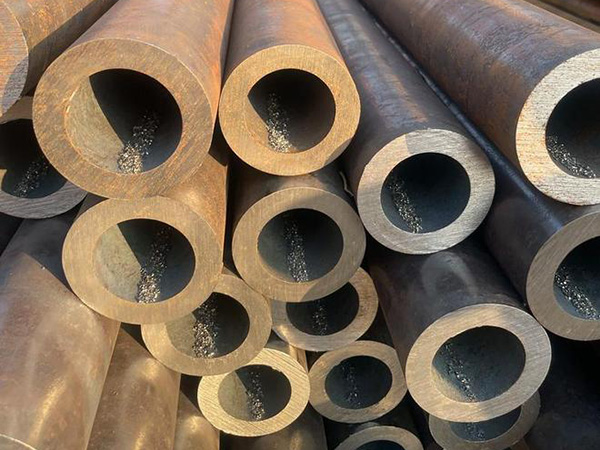
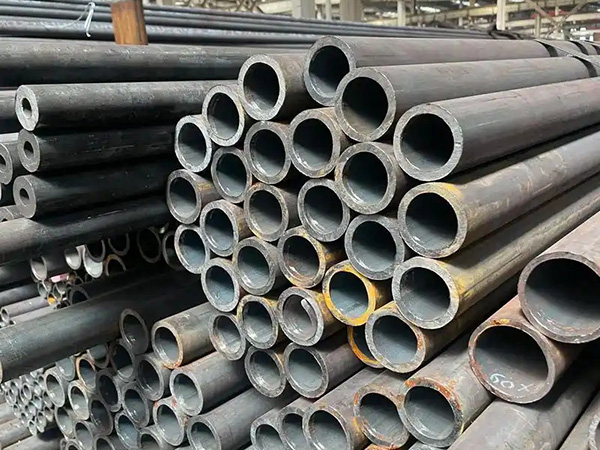
High pressure seamless steel pipe encompasses seamless tubular products specifically designed and manufactured to withstand elevated internal pressures across sustained operational periods. Industry convention classifies products as high-pressure when design pressures exceed 1,000 PSI, with extreme-pressure applications reaching 5,000-15,000 PSI in hydraulic and specialized chemical injection service. The seamless manufacturing process is effectively mandatory in this service category—welded constructions cannot provide the burst strength, fatigue resistance, and pressure-cycling durability that high-pressure duty demands.
Key governing standards include ASME B36.10M for dimensional scheduling, ASME B31.3 for process piping pressure design, and material-specific ASTM specifications governing chemistry, mechanical properties, and testing requirements for each grade category.
Pressure Rating Fundamentals
Understanding pressure ratings requires familiarity with how seamless pipe pressure capacity is calculated and verified. Barlow's formula provides the foundational relationship: allowable internal pressure derives from material yield strength, outside diameter, and wall thickness, moderated by design factors that account for uncertainty in operating conditions and material properties.
The schedule numbering system codified in ASME B36.10M translates design requirements into standardized wall thickness categories. Schedule 80 provides approximately 2-3 times the pressure rating of Schedule 40 at the same diameter; Schedule 160 reaches 4-6 times the Schedule 40 rating; and double-extra-strong (XXS) wall sections deliver the highest standard pressure ratings available in seamless carbon steel.
Design pressure calculation per ASME B31.3 incorporates temperature derating factors that reduce allowable stress as temperature rises. Material-specific allowable stress values published in ASME Section II Part D establish the maximum permissible stress at each temperature level, ensuring conservative design margins across the full operating envelope.
Material Standards and Grade Selection
High pressure seamless steel pipe is produced across several material families, each suited to specific temperature and pressure ranges:
Carbon steel grades serve ambient to moderate-temperature high-pressure applications. ASTM A106 Grade B provides the industry workhorse specification for high-pressure process piping to approximately 450°C, with minimum yield strength of 35,000 PSI and minimum tensile strength of 60,000 PSI. ASTM A524 offers equivalent performance for lower-temperature service with more restrictive chemistry controls.
Alloy steel grades extend the pressure-temperature envelope into elevated service ranges. ASTM A335 Grade P11 (2.25Cr-1Mo) and Grade P22 (2.25Cr-1Mo) serve steam and hot oil systems to 550-600°C, retaining meaningful yield strength at these temperatures where carbon steel allowable stresses have degraded substantially. Grade P91 and P92 offer further improvements for the most demanding superheater and reheater applications in modern power plants.
Manufacturing and Quality Assurance
High-pressure seamless pipe production demands rigorous process control throughout the manufacturing sequence. Rotary piercing of heated billets creates the initial hollow shell through controlled plastic deformation, followed by elongation rolling, sizing, and heat treatment stages that progressively establish final dimensions and microstructure.
Heat treatment of high-pressure pipe is not optional—it is essential for achieving specified mechanical properties throughout the wall section. Normalizing, quench-and-temper, or accelerated cooling processes are applied per material grade requirements to achieve the combination of yield strength, tensile properties, and toughness that design calculations assume. Improperly heat-treated pipe cannot reliably meet pressure ratings regardless of nominal wall thickness.
Non-destructive examination completes the quality verification chain. Full-body ultrasonic testing detects internal and sub-surface defects; eddy current or magnetic particle inspection addresses surface-breaking discontinuities; hydrostatic testing confirms leak-tight integrity at 1.25-1.5 times design pressure per ASTM A999 requirements. These inspection regimes provide the independent verification that high-pressure service demands.
Application Sectors and Use Cases
High pressure seamless steel pipe appears across every industrial sector where fluid energy must be contained reliably:
Hydraulic power transmission systems in heavy manufacturing, mining equipment, and offshore platform deployment operate at 3,000-5,000 PSI routinely, with specialty applications reaching 10,000+ PSI. Seamless construction is essential here—fatigue loading from pump cycling would quickly propagate cracks from weld seams, making welded alternatives unsuitable for these service conditions.
Oil and gas wellhead piping, flow lines, and gathering systems routinely handle pressures of 1,000-5,000 PSI in conventional fields and substantially higher in enhanced recovery operations. API 5L X52 through X80 line pipe grades provide the strength and toughness required for these aggressive operating environments.
Boiler feedwater, main steam, and reheat piping in power generation facilities must contain pressures of 1,800-2,500 PSI at temperatures reaching 565°C. Only alloy steel seamless pipe with properly applied heat treatment can meet these demanding requirements over design lives exceeding 100,000 hours.
Procurement and Specification Guidance
Effective high-pressure pipe procurement begins with complete specification development. B2B buyers should ensure that purchase orders address the following parameters explicitly:
Applicable design code (ASME B31.3, B31.4, B31.8, or project-specific)
Design pressure and temperature including any transient or upset conditions
Material grade and ASTM specification designation
Schedule or minimum wall thickness requirement
Heat treatment condition and any post-weld heat treatment limitations
Required NDT examination methods and acceptance criteria
Mill Test Report requirements including chemistry, mechanical properties, and impact testing
Hydrostatic test pressure and hold duration
End preparation requirements per ASME B16.25
Complete specification eliminates ambiguity and ensures that delivered material meets the performance assumptions embedded in engineering design calculations.
Conclusion
High pressure seamless steel pipe selection demands rigorous alignment between engineering design requirements, material specification, and manufacturing capability. Pressure ratings derive from controlled calculations using material properties established through proper heat treatment and verified through systematic non-destructive examination—none of which can be assumed or approximated.
B2B procurement professionals who invest in complete specification development, qualify capable manufacturers, and require comprehensive Mill Test Report documentation consistently achieve reliable high-pressure piping installations. The consequences of under-specification—catastrophic failure, unplanned downtime, and safety incidents—dwarf any procurement cost savings from specification shortcuts.
Frequently Asked Questions
Q: How is the pressure rating of seamless pipe determined?
A: Pressure design follows ASME B31.3 equations incorporating design pressure, outside diameter, specified minimum wall thickness, allowable stress at design temperature, temperature derating factors, and weld joint efficiency. The schedule system in ASME B36.10M provides commercially available walls that satisfy these calculations for standard conditions.
Q: Why is seamless construction preferred over welded pipe for high-pressure service?
A: Seamless construction eliminates the longitudinal weld seam and its associated heat-affected zone, which represent inherent stress concentrations and potential crack initiation sites under cyclic pressure loading. Seamless pipe provides 15-25% higher burst strength and 3-5 times the fatigue life of welded equivalents in high-pressure service.
Q: What heat treatment is required for high-pressure carbon steel pipe?
A: ASTM A106 Grade B pipe is typically furnished in normalized condition or normalized and tempered condition for heavy wall sections to achieve consistent mechanical properties through the wall. Heat treatment requirements are specified in the ASTM purchase order and must be documented in Mill Test Reports. Improper or omitted heat treatment invalidates pressure ratings.
Q: How do temperature limits affect pressure ratings?
A: Allowable stress values decrease as temperature rises per ASME BPVC Section II Part D tables. Carbon steel allowable stress begins significant derating above 400°C; alloy steels retain usable strength to 550-650°C depending on grade. Higher temperatures may require thicker walls or higher-strength alloy grades to maintain adequate pressure ratings.
Q: What documentation should I require for high-pressure pipe procurement?
A: Require ASTM material specification compliance certification, Mill Test Reports documenting heat chemistry, mechanical properties (tensile, yield, elongation), hardness survey for heavy wall, Charpy impact results where specified, NDT examination reports, and hydrostatic test records with pressure and hold time documentation. Heat number traceability throughout is essential.
References
American Society of Mechanical Engineers. (2023). ASME B31.3-2022: Process Piping. New York, NY.
American Society of Mechanical Engineers. (2022). ASME B36.10M-2022: Welded and Seamless Wrought Steel Pipe. New York, NY.
ASTM International. (2024). ASTM A106/A106M-24: Standard Specification for Seamless Carbon Steel Pipe for High-Temperature Service. West Conshohocken, PA.
Mosley, W.R. (2024). "Pressure Design of High-Strength Seamless Piping Systems." Journal of Pressure Vessel Technology, 146(5), 051502.
ASTM International. (2024). ASTM A999/A999M-24: Standard Specification for Alloy and Stainless Steel Pipe. West Conshohocken, PA.