

For buyers who are ready to purchase — how to write the RFQ, qualify the supplier, control price and risk, and assure quality on arrival.
Introduction
Once you understand the product (covered in our stainless steel pipe overview), the next step is procurement. Working with a reliable stainless steel pipe supplier turns a list of line items into delivered, certified material that fits your schedule. This guide is written for purchasers and project engineers who need a repeatable buying process rather than a one-off quote.
Manufacturer vs. Supplier: Which Do You Need?
A manufacturer produces the pipe; a supplier (distributor or trading company) sources and resells it, often across multiple mills. Neither is inherently better — they solve different problems.
| Need | Preferred partner |
|---|---|
| Specific grade, dimension, finish, certification | Manufacturer (project-direct) |
| Broad stock and fast local delivery | Distributor / supplier |
| Lowest lifetime cost at volume | Manufacturer |
| Many unrelated SKUs consolidated | Supplier |
Many mature buyers use both: a manufacturer for project volumes and a local supplier for urgent top-ups. Explore the full product catalog to see what a single source can cover.
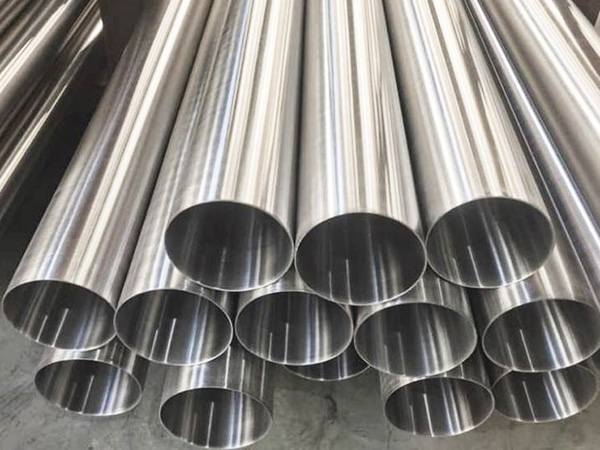
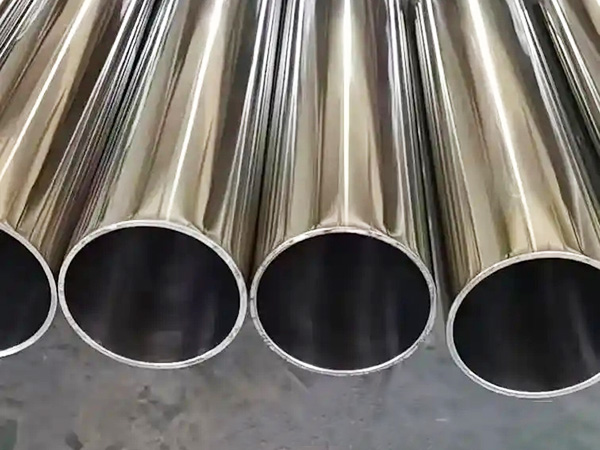
Step 1 — Write a Precise RFQ
A precise request for quotation is the single biggest lever on price comparability and delivery accuracy. Include:
Grade and standard: e.g., ASTM A312 TP316L, or ASTM A213 for certain seamless tubes.
Dimensions: outer diameter, wall schedule (per ASME B36.19M), and length with tolerance.
Surface finish: pickled, brushed, or polished to a target grit/Ra.
End condition: plain, beveled (per ASME B16.25), or threaded.
Certification: EN 10204 3.1 material certificate and any NDT scope (PMI, hydrostatic, UT, ET).
Quantity and packing: total meters, bundle size, end caps, separators, export marking.
Destination and Incoterm: so logistics responsibility is unambiguous.
Step 2 — Qualify the Supplier
Before awarding volume, run a lightweight qualification:
Confirm the standards they supply to and request a sample certificate from a past order.
Verify they can provide full traceability (heat number to finished pipe).
Ask which inspections are in-house versus third-party.
Check references or recent project experience in your industry (e.g., chemical, power, water).
Clarify after-sales: how they handle claims, shortages, or non-conforming material.
Step 3 — Understand Pricing Drivers
Stainless pipe pricing is not static. Key drivers:
Alloy content: nickel dominates 300-series cost; 316L costs more than 304L largely due to molybdenum and nickel.
Mill surcharges: often tied to raw alloy indices and adjusted monthly.
Dimensions and schedule: thicker walls and less common sizes carry a premium.
Finish and testing: polishing and extra NDT add cost.
Volume and lead time: rush orders and small quantities cost more per unit.
Agree whether surcharges are fixed or floating at order confirmation, and request a valid-for quotation period. Our weight calculation guide helps you sanity-check quoted weights and prices.
Step 4 — Get Incoterms Right
Incoterms define who pays for and bears risk during transport. The common ones for pipe:
| Incoterm | Buyer responsibility | When to use |
|---|---|---|
| EXW | Collects goods at supplier's gate; all freight/risk after | You have strong local logistics |
| FOB | Ocean freight + insurance from port of loading | You want to control freight |
| CIF | Supplier pays freight + insurance to destination port | You want a single point of contact |
FOB is common because it lets you use your own forwarder; CIF simplifies the buyer's workload. Choose based on who can negotiate freight and clear customs more efficiently.
Step 5 — Assure Quality on Arrival
Incoming inspection protects you from silent non-conformities:
Match the certificate's heat number to the marking on the pipe.
Verify OD, wall thickness, and length against tolerances.
Confirm surface finish and end bevel condition.
Review any NDT reports and, for critical service, commission third-party inspection (e.g., SGS, BV) or perform PMI on a sample.
Step 6 — Manage Supply Risk
For critical projects, avoid single-point dependence:
Keep a qualified alternate source for key line items.
Build buffer lead time into the project schedule.
Hold agreed safety stock for fast-moving sizes.
Document claims handling in the purchase contract.
Build a Supplier Scorecard
When comparing several stainless steel pipe suppliers, a simple weighted scorecard keeps the decision objective and documented:
| Criterion | Weight | What to verify |
|---|---|---|
| Spec compliance | 25% | Quoted grade, standard, schedule match the RFQ exactly |
| Traceability & certs | 20% | EN 10204 3.1, heat-number logic, NDT scope |
| Price & TCO | 20% | Unit price plus freight, insurance, inspection |
| Lead time & capacity | 15% | Realistic date, ability to scale |
| Quality system & claims | 10% | Documented process, clear claims handling |
| Logistics & packaging | 10% | Incoterm clarity, export packing |
Think in Total Cost of Ownership
The invoice price is only part of the cost. Total cost of ownership includes:
Unit material price and any alloy surcharge.
Freight, insurance, and customs duties under the chosen Incoterm.
Incoming inspection and third-party survey fees.
Cost of scrap, rework, or downtime if material is non-conforming.
Financing cost of tied-up inventory and lead-time buffers.
A supplier with a slightly higher unit price but stronger certification and on-time delivery often wins on TCO.
A Practical RFQ Line Item
A clear line item removes ambiguity. Example:
| Field | Value |
|---|---|
| Description | Stainless steel pipe, ASTM A312 TP316L, SMLS |
| Size | OD 168.3 mm (6"), Sch 40S |
| Length | 6000 mm ± 5 mm |
| Finish | Pickled & passivated |
| Ends | Plain ends, squared |
| Cert | EN 10204 3.1, PMI + hydrostatic |
| Qty / Pack | 2,000 m, bundled, end-capped |
| Incoterm | FOB Tianjin |
Handling Claims and Disputes
Define the claims process in the purchase contract before ordering:
Require photographic and dimensional evidence at the time of discovery.
Agree on a response window (for example, 7 working days).
State whether replacement, credit, or refund applies.
Name the third-party inspector (SGS, BV, or equivalent) for disputed cases.
Common Procurement Pitfalls
Accepting the lowest quote without confirming the spec matches the RFQ.
Leaving Incoterms and surcharge terms vague.
Skipping incoming inspection on "certified" material.
No clear claims process for shortages or damage.
Frequently Asked Questions
Should I buy from a manufacturer or a stainless steel pipe supplier?
Buy from a manufacturer when you need a specific grade, dimension, finish, or certification and want the lowest lifetime cost with full traceability. Use a supplier or distributor when you need broad stock, fast local delivery, or consolidated sourcing across many SKUs. Many buyers use both: a manufacturer for project-direct volumes and a local supplier for urgent top-ups.
What information must a stainless steel pipe RFQ include?
Include grade and standard (e.g., ASTM A312 TP316L), outer diameter, wall schedule, length and tolerance, surface finish, end type and bevel, required certificates (EN 10204 3.1), NDT scope, quantity, packing requirements, destination, and requested Incoterm. The more precise the RFQ, the more comparable the quotes.
Which Incoterm is best for importing pipe?
FOB is common because you control the ocean freight and insurance and can use your own forwarder. CIF suits buyers who want the supplier to handle freight and insurance to the destination port. EXW places the most logistics burden on the buyer. Choose based on who can negotiate freight and clear customs more efficiently.
Why does stainless steel pipe price fluctuate?
Base price tracks nickel and chromium (especially nickel, which dominates 300-series cost), plus mill surcharges, exchange rates, and order volume. Request a valid-for quote period and agree whether surcharges are fixed or floating at order confirmation.
How should I inspect pipe on arrival?
Check the certificate against the heat number on the pipe, verify markings, measure OD/wall/length against tolerance, confirm surface finish and end bevel, and review any NDT reports. For critical service, commission third-party inspection (e.g., SGS, BV) or perform PMI on a sample.
Conclusion
A strong relationship with a stainless steel pipe supplier is built on clear specifications, verified traceability, fair and transparent pricing, and disciplined incoming inspection. Treat procurement as a process — precise RFQ, structured qualification, correct Incoterms, and risk buffer — and you convert a risky commodity purchase into a predictable, auditable supply line. For project-specific support, review the product range or reach the manufacturer's team directly.
Technical References
ASTM International. ASTM A312 / A312M – Seamless, Welded, and Heavily Cold Worked Austenitic Stainless Steel Pipes. astm.org
ICC Digital Codes. Incoterms® 2020 (International Commercial Terms). iccwbo.org
ASME. ASME B36.19M – Stainless Steel Pipe and ASME B16.25 – Buttwelding Ends. asme.org/codes-standards
The International Stainless Steel Forum (worldstainless). Stainless market and grade guidance. worldstainless.org
Engineering Toolbox. Stainless Steel Pipes – Dimensions, Weights, and Pressure Ratings. engineeringtoolbox.com