

For procurement managers, project engineers, and EPC contractors — what to define, what to verify, and what to avoid when sourcing stainless steel pipe.
Introduction
Choosing a stainless steel pipe manufacturer is rarely a simple price comparison. The pipe you specify will carry corrosive chemicals, high-pressure steam, potable water, or hygienic process fluids for decades. A capable manufacturer controls the material route, the forming process, the heat treatment, and the final inspection — every link in that chain affects service life, code compliance, and total cost of ownership. This guide explains the technical fundamentals you must understand and the commercial due diligence that separates reliable partners from risky ones.
What a Stainless Steel Pipe Manufacturer Produces
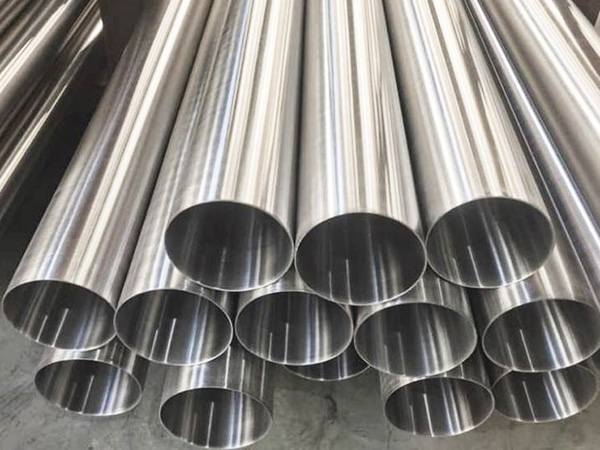
A stainless steel pipe manufacturer converts flat-rolled or billet stainless stock into finished tubular products and typically supplies them cut to length, beveled, cleaned, and certified. The product range usually spans multiple process routes and a broad set of corrosion-resistant alloys. For background on the full product family, see the stainless steel pipe product page and the complete product catalog.
Stainless Steel Grades and Why They Matter
The grade defines corrosion resistance, temperature limits, and weldability. Selecting the wrong grade is the most common root cause of premature failure.
| Grade | Typical Character | Common Use |
|---|---|---|
| 304 / 304L | 18% Cr, 8% Ni; 304L has lower carbon for better weld corrosion resistance | General service, food, architecture, water |
| 316 / 316L | Adds molybdenum for chloride resistance | Marine, chemical, pharmaceutical, coastal |
| 321 | Stabilized with titanium | High-temperature exhaust and process lines |
| 310S | High chromium-nickel, heat resistant | Furnaces, high-temperature duty |
| Duplex 2205 | Austenitic-ferritic, high strength | Aggressive chloride, high-pressure service |
For a deeper comparison of 304 versus 316 chemistry and when molybdenum matters, read our 316 stainless steel pipe guide.
How Stainless Steel Pipes Are Made
Understanding the production route helps you judge quality and specify correctly.
Seamless pipe
A solid billet is pierced and elongated (often by hot rolling or cold drawing) to form a tube with no longitudinal weld. Seamless pipe is favored where the absence of a weld seam reduces a potential initiation point for cracking under high pressure or corrosive media.
Welded pipe (ERW / LSAW)
Strip or plate is rolled into shape and joined by electric resistance or submerged arc welding, then typically solution-annealed and straightened. Welded pipe is economical for larger diameters and, when produced and tested to the relevant standard, performs well in many services.
Key Technical Specifications You Must Define
A vague request such as "give me 316 pipe" invites the wrong product. A precise specification should include:
Grade and standard: e.g., ASTM A312 TP316L, or ASTM A213 for certain seamless applications.
Outer diameter and wall thickness: stainless is dimensioned per ASME B36.19M (and B36.10M for some schedules); wall is expressed as a Schedule (5S, 10S, 40S, 80S…). See our schedule guide for how SCH numbers map to wall thickness.
Length and tolerance: fixed vs random length, and allowable deviation.
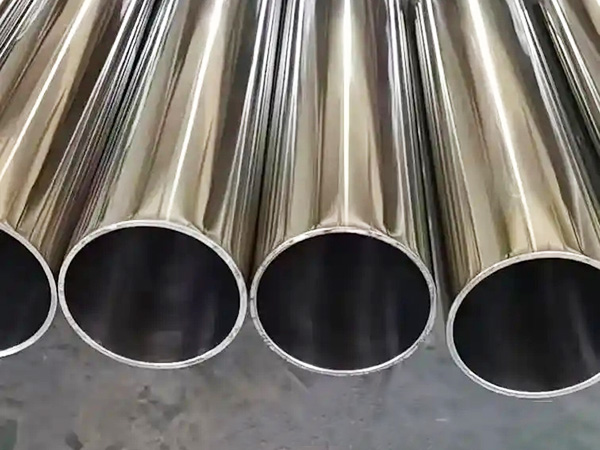
Surface finish: pickled, brushed, or polished (e.g., 180/240/320 grit or mirror); hygienic lines often require a defined Ra value.
End condition: plain ends, beveled ends (typically 30°–37.5° per ASME B16.25), or threaded.
Heat treatment: solution annealing / passivation where required.
How to Evaluate a Manufacturer
Technical capability is necessary but not sufficient. Evaluate the following:
Process control and traceability
The manufacturer should assign a heat (lot) number and maintain full material traceability from raw coil or billet through to finished pipe. Ask how they record and retain this data.
Testing and inspection
Capable plants perform or commission positive material identification (PMI), hydrostatic or pneumatic pressure testing, ultrasonic (UT) or eddy current (ET) examination, and dimensional checks. Clarify which tests are in-house versus outsourced.
Documentation
Each shipment should be backed by a material certificate (for example EN 10204 3.1), a mill test report, and any project-specific inspection records. Strong documentation is what makes incoming inspection and audit trails possible.
Customization, capacity, and lead time
Confirm the plant can meet your dimensions, finishes, and volumes, and obtain a realistic lead time that includes heat treatment and testing, not just forming.
Packaging and logistics
Stainless surfaces are vulnerable to contamination and carbon pick-up. Confirm bundling, end caps, separators, and moisture protection; for export, clarify marking and container loading.
Common Mistakes Buyers Make
Specifying only "316" without the "L" when welding is heavy, risking sensitization.
Comparing price per meter without comparing grade, standard, schedule, and certification level.
Ignoring surface cleanliness and allowing carbon steel contact during transit.
Assuming all "seamless" pipe is identical — verify the standard and NDT scope.
Red Flags to Avoid
Reluctance to share a sample material certificate from a past order.
No defined heat number or traceability system.
Vague answers on heat treatment and NDT.
Delivery promises that are far shorter than the stated process requires.
A Practical Manufacturer Qualification Checklist
Confirm the standards produced to (ASTM A312/A213, ASME B36.19M).
Request a sample EN 10204 3.1 certificate and verify the heat number logic.
Map in-house vs third-party testing (PMI, hydrostatic, UT/ET).
Validate customization range (OD, schedule, length, finish).
Obtain a lead time that includes heat treatment and inspection.
Review packaging, marking, and Incoterms for your destination.
Place a small trial order or arrange a factory audit before volume.
Frequently Asked Questions
What is the difference between a stainless steel pipe manufacturer and a supplier?
A manufacturer owns the production lines (forming, welding, heat treatment, finishing) and controls the material route, while a supplier may be a distributor or trader that resells pipe made by others. Buying from a manufacturer typically improves traceability, customization options, and price, but a qualified supplier can add value through stock breadth and local logistics.
Which stainless steel grade should I choose for corrosive environments?
For general corrosion and indoor service, 304/304L is common. For chloride, marine, or chemical exposure, 316/316L (with molybdenum) is preferred. High-temperature duty may call for 321 or 310S, and aggressive or high-stress service can use duplex 2205. The final grade should be confirmed against the project's corrosion and temperature envelope.
What quality documents should a manufacturer provide with each order?
At minimum, request a material certificate (such as EN 10204 3.1), mill test report with heat number, dimensions and tolerances, surface condition, and any requested NDT results (PMI, hydrostatic, ultrasonic, or eddy current). These documents support traceability and incoming inspection.
Is seamless or welded stainless steel pipe better?
Neither is universally better. Seamless pipe has no longitudinal weld and is often specified for high pressure, high temperature, or corrosive duty. Welded (ERW) pipe is economical for larger diameters and less severe service when made and tested to the relevant standard. The choice depends on pressure, medium, and code requirements.
How can I verify a manufacturer's capability before a large order?
Request the product scope and standards they produce to, ask for sample material certificates from past orders, confirm in-house vs third-party testing, review their quality system, and consider a small trial order or a factory audit before committing to volume.
Conclusion
Selecting a stainless steel pipe manufacturer is a risk-management decision, not just a purchasing one. Define the grade, standard, dimensions, finish, and test scope precisely; verify traceability and inspection discipline; and validate capability with a trial order before scaling. When those boxes are checked, the lowest lifetime cost usually comes from the partner who controls the process and documents it — not the one with the lowest headline price. For product specifics, explore the stainless steel pipe range or contact the manufacturer for project support.
Technical References
ASTM International. ASTM A312 / A312M – Standard Specification for Seamless, Welded, and Heavily Cold Worked Austenitic Stainless Steel Pipes. astm.org
ASME. ASME B36.19M – Stainless Steel Pipe and ASME B16.9 – Factory-Made Wrought Steel Buttwelding Fittings. asme.org/codes-standards
The International Stainless Steel Forum (worldstainless). Stainless steel grading and properties. worldstainless.org
Engineering Toolbox. Stainless Steel Pipes – Dimensions and Weights. engineeringtoolbox.com
Wikipedia. Piping and plumbing fitting. en.wikipedia.org/wiki/Piping_and_plumbing_fitting