

A technical reference for engineers and procurement: what a concentric reducer is, how it works, where it is used, and how to specify the right one.
What Is a Concentric Reducer?
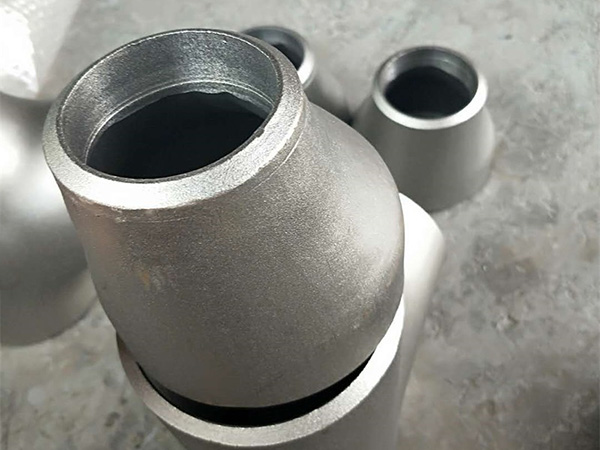
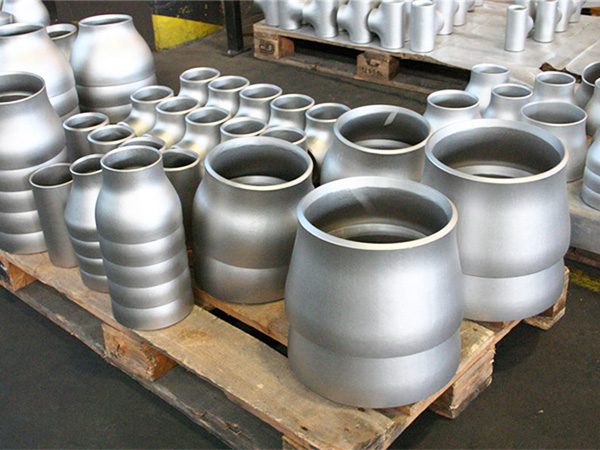
A concentric reducer is a butt-welded pipe fitting that connects two pipes of different nominal diameters while keeping their centerlines on the same axis. Its profile is symmetrical — the large and small ends share a common centerline — producing a cone-like transition. This geometry makes it the default choice when the pipeline must remain axially aligned and there is no concern about trapping gas or air.
For the broader fitting family, see our pipe fitting reducer overview.
How a Concentric Reducer Works
The reducer changes the cross-sectional area of the flow path gradually. As the diameter narrows, fluid velocity rises and static pressure drops (by Bernoulli's principle); as it widens, velocity falls and pressure recovers. A well-formed, gradual cone minimizes turbulence and pressure loss compared with an abrupt step change. Because the transition is centered, the reducer introduces no vertical offset and does not create a flat pocket where air can accumulate.
Standards and Dimensions
Butt-welded concentric reducers are dimensioned by ASME B16.9, which defines the large-end and small-end diameters, length, and tolerances. Material requirements are typically governed by:
ASTM A403 — wrought austenitic stainless steel fittings (e.g., WP304, WP316L).
ASTM A234 — carbon and alloy steel fittings.
ASTM A960 — common requirements for wrought steel fittings.
Wall thickness is matched to the pipe schedule (5S, 10S, 40S, 80S… per ASME B36.19M / B36.10M). Our schedule guide explains how schedules map to wall thickness.
Materials and Manufacturing
Concentric reducers are produced to match the connected pipe material:
| Material family | Typical grade | Common driver |
|---|---|---|
| Stainless austenitic | 304/304L, 316/316L | Corrosion resistance, hygiene |
| Stainless high-temp | 321, 310S | Heat resistance |
| Duplex | 2205 | Strength + chloride resistance |
| Carbon / alloy | A234 WPB, WP11 | Cost / high-temperature strength |
Manufacturing routes include pressing from a flat blank (for larger sizes) and extrusion or forging (for smaller, higher-integrity fittings). After forming, stainless fittings are usually solution-annealed and pickled/passivated to restore corrosion resistance at the grain boundaries.
Typical Applications
Vertical piping runs: the continuous centerline keeps the line plumb.
Pump and compressor discharge: aligned transition to the next pipe size.
Instrument and sampling connections: where a small branch taps off a centered line.
General process lines: anywhere the bore must change size without offset.
How to Select a Concentric Reducer
Define both ends: large-end NPS and small-end NPS.
Match wall schedule: specify the schedule of each end (they may differ).
Choose the material/grade: align with the connected pipe and the service environment.
Confirm the standard: ASME B16.9 for dimensions; ASTM A403 (stainless) or A234 (carbon) for material.
Specify end preparation: butt-weld ends beveled per ASME B16.25.
Set certification: EN 10204 3.1 material certificate and any required NDT (PMI, UT, MT/PT).
Installation and Inspection
Weld the reducer with the correct alignment and root gap; verify that the bevels are clean and free of contamination (especially for stainless, to avoid carbon pick-up). On receipt, check:
Marking matches the certificate (material, grade, heat number, size).
End diameters and length are within ASME B16.9 tolerance.
Surface condition is sound (no cracks, lamination, or excessive scale).
Required NDT and certificates are present.
Concentric vs. Eccentric — Quick Decision
| Condition | Choose |
|---|---|
| Centerline must stay aligned; no air-pocket risk | Concentric |
| Horizontal pump suction; avoid air pocket | Eccentric (flat side up) |
| Maintain top-of-pipe or bottom-of-pipe alignment | Eccentric (flat side per layout) |
Flow Behavior and Pressure Loss
When a concentric reducer narrows the bore, velocity rises and static pressure falls; where it widens, pressure partially recovers. A gradual, code-compliant cone keeps the loss coefficient low. By contrast, an abrupt step change generates recirculation and a higher permanent pressure loss. For long pipelines this difference accumulates into pump energy cost, so the smooth transition of a properly formed reducer pays back over the system life.
A Sizing Example
Suppose a line steps from 6" Sch 40S to 4" Sch 40S in TP316L. You would specify: concentric reducer 6"×4" Sch 40S, ASTM A403 WP316L, ASME B16.9, butt-weld ends, EN 10204 3.1. The large-end and small-end outside diameters follow ASME B36.19M, and the overall length follows ASME B16.9. Match the reducer schedule to the connected pipe so wall thickness and pressure rating stay continuous across the joint.
Welding Stainless Reducers
Stainless welding demands contamination control. Keep the fitting and adjacent pipe clean and separate from carbon steel; use a root purge with inert gas where the specification requires it; select a filler metal compatible with the base grade (for example, 316L filler for 316L); and confirm fit-up gap and alignment before welding. After welding, the heat-affected zone should retain its corrosion resistance — which is why solution-annealed and pickled fittings are preferred for corrosive service.
Reading the Fitting Mark
A properly marked reducer carries the size, material/grade, standard, heat or lot number, and manufacturer identification. On receipt, confirm the mark against the material certificate and against the heat number on the connected pipe so the whole spool is traceable. ASME B16.9 also defines permissible variation in end diameters and overall length; for stainless schedules the wall-thickness tolerance is governed by the referenced pipe specification, and these should be verified on incoming inspection, especially for automated welding where fit-up is critical.
Frequently Asked Questions
What is a concentric reducer used for?
A concentric reducer joins two pipes of different diameters while keeping the centerline continuous. It is used where the pipeline must stay axially aligned — for example vertical runs, pump discharge lines, and instrument connections — and where trapping air or gas pockets is not a concern.
What is the difference between concentric and eccentric reducers?
A concentric reducer is symmetrical about the pipe centerline (both ends share the same axis). An eccentric reducer has one flat side so the centerline is offset; it is used to keep the top or bottom of the pipe flush and to avoid air pockets in suction lines.
Which standard covers concentric reducers?
Butt-welded concentric reducers are dimensioned by ASME B16.9, with material requirements typically governed by ASTM A403 for stainless steel and ASTM A234 for carbon/alloy steel. Fitting dimensions and tolerances follow these standards.
How do I specify a concentric reducer?
Specify the large-end and small-end nominal pipe sizes, the schedule (wall thickness) of each end, the material and grade (e.g., ASTM A403 WP316L), the standard (ASME B16.9), the end type (butt-weld), and any surface or certification requirements.
Can concentric reducers be used on pump suction lines?
They can be used on the discharge side and on vertical suction runs. On horizontal pump suction lines, an eccentric reducer is usually preferred (flat side up) to prevent air pockets that could cause cavitation.
Conclusion
The concentric reducer is the workhorse of size transitions in industrial piping: simple, symmetrical, and ideal wherever the centerline must stay aligned. Specify it by both end sizes, matched schedule, correct material grade, and the governing standards (ASME B16.9 dimensions, ASTM A403 material), and verify certification and condition on arrival. When the layout demands flush top/bottom alignment or air-pocket avoidance, switch to an eccentric design. Browse the reducer product range for specifics.
Technical References
ASME. ASME B16.9 – Factory-Made Wrought Steel Buttwelding Fittings. asme.org/codes-standards
ASTM International. ASTM A403 / A403M – Standard Specification for Wrought Austenitic Stainless Steel Piping Fittings. astm.org
ASTM International. ASTM A960 / A960M – Common Requirements for Wrought Steel Piping Fittings. astm.org
The International Stainless Steel Forum (worldstainless). Stainless steel properties and applications. worldstainless.org
Wikipedia. Piping and plumbing fitting. en.wikipedia.org/wiki/Piping_and_plumbing_fitting