

In aggressive industrial environments, material selection determines system longevity and reliability. Stainless steel seamless pipe offers exceptional corrosion resistance across diverse applications—from chemical processing to marine infrastructure—making it the preferred choice for demanding process environments. This technical guide explains the underlying mechanisms, grade selection criteria, and procurement considerations enabling optimal corrosion-resistant performance.
Understanding Corrosion Resistance Mechanisms
Stainless steel's corrosion resistance derives from a passive chromium oxide layer forming spontaneously on exposed surfaces. This extremely thin film (2-5 nanometers) adheres strongly to the underlying metal and acts as a barrier separating metallurgical substrate from corrosive media. Key mechanism elements include:
Chromium Content: Minimum 10.5% chromium enables stable passive layer formation; higher alloys increase film stability
Self-Healing Capability: Passive film reforms spontaneously following mechanical damage in oxidizing environments
Homogeneous Microstructure: Seamless construction avoids galvanic couples associated with weld dissimilar metal transitions
This passive protection fundamentally differentiates stainless steel from carbon steel, which corrodes uniformly without inherent defensive mechanisms.
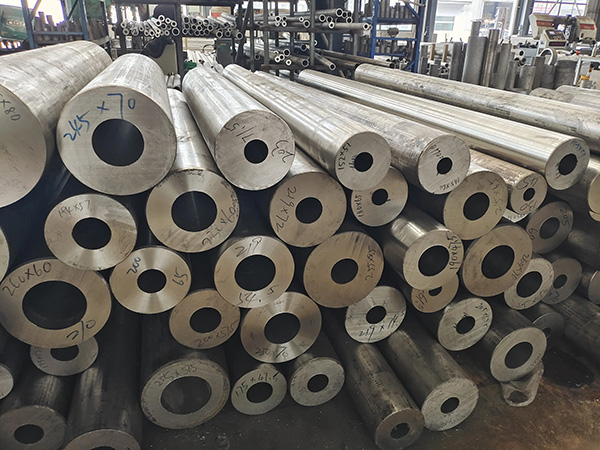
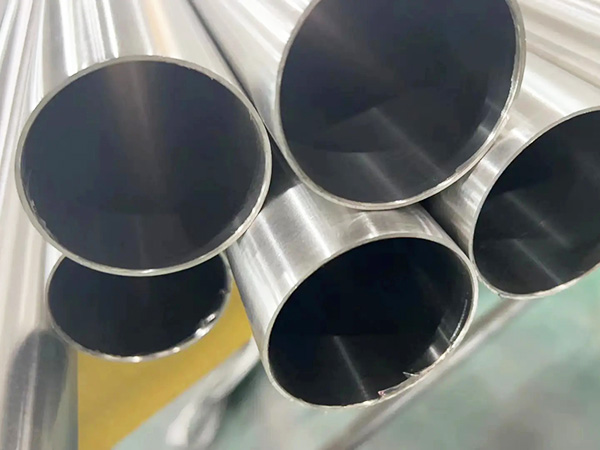
Stainless Steel Grades and Corrosion Performance
Industrial applications utilize several stainless steel grades with differentiated corrosion performance:
Austenitic Grades (300 Series)
304/304L: General-purpose grade; adequate corrosion resistance in atmospheric and mild chemical exposure; not suitable for chloride-containing environments
316/316L: Molybdenum-bearing grade; superior pitting resistance; standard choice for chemical processing; resists most organic acids and chlorides at moderate concentrations
317L: Enhanced molybdenum content (3-4%); superior resistance to phosphoric acid and sulfurous compounds
904L: Super-austenitic grade; excellent resistance to halide-containing environments; premium pricing
Ferritic Grades (400 Series)
430: Interior trim and architectural applications; limited corrosion resistance
444: Improved corrosion resistance with titanium stabilization; automotive exhaust applications
Duplex Grades
2205 (S31803): 50% austenite/50% ferrite microstructure; twice the strength of 304L; excellent chloride stress corrosion cracking (SCC) resistance
2507 (S32750): Super-duplex; maximum corrosion resistance; super-duplex strength; severe marine andprocess applications
Corrosion Types and Grade Selection
Different corrosion mechanisms require specific material solutions:
Uniform Corrosion: Generalized surface attack; 304L/316L adequate for most non-halide environments
Pitting Corrosion: Localized attack in chloride environments; 316L minimum for maritime applications; 904L or duplex for concentrated chloride exposure
Stress Corrosion Cracking (SCC): Tensile stress + chloride + temperature combination; duplex grades provide superior resistance; avoid 304L above 60°C in chloride service
Intergranular Corrosion: Grain boundary attack in sensitized zones; low-carbon "L" grades (304L, 316L) prevent sensitization during welding
Galvanic Corrosion: Dissimilar metal coupling; avoid incompatible metal connections in aggressive electrolytes
Pitting Resistance Equivalent Number (PREN)
PREN provides comparative pitting corrosion resistance indexing:
| Grade | PREN Value | Typical Application |
| 304L | 18-20 | Atmospheric, mild chemicals |
| 316L | 24-26 | General chemical process |
| 2205 Duplex | 32-34 | Marine, chloride process |
| 2507 Super-Duplex | 42-45 | Severe marine, extreme chlorides |
| 904L | 34-36 | Pharmaceutical, severe chemicals |
Environments exceeding 35 PREN typically require duplex or super-duplex grades for adequate service life.
Seamless Construction Advantages
Stainless steel seamless pipe delivers corrosion performance advantages:
No Weld Heat-Affected Zone: Eliminates chromium-depleted regions susceptible to localized attack
Consistent Passivity: Uniform microstructure provides consistent passive film formation across entire interior surface
Smooth Interior Surfaces: Better flow characteristics and reduced fouling in process streams
Superior Temperature Performance: Retained mechanical properties at elevated temperatures without weld-related embrittlement
Field experience documents 30-50% longer service lives for seamless 316L compared to welded equivalents in equivalent moderate-chloride chemical processing applications.
Environmental Considerations by Industry Sector
Industry-specific recommendations follow established practice:
Oil and Gas: Sour service (H2S) requires API 5L X52 or higher; 13Cr or duplex for Cl2/CO2 combinations
Chemical Processing: 316L minimum for organics; 904L or 254 SMO for halide acids; PTFE-lined alternatives for mixed acid service
Pulp and Paper: 316L for chlor-alkali; duplex for black liquor service
Marine/Water Treatment: 2205 duplex for seawater; 2507 for concentrated brines
Food and Beverage: 304L/316L with FDA/EU compliance documentation; polished interior surfaces
Inspection and Maintenance Protocols
Maximizing lifespan through systematic monitoring:
Visual Inspection: Semi-annual external examination for staining, discoloration, or surface alterations
Thickness Monitoring: Ultrasonic thickness measurement (UTM) tracking corrosion rates in-service
Cleaning Protocols: Chloride-free cleaning for passivation preservation; avoid mechanical abrasion of passive layer
Environmental Control: Maintain oxidizing conditions; minimize chloride concentration where possible
Procurement Specifications
Specify correctly for intended service:
Material Grade: Precisely designate (304L, 316L, 2205, etc.)—not simply "stainless steel"
Heat Number Traceability:
Mill Test Reports: Document chemical composition, mechanical properties, and corrosion test results
Surface Finish: Specify per ASTM A480 (2B, #3, #4 polish) for aesthetic or sanitary requirements
Testing Requirements: Consider intergranular corrosion testing per ASTM A262 Practice E for welded constructions
Conclusion
Stainless steel seamless pipe provides exemplary corrosion resistance when properly matched to service conditions. B2B procurement professionals should evaluate chloride exposure levels, temperature requirements, mechanical stresses, and failure consequences in specifying appropriate grades.
Investment in superior corrosion-resistant grades—while commanding 20-60% acquisition premiums over commodity austenitics—generates compelling returns through extended service life, reduced unplanned maintenance, and improved system reliability. Organizations serving aggressive process environments consistently achieve positive ROI within 18-30 months through corrosion-related failure avoidance and extended inspection intervals.
Frequently Asked Questions
Q: What is the primary mechanism enabling stainless steel corrosion resistance?
A: Spontaneous formation of a thin, adherent chromium oxide passive film on exposed surfaces creates a barrier isolating the underlying metal from corrosive media. This film self-repairs in oxidizing environments following minor mechanical damage, providing continuous protection.
Q: When should I specify duplex stainless steel instead of 316L?
A: Duplex grades provide superior performance in: chloride concentrations exceeding 200 ppm, temperatures above 60°C with chloride presence, tensile loading perpendicular to weld direction, and pitting/crevice corrosion risk environments. PREN values exceeding 32 favor duplex specification.
Q: Does seamless construction really matter for corrosion resistance?
A: Yes—seamless construction eliminates the weld heat-affected zone where chromium depletion creates localized susceptibility to pitting and intergranular attack. Field autopsies consistently show weld-adjacent attack as failure initiation sites in welded constructions serving aggressive environments.
Q: How do I specify proper testing for corrosion-resistant applications?
A: Specify ASTM A262 Practice A (oxalic acid etch) for intergranular corrosion screening, Practice B (copper sulfate-sulfuric acid) for detecting sensitized microstructures, and Practice E (nitric acid) for welded fabrications. Mill Test Reports should document compliance.
Q: What documentation should accompany corrosion-resistant pipe deliveries?
A: Essential documentation includes: Certificate of Conformance to specified ASTM grade, Mill Test Reports (MTR) documenting chemical composition and mechanical properties, heat number traceability documentation, and when specified, corrosion test results per applicable ASTM procedures.
References
ASTM International. (2024). ASTM A312/A312M-24 Standard Specification for Seamless, Welded, and Heavily Cold Worked Austenitic Stainless Steel Pipes. West Conshohocken, PA.
ASM International. (2023). Corrosion: Fundamentals, Testing, and Protection (Vol. 13A). Materials Park, OH.
Jones, R.H. & Ansell, M.P. (2024). "Chloride Stress Corrosion Cracking of Austenitic Stainless Steels." CORROSION Journal, 80(5), 521-538.
Corrall, R.M. (2024). The Stainlass Steel Tubular Products Manual (2nd ed.). Sheffield, UK: Industry Publications Ltd.