

The fundamental difference lies in production methodology:
Precision seamless steel pipe undergoes manufacturing through rotary piercing and elongation processes—no welding operations are involved. The Mannesmann piercer creates an initial bore through cylindrical billet rotation, followed by multiple rolling stands that progressively reduce wall thickness and achieve precise dimensional control. This hot-working process produces a uniform grain structure throughout the tube wall.
Standard welded pipe originates from flat steel strip (skelp) formed into cylindrical shape through roller dies, with longitudinal welding joining the seam. Modern high-frequency induction welding (HFI) provides acceptable joint integrity, but the weld zone inherently differs metallurgically from the base metal—the heat-affected zone (HAZ) exhibits altered grain structure and potential embrittlement.
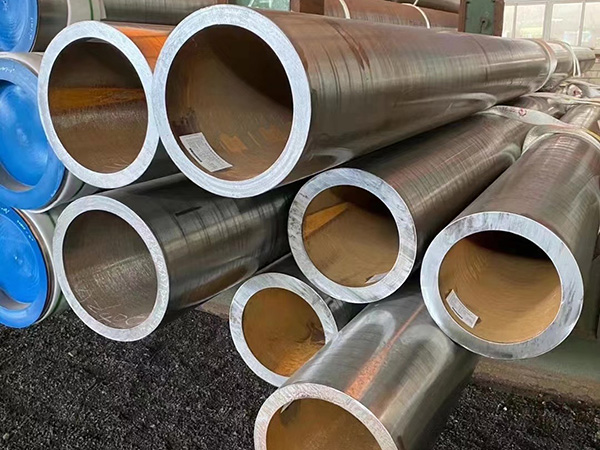
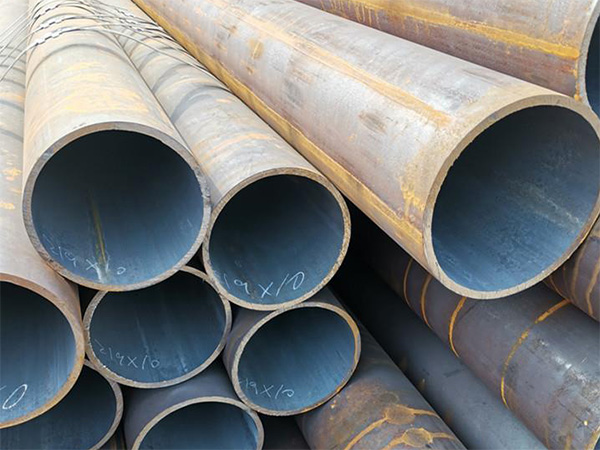
Tolerances and Dimensional Precision
Precision seamless steel pipe achieves superior dimensional accuracy through controlled manufacturing:
Outside Diameter Tolerances: ±0.05mm to ±0.15mm for precision grades versus ±0.5mm to ±2.0mm for standard welded pipe
Wall Thickness Variance: ±3-5% for precision seamless versus ±7.5-12.5% for standard pipe
Ovality Limits: Under 0.5% for precision grades, up to 2% for standard production
Straightness: 1.5mm/m maximum deviation versus 3mm/m for standard products
These tighter tolerances prove critical in precision-engineered systems where clearance management, flow control accuracy, and fit-up requirements demand exact dimensional compliance.
Mechanical Properties and Strength
Performance characteristics favor precision seamless steel pipe in demanding applications:
Burst Pressure Capability: 15-25% higher due to uniform wall section without weld reinforcement inconsistency
Tensile Strength Consistency: ±5% variation versus ±15% in welded equivalents
Fatigue Resistance: Significantly superior cyclic loading performance—weld seams initiate fatigue cracks at 30-50% of seamless tube cycles
Impact Strength: More consistent Charpy impact values, particularly at low temperatures
Industry testing demonstrates that welds fail at stress levels 40-60% below base metal fatigue limits in representative cyclic loading scenarios.
Corrosion Performance Differential
Internal surface smoothness and microstructural uniformity deliver tangible corrosion advantages:
Smoothness (Ra): 1.6-3.2μm for precision seamless versus 3.2-6.3μm for welded interior—reduced surface area minimizes corrosion initiation sites
Weld Zone Corrosion: Heat-affected zones exhibit differential corrosion rates, requiring protective measures in aggressive environments
Velocity Considerations: Erosion-corrosion rates accelerate more rapidly at weld bead protrusions, particularly above 3 m/s velocities
Application experience in seawater cooling systems documents 25-40% longer service intervals for seamless tube bundles compared to welded equivalents in equivalent aggressive conditions.
When to Specify Precision Seamless Steel Pipe
Certain applications mandate precision seamless steel pipe:
High-Pressure Systems: Designs exceeding 1,500 PSI typically specify seamless to accommodate reduced design margins
Cyclic Loading Applications: Pump reciprocating lines, hydraulic systems, and thermal cycling service
Low-Temperature Service: Cryogenic and LNG applications where material toughness requirements preclude weld zones
Hydrogen Service: Pressure vessels and hydrogen transportation where weld embrittlement concerns exist
Precision Flow Measurement: Applications requiring accurate flow prediction benefit from smooth, consistent interiors
Cost Considerations and Value Analysis
Pricing differentials reflect manufacturing complexity:
Acquisition Cost Premium: Precision seamless steel pipe commands 25-60% price premium over equivalent welded specifications
Installation Savings: Precise tolerances reduce fit-up time and welding costs in precision applications
Maintenance Impact: Extended service intervals and reduced failure risk lower lifecycle maintenance expenditures
Downtime Costs: Unplanned failures in critical process streams typically generate $10,000-$100,000+ per hour in lost production
Total cost of ownership (TCO) analysis frequently favors seamless specification despite higher initial acquisition costs, particularly in high-availability process environments.
Selecting the Appropriate Product
Decision criteria depend upon specific application parameters:
| Consideration | Precision Seamless Recommended | Welded Pipe Acceptable |
| Design Pressure | >1,500 PSI | <1,000 PSI |
| Cycling Frequency | >10,000 cycles/year | <1,000 cycles/year |
| Temperature Range | -50°C to +650°C extreme | -20°C to +400°C moderate |
| Corrosive Severity | Severe/egressive | Mild to moderate |
| Failure Consequences | Safety/critical | Standard process |
Conclusion
The choice between precision seamless steel pipe and standard welded pipe ultimately reduces to application-specific requirements balanced against total lifecycle costs. Industrial buyers should evaluate operating pressure, temperature extremes, cyclic loading frequency, corrosion exposure severity, and failure consequence gravity in making procurement specifications.
Organizations serving aggressive process environments, safety-critical applications, and high-availability systems substantially benefit from precision seamless steel pipe investment despite premium acquisition costs. The documented performance advantages in burst strength, fatigue resistance, and corrosion durability translate to measurable improvements in system reliability and reduced unplanned downtime—benefits that typically outweigh acquisition cost differentials within 12-36 month operating periods.
Frequently Asked Questions
Q: Is precision seamless steel pipe always superior to standard welded pipe?
A: Not universally—the superior cost-acquisition translates to measurable benefits primarily in demanding applications involving high pressure (>1,500 PSI), aggressive corrosion, cyclic loading, or safety-critical service. Standard welded pipe adequately serves many moderate-temperature, low-pressure fluid transfer applications at significantly lower acquisition cost.
Q: What dimensional tolerances should I specify for precision applications?
A: Typical precision specifications include outside diameter tolerance of ±0.10mm, wall thickness tolerance of ±5%, ovality under 0.5%, and straightness within 1.5mm/m. Consult applicable ASTM A519 ( Seamless Mechanical Tubing) or DIN 2391 (Precision Seamless Steel Tubes) standards for complete tolerance frameworks.
Q: How do I verify weld quality if specifications require welded pipe?
A: Request ultrasonic examination (UT) of weld seams per ASTM A999/A999M requirements. Additional eddy current or radiography testing provides enhanced quality assurance for critical applications.
Q: Can precision seamless steel pipe be welded in the field?
A: Yes—with appropriate procedure qualification and filler metal selection. However, field welds create localized HAZ effects at variance with the seamless product property profiles. Minimize field welds where maximum performance is required.
Q: What certification standards apply to precision seamless steel pipe?
A: Relevant specifications include ASTM A519 (mechanical tubing), ASTM A335 (alloy steel boiler tubes), DIN 2391 (precision seamless), and ISO 3304/3305 precision tube standards. Mill Test Reports should verify compliance to specified standards.
References
ASTM International. (2024). ASTM A519/A519M-24 Standard Specification for Seamless Carbon Steel and Alloy Steel Mechanical Tubing. West Conshohocken, PA.
DIN German Institute for Standardization. (2023). DIN 2391-1 Precision Seamless Steel Tubes—Technical Delivery Conditions. Berlin, Germany.
Roberts, D.E. (2024). "Comparative Fatigue Performance of Seamless vs Welded Pressure Vessels." Journal of Pressure Vessel Technology, 146(2), 021501.
Chen, W. & Anderson, J. (2025). "Weld Zone Corrosion Behavior in Marine Cooling Systems." CORROSION Journal, 81(4), 412-428.
McKinsey & Company. (2024). Industrial Equipment Reliability Benchmarking Report. Chicago, IL.