

Stainless steel pipe serves applications where carbon steel cannot survive the service environment—corrosive media, chloride exposure, hygienic requirements, or low-temperature conditions that demand the combination of corrosion resistance, mechanical strength, and metallurgical stability that stainless alloys provide. But "stainless steel" is not a single material. The stainless steel pipe grades available to industrial buyers span a range of compositions, microstructures, and performance characteristics that must be matched to specific service conditions with engineering precision. Selecting the wrong grade creates premature failure risk; selecting an over-specified grade wastes budget. This guide walks through the grade landscape to help engineers and procurement professionals navigate the selection process.
Understanding Stainless Steel Metallurgy
Stainless steel achieves corrosion resistance through chromium—the element that forms a passive oxide film on the surface, protecting the underlying steel from oxidation and corrosion. A minimum of 10.5 percent chromium is required for this passive film to form and maintain itself. Beyond this threshold, increasing chromium content improves corrosion resistance, while additions of nickel, molybdenum, nitrogen, and other elements modify the microstructure and extend performance into specific environments.
The microstructure of stainless steel—determined primarily by chemistry—defines the grade family. Austenitic grades (300-series) contain sufficient nickel to stabilize a face-centered cubic structure that is non-magnetic, ductile, and readily welded. Ferritic grades (400-series with low carbon) have a body-centered cubic structure that is magnetic and generally lower in strength but resistant to stress corrosion cracking. Duplex grades combine austenite and ferrite phases, offering higher strength and improved chloride stress corrosion cracking resistance. Martensitic grades can be hardened through heat treatment, providing high strength for specialized applications.
For stainless steel pipe in industrial process applications, the austenitic 300-series and the duplex family dominate procurement. The following sections examine each grade's characteristics and application fit.
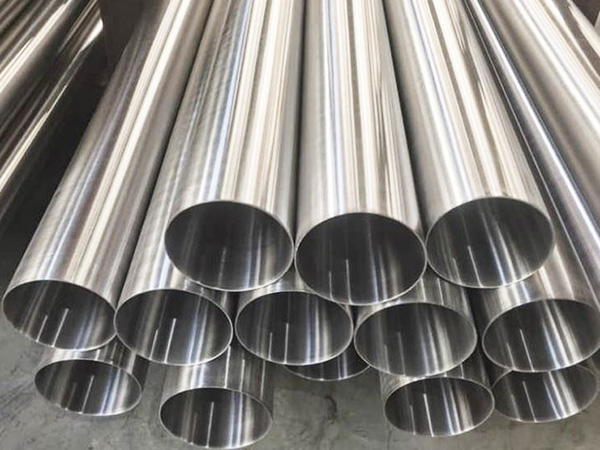
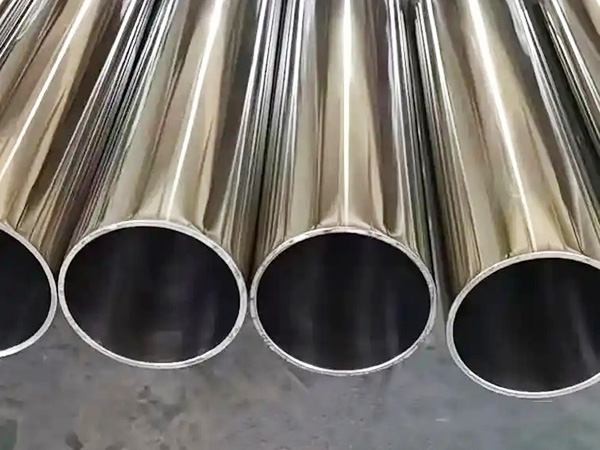
Grade 304: The General-Purpose Standard
ASTM A312 TP304 is the most widely specified stainless steel pipe grade for general industrial service. With nominally 18 percent chromium and 8 percent nickel (the "18-8" composition that defines the baseline austenitic stainless), Grade 304 provides good corrosion resistance in atmospheric conditions, fresh water, mild organic acids, and many food and beverage environments. Its excellent formability, weldability, and availability across a wide range of sizes make it the economical default for applications that do not require the enhanced corrosion resistance of higher-alloy grades.
Grade 304 serves food processing, dairy, pharmaceutical, and chemical applications where the service environment is moderately corrosive but does not involve chlorides or reducing acids. It performs well in atmospheric exposure, indoor plumbing, and low-stress corrosive environments. Its temperature capability extends to approximately 870°C for intermittent service and 925°C for continuous service, though prolonged exposure in the 425 to 900°C range can cause carbide precipitation at grain boundaries (sensitization) that reduces corrosion resistance in aggressive environments.
For applications requiring welded construction in thicker sections, the low-carbon variant TP304L should be specified. The L-grade, with maximum 0.030 percent carbon, minimizes carbide precipitation during welding, preserving corrosion resistance in the heat-affected zone. For most welded pipe applications, TP304L has become the de facto standard, replacing TP304 even when the original specification does not explicitly require the low-carbon variant.
Grade 316: When Chlorides Enter the Picture
The addition of 2 to 3 percent molybdenum distinguishes stainless steel pipe grades 316 from 304 and fundamentally changes the corrosion performance. Molybdenum enhances resistance to pitting and crevice corrosion in chloride-containing environments—seawater, brackish water, deicing salt exposure, and process streams containing chlorides. This single alloy addition expands stainless pipe's applicability into marine, coastal, and chloride-bearing process environments where Grade 304 would fail prematurely.
Grade 316 also provides better resistance to sulfuric acid, phosphoric acid, and other reducing acids than Grade 304. In chemical processing, pulp and paper, and pharmaceutical manufacturing where chlorides or reducing acids are present, Grade 316 is often the minimum acceptable grade. As with 304, the low-carbon variant TP316L should be specified for welded construction to prevent sensitization in the heat-affected zone.
The pitting resistance equivalent number (PREN)—calculated as %Cr + 3.3 × %Mo + 16 × %N—provides a quantitative comparison of chloride pitting resistance. TP304 has a PREN of approximately 18-20; TP316 of approximately 23-28. This numerical difference reflects the significant service performance improvement that the molybdenum addition provides in chloride environments.
Grade 321 and 347: Stabilized for High Temperature
For applications involving sustained elevated temperature service where sensitization would degrade TP304 or TP316, stabilized grades offer an alternative to the low-carbon L-grades. TP321 contains titanium, and TP347 contains niobium (columbium)—elements that preferentially combine with carbon, preventing chromium carbide formation at grain boundaries during high-temperature exposure. This stabilization preserves the grain boundary corrosion resistance that sensitization would otherwise compromise.
These stainless steel pipe grades serve applications in exhaust systems, heat exchangers, boiler and superheater tubing, and process piping operating continuously in the sensitization temperature range. TP321 is more commonly specified for general high-temperature service; TP347, with its stronger stabilization effect, serves the most demanding elevated-temperature applications where post-weld heat treatment is not feasible.
The stabilized grades have largely been replaced by the L-grades for many applications, since the low-carbon approach achieves similar corrosion resistance after welding at lower cost. However, for sustained high-temperature service where the material operates continuously in the sensitization range, the stabilized grades provide superior long-term performance because the stabilization effect persists throughout the service life, while the L-grade's low carbon content alone does not prevent sensitization during prolonged high-temperature exposure.
Duplex Grades: Combining Strength and Chloride Resistance
Duplex stainless steels—typically containing 21 to 26 percent chromium, 1 to 8 percent nickel, and 0.1 to 4 percent molybdenum—combine austenite and ferrite phases in roughly equal proportions. This mixed microstructure provides higher yield strength (typically 450 to 550 MPa versus 205 to 250 MPa for standard austenitic grades) and significantly improved resistance to chloride stress corrosion cracking—a failure mode that can affect austenitic grades in chloride environments under tensile stress at elevated temperatures.
Grade 2205 (UNS S32205/S31803) is the workhorse duplex grade, providing chloride pitting resistance significantly superior to TP316 (PREN approximately 34-38) with yield strength more than double the austenitic standard. This combination makes 2205 particularly effective in applications such as oil and gas flow lines, chemical processing equipment, desalination plant components, and marine structures where both chloride corrosion resistance and structural strength matter.
Super-duplex grades like 2507 (UNS S32750) extend chloride resistance further (PREN above 40), serving the most aggressive chloride environments in offshore oil and gas, subsea systems, and high-chloride process streams. The cost premium for super-duplex grades is significant—typically 2 to 3 times the cost of TP316—but the performance in extreme chloride environments justifies the investment where service life and failure consequences demand it.
Buyers should note that duplex grades require more careful welding procedures than austenitic grades. The phase balance between austenite and ferrite can shift during welding, potentially reducing corrosion resistance and toughness if the welding procedure does not properly control heat input and cooling rate. Welding procedure qualifications should specifically verify the phase balance in the weld metal and heat-affected zone.
Specification Framework: ASTM A312 and Related Standards
ASTM A312 is the primary specification for seamless and welded austenitic stainless steel pipe, covering TP304, TP304L, TP316, TP316L, TP321, TP347, and other standard austenitic grades. The specification establishes chemistry limits, mechanical property requirements, heat treatment conditions, and testing requirements. For welded pipe, A312 covers both ERW and autogenous (TIG/plasma) weld methods without filler metal for smaller sizes.
ASTM A358 covers electric fusion welded austenitic pipe for larger diameters where filler metal is required. ASTM A790 covers seamless and welded duplex stainless pipe. ASTM A409 covers welded pipe for corrosion-resistant high-temperature service. Buyers should specify the applicable ASTM specification, grade designation (including UNS number for precision), and any supplementary requirements that the application demands.
Grade Selection: Matching Material to Environment
Effective grade selection follows a systematic evaluation of service conditions:
Corrosion media — Identify the specific chemicals, concentrations, and temperatures that the pipe will contain. Atmospheric and fresh water service: TP304. Chloride-bearing or reducing acid service: TP316. Aggressive chloride service: 2205 or 2507.
Temperature range — Minimum and maximum sustained temperatures determine whether standard grades suffice or stabilized/duplex grades are necessary. Above 425°C for prolonged periods: TP321 or TP347. Below minus 196°C: TP304 or TP316 (austenitic grades retain toughness at cryogenic temperatures).
Chloride exposure — Even trace chlorides can initiate pitting in TP304. Evaluate all potential chloride sources: process media, cooling water, cleaning solutions, atmospheric deposition in coastal locations.
Stress conditions — Tensile stress combined with chlorides and elevated temperature creates chloride stress corrosion cracking risk in austenitic grades. Where this combination exists, duplex grades provide superior resistance.
Welding requirements — Specify L-grades for welded austenitic construction to prevent sensitization. For duplex welding, verify phase balance in welding procedure qualification.
Economic optimization — Balance material cost against required service life and failure consequences. Over-specification wastes budget; under-specification creates premature failure costs that dwarf the material savings.
Conclusion
Selecting stainless steel pipe grades requires translating service environment conditions into metallurgical requirements through structured engineering analysis. Grade 304 serves general-purpose applications in moderately corrosive environments. Grade 316 extends capability into chloride-bearing service through molybdenum addition. Stabilized grades 321 and 347 address sustained high-temperature service. Duplex grades 2205 and 2507 combine high strength with chloride stress corrosion cracking resistance for the most demanding environments.
The grade selection process should document the engineering basis—corrosion media analysis, temperature assessment, chloride evaluation, and stress analysis—that supports the chosen grade. This documentation protects against specification errors, supports design review, and provides the rationale for any future material substitution discussions. For projects requiring guidance on stainless steel grade selection, consulting with a manufacturer who understands the full grade range and can provide material certifications to ASTM specifications provides the technical and supply assurance that corrosion-resistant piping applications demand.
FAQ
Q: What is the difference between 304 and 316 stainless steel pipe?
A: The key difference is molybdenum content: 316 contains 2-3% molybdenum while 304 does not. This addition gives 316 significantly better resistance to chloride pitting and crevice corrosion, making it suitable for marine, coastal, and chloride-bearing process environments where 304 would fail. 316 also offers better resistance to reducing acids like sulfuric and phosphoric acid. For non-chloride service, 304 provides adequate performance at lower cost.
Q: When should I specify 316L instead of 316 for welded pipe?
A: Specify 316L for any welded construction to prevent sensitization—chromium carbide precipitation at grain boundaries during welding that reduces corrosion resistance in the heat-affected zone. The low-carbon variant (max 0.030% C) minimizes carbide formation, preserving corrosion resistance after welding. For most welded pipe applications, TP316L has become the de facto standard regardless of whether the specification explicitly requires it.
Q: What are duplex stainless steel grades and when are they preferred?
A: Duplex grades (2205, 2507) combine austenite and ferrite microstructures, providing yield strength approximately double the 300-series and superior resistance to chloride stress corrosion cracking. They are preferred for oil and gas flow lines, chemical processing with chlorides, desalination, and marine applications where both strength and chloride resistance matter. They require more careful welding procedures to maintain phase balance.
Q: Can stainless steel pipe be used at cryogenic temperatures?
A: Yes, austenitic grades (TP304, TP316) retain excellent toughness at cryogenic temperatures down to minus 196°C and below, making them suitable for liquid nitrogen, liquid oxygen, and LNG service. Duplex grades have a ductile-to-brittle transition and are generally not recommended below minus 50°C. Ferritic and martensitic grades are not suitable for cryogenic service.
Q: How do I calculate pitting resistance equivalent (PREN) for grade comparison?
A: PREN = %Cr + 3.3 × %Mo + 16 × %N. Typical values: TP304 ≈ 18-20, TP316 ≈ 23-28, 2205 ≈ 34-38, 2507 ≈ 42+. Higher PREN indicates better resistance to chloride pitting. Use actual chemistry from the Mill Test Report rather than nominal composition for accurate comparison. PREN provides a quantitative basis for grade comparison but does not replace service-environment-specific corrosion testing for critical applications.
References
ASTM International. (2024). ASTM A312/A312M-24: Standard Specification for Seamless, Welded, and Heavily Cold Worked Austenitic Stainless Steel Pipe. West Conshohocken, PA.
ASTM International. (2024). ASTM A790/A790M-24: Standard Specification for Seamless and Welded Duplex Stainless Steel Pipe. West Conshohocken, PA.
ASM International. (2023). ASM Specialty Handbook: Stainless Steels. Materials Park, OH.
Sedriks, A.J. (2023). Corrosion of Stainless Steels (2nd ed.). New York, NY: John Wiley & Sons.
ASTM International. (2024). ASTM A358/A358M-24: Standard Specification for Electric-Fusion-Welded Austenitic Chromium-Nickel Stainless Steel Pipe for High-Temperature Service and General Applications. West Conshohocken, PA.