

The petroleum industry operates some of the most demanding fluid containment systems in the world. From high-pressure wellhead piping to long-distance transmission pipelines crossing hundreds of kilometers, the tubular products carrying hydrocarbons must withstand internal pressure, external loads, temperature extremes, and corrosive media over service lives measured in decades. Seamless steel pipe for oil and gas applications provides the structural integrity that these conditions demand—manufactured without longitudinal welds, tested against industry-specific standards, and certified to specifications that have evolved through decades of operational experience. This guide walks through the technical landscape that procurement teams and engineers must navigate when specifying seamless pipe for petroleum applications.
Why Seamless Construction Dominates Oil and Gas Service
The preference for seamless construction in petroleum applications is not arbitrary—it reflects the failure consequences and operating conditions that welded alternatives struggle to match. A longitudinal weld seam introduces a metallurgical discontinuity: a heat-affected zone with potentially different mechanical properties than the parent material, a stress concentration that can initiate fatigue cracks under pressure cycling, and a potential defect location for manufacturing imperfections. Eliminating this seam through seamless manufacturing produces a homogeneous wall with uniform properties in all directions.
For high-pressure transmission pipelines operating at 1,000 to 2,200 PSI, the burst strength advantage of seamless construction—typically 15 to 25 percent higher than welded equivalents at the same dimensions—provides meaningful safety margin. For offshore and subsea installations where inspection access is limited and failure consequences are severe, the reliability advantage is even more critical. For sour gas service where hydrogen-induced cracking can initiate at weld seam imperfections, seamless construction removes a primary vulnerability.
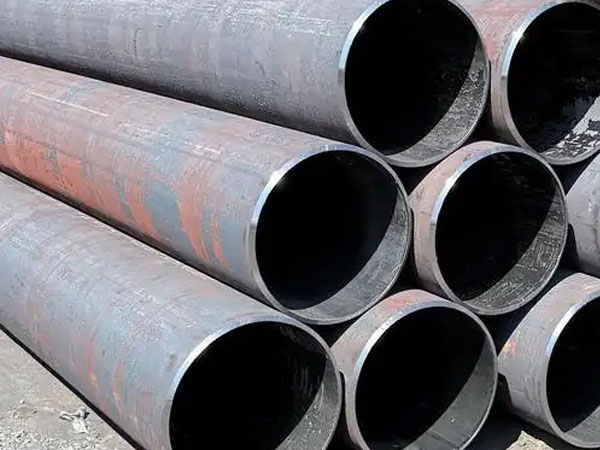
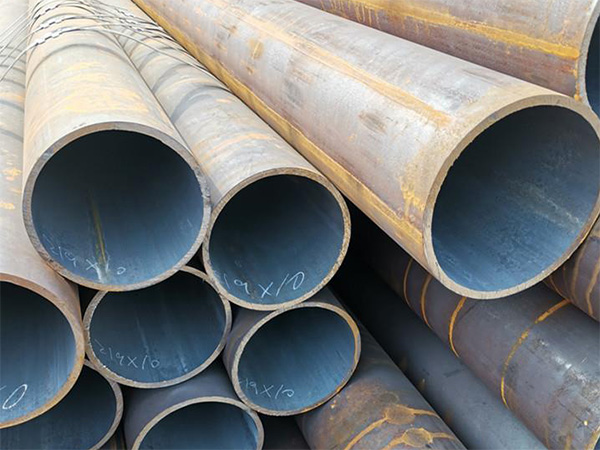
API 5L, published by the American Petroleum Institute, is the specification that governs line pipe used in pipeline transportation systems for petroleum and natural gas industries. The specification covers both seamless and welded pipe, establishing requirements for chemical composition, mechanical properties, dimensional tolerances, non-destructive examination, and documentation. Pipeline operators worldwide require API 5L compliance as a baseline acceptance criterion.
The specification divides line pipe into two Product Specification Levels. PSL 1 establishes minimum requirements covering basic chemistry, tensile properties, and hydrostatic testing. PSL 2 adds enhanced requirements: tighter chemistry limits, specified yield and tensile strength ranges rather than minimums only, mandatory Charpy impact testing, and additional examination requirements. For any application involving high pressure, low temperature, sour service, or demanding fracture toughness, PSL 2 specification is effectively mandatory.
Seamless steel pipe for oil and gas is produced in grades from API 5L Grade A (informally L175) through Grade X120 (L830). The numeric designation represents approximately the minimum yield strength in PSI multiplied by 1,000. Grade X52, with minimum yield of 52,000 PSI, serves conventional transmission applications. Grades X65 and X70 dominate large-diameter, high-pressure trunk lines where higher strength enables thinner walls and reduced material weight.
Upstream Applications: Wellhead and Gathering Systems
Upstream operations—from wellhead to processing facility—place diverse demands on tubular products. Flow lines transport produced fluids from the wellhead to separation and processing facilities, carrying mixtures of oil, gas, water, and sometimes corrosive contaminants like hydrogen sulfide and carbon dioxide. Design pressures vary from several hundred PSI for low-pressure wells to 5,000+ PSI for high-pressure, high-temperature reservoirs.
In conventional onshore production, API 5L X42 through X60 in NPS 2 through NPS 12 typically satisfies flow line requirements. For HPHT wells, PSL 2 grades in X65 or higher with sour service compliance may be necessary. The specific grade selection depends on reservoir pressure, fluid composition, temperature profile, and the corrosion management strategy that the field development plan establishes.
Casing and tubing for downhole applications, while produced to API 5CT rather than API 5L, share similar metallurgical principles. The seamless manufacturing discipline and quality assurance framework that characterizes line pipe production extends to downhole tubulars, reflecting the common requirement for reliable performance in aggressive wellbore environments.
Midstream: Long-Distance Transmission Pipelines
Midstream transmission pipelines represent the highest-volume application for seamless steel pipe for oil and gas. Crude oil, natural gas, and refined product pipelines spanning hundreds to thousands of kilometers operate at design pressures that require high-strength, defect-free pipe capable of sustaining continuous operation over multi-decade design lives.
For large-diameter transmission lines (NPS 16 through NPS 48), the economic balance between seamless and welded pipe shifts depending on diameter. Seamless production remains competitive through approximately NPS 16 to NPS 20; above those sizes, welded alternatives—particularly SAW pipe—become more economically attractive while still meeting API 5L requirements. The choice depends on project-specific factors including route terrain, pressure requirements, regulatory environment, and the fracture control plan that governs material toughness requirements.
Grade selection for transmission pipelines balances material cost against wall thickness savings. X52 through X65 covers the majority of conventional transmission applications. X70 and X80 have gained substantial adoption in high-pressure, large-diameter trunk lines where the strength premium enables thinner walls, reducing material weight, welding volume, and construction cost per kilometer. However, higher grades require more stringent welding procedures and stricter chemistry control to maintain adequate toughness and weldability.
Downstream: Refining and Petrochemical Applications
Downstream facilities—refineries, petrochemical plants, and gas processing installations—use seamless pipe across a wide range of process services. Feedstock lines, utility systems, and process piping must handle hydrocarbons at elevated temperatures and pressures, often combined with corrosive media like sulfur compounds, hydrogen, and chlorides.
In hydrocracker and delayed coker units, where temperatures exceed 400°C and hydrogen partial pressures create embrittlement risk, seamless steel pipe for oil and gas applications transitions to alloy grades per ASTM A335—P11, P22, P91—selected for their creep resistance and hydrogen attack resistance at sustained elevated temperatures. Carbon steel per ASTM A106 serves moderate-temperature utility and process services where its lower cost and adequate performance make it the economical default.
The specification complexity in downstream applications often exceeds that of pipeline projects. Process piping per ASME B31.3 involves detailed stress analysis, corrosion allowance calculations, and material verification requirements that pipeline codes do not address to the same depth. Procurement teams serving downstream projects must be prepared for more elaborate specification packages and more rigorous documentation requirements.
Sour Service: When H2S Changes Everything
Applications involving hydrogen sulfide (H2S) exposure require material controls that fundamentally change the specification landscape. NACE MR0175 and ISO 15156 define acceptable material configurations for H2S-containing petroleum and natural gas environments, addressing sulfide stress cracking, hydrogen-induced cracking, and stress-oriented hydrogen-induced cracking.
Sour service pipe must meet controlled hardness limits—typically maximum 22 HRC or 237 HB in the body—to minimize cracking susceptibility. Chemistry restrictions, heat treatment requirements, and specific acceptable grades are codified in these standards. Not all API 5L grades are acceptable for sour service; the supplier must demonstrate compliance through supplementary testing and documentation beyond standard API 5L requirements.
Buyers must communicate sour service requirements at inquiry stage, as these restrictions limit available grades and may require specialized mill sourcing. Material certified for sweet service but installed in sour environments creates catastrophic cracking risk that can develop within days or weeks of exposure—a failure mode that makes specification accuracy genuinely safety-critical.
Procurement and Verification
Effective procurement of seamless steel pipe for oil and gas requires systematic verification:
Confirm API 5L monogram license validity through the API directory
Specify complete requirements: grade, PSL, size, end preparation, coating, supplementary testing
Review Mill Test Reports against specifications upon receipt
Conduct positive material identification at receiving inspection
For sour service, verify NACE MR0175 compliance documentation
For PSL 2, confirm Charpy impact test results at the required temperature
Retain all documentation for pipeline integrity management records
Documentation integrity protects both procurement quality and long-term operational liability. Pipe installed without documented specification compliance creates regulatory exposure and insurance complications that far exceed any procurement savings from documentation shortcuts.
Conclusion
Specifying seamless steel pipe for oil and gas applications requires integrating engineering requirements, industry specifications, and supplier capability assessment into a coherent procurement process. The API 5L framework provides the quality foundation, PSL levels establish the performance tier, and supplementary requirements address application-specific demands from sour service to low-temperature operation.
B2B buyers who invest in complete specification development, qualify capable suppliers, and require comprehensive documentation consistently achieve reliable pipeline and facility installations. The cost of specification errors—delays, rework, field failures, safety incidents—dwarfs any procurement savings from specification shortcuts. For projects that demand reliable material supply, partnering with a manufacturer who understands petroleum industry requirements and can demonstrate documented quality systems provides the assurance that critical infrastructure demands.
FAQ
Q: When is PSL 2 required instead of PSL 1 for oil and gas pipe?
A: PSL 2 is effectively mandatory for sour gas service, low-temperature service below minus 30 degrees Celsius, high-pressure transmission above 1,440 PSI, offshore pipelines under combined static and dynamic loading, and any application where fracture control plans require documented toughness properties. PSL 2's tighter chemistry controls, mandatory impact testing, and strength range requirements provide the assurance that demanding applications need.
Q: What is the difference between API 5L X52 and X65 for pipeline applications?
A: X52 specifies minimum yield strength of 52,000 PSI while X65 specifies 65,000 PSI. Higher grades enable thinner walls for equivalent pressure ratings, reducing material weight and welding volume. Grade selection depends on design pressure, diameter, wall thickness optimization, and the fracture control plan requirements. Most conventional transmission pipelines use X52 through X65; X70 and X80 are used in large-diameter, high-pressure trunk lines.
Q: How does sour service change pipe material requirements?
A: Sour service requires compliance with NACE MR0175/ISO 15156, which restricts acceptable grades, chemistry, hardness (typically maximum 22 HRC), and heat treatment. Only certain API 5L grades are acceptable. The supplier must provide supplementary documentation demonstrating compliance. Specifying sour service at inquiry stage is essential because it limits available sources and may affect lead time.
Q: Can seamless pipe be used for all pipeline diameters?
A: Seamless pipe is commercially available through approximately NPS 16 to NPS 26 depending on the manufacturer. Above those sizes, welded alternatives—particularly SAW pipe—become more economically attractive while still meeting API 5L requirements. The choice between seamless and welded depends on diameter, project-specific requirements, and the operating conditions that influence the relative importance of seamless construction advantages.
Q: What documentation should accompany API 5L seamless pipe deliveries?
A: Mill Test Reports should reference API 5L specification and document heat chemistry, mechanical properties (yield, tensile, elongation), impact test results for PSL 2, hydrostatic test pressure and hold time, and NDT examination results—all traceable to heat numbers. The manufacturer's API 5L monogram license should be current and verifiable through the API directory.
References
American Petroleum Institute. (2024). API Spec 5L, 47th Edition: Specification for Line Pipe. Washington, DC.
NACE International. (2024). NACE MR0175/ISO 15156: Petroleum and Natural Gas Industries—Materials for Use in H2S-Containing Environments. Houston, TX.
American Society of Mechanical Engineers. (2022). ASME B31.8: Gas Transmission and Distribution Piping Systems. New York, NY.
American Society of Mechanical Engineers. (2023). ASME B31.4: Pipeline Transportation Systems for Liquids and Slurries. New York, NY.
Demofonti, G. & Mannucci, G. (2023). "Fracture Control in High-Pressure Gas Transmission Pipelines." International Journal of Pressure Vessels and Piping, 201, 104-118.