

Procuring cold drawn seamless tubes is not the same as buying commodity pipe. The applications that demand cold drawn precision—hydraulic cylinder barrels, instrumentation lines, bearing races, mechanical components—depend on tolerances measured in hundredths of a millimeter and surface finishes that directly affect seal life and system performance. When a cold drawn seamless tube supplier ships material that deviates from specification, the consequences cascade through fabrication, assembly, and field operation. This guide provides procurement professionals with a structured approach to evaluating suppliers against the criteria that actually determine whether delivered material performs as expected.
Why Supplier Selection Matters for Cold Drawn Tubing
Unlike standard hot-rolled pipe, where commercial tolerances and widely available alternatives provide margin for specification variance, cold drawn tubing serves applications with minimal tolerance for deviation. A hydraulic cylinder barrel with bore variation outside specification causes premature seal wear, leakage, and eventual cylinder failure. An instrumentation line with inconsistent wall thickness compromises pressure rating calculations and introduces measurement uncertainty.
The supplier's manufacturing capability, quality system maturity, and commercial reliability collectively determine whether the material arriving at your facility matches the specification on the purchase order. Selecting a supplier without systematic evaluation means accepting risk that may not become apparent until fabrication problems, field failures, or audit findings reveal the gap between promised and actual quality.
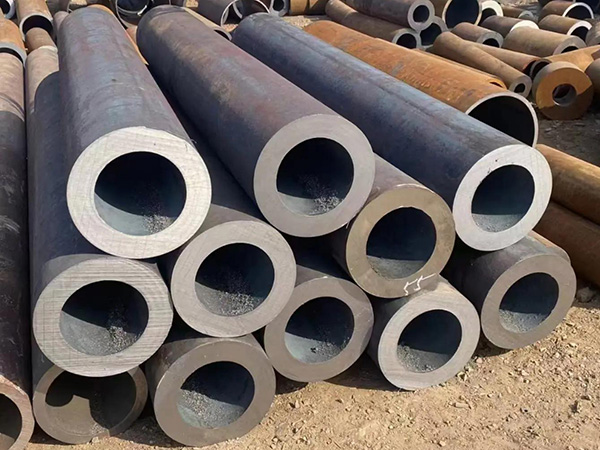
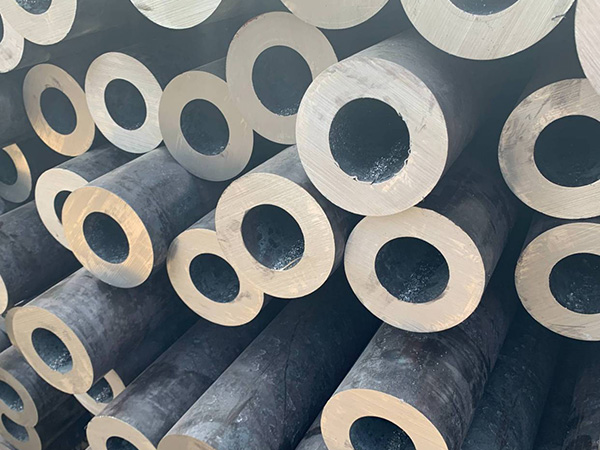
Technical Capability: What to Evaluate
Dimensional Precision and Tolerance Achievement
The defining capability of a cold drawn seamless tube supplier is consistent achievement of tight dimensional tolerances. Standard precision production typically holds outside diameter to plus or minus 0.05 to 0.10 millimeters, with wall thickness consistency of plus or minus three to five percent. These tolerances require more than capable drawing equipment—they demand calibrated measurement systems, statistical process control, and operators trained to identify and correct drift before it produces out-of-tolerance product.
When evaluating a supplier, request actual production data showing dimensional consistency across recent batches. A supplier who can produce SPC charts demonstrating stable, in-control processes provides better assurance than one who merely claims tolerance compliance. Review their measurement equipment calibration records and gauge R&R studies if available—these documents reveal whether the supplier's quality infrastructure actually supports the precision they claim.
Surface Finish Control
Cold drawn tube interior surface condition serves functional purposes that go beyond cosmetic appearance. Standard cold drawn production achieves Ra values of 0.8 to 1.6 micrometers. For hydraulic applications requiring smoother surfaces, honing operations bring bore Ra down to 0.05 to 0.2 micrometers. The supplier should be able to specify the surface finish they achieve, offer the finishing operations your application requires, and provide documentation confirming finished product meets stated Ra targets.
A supplier without surface finish measurement capability—or one who cannot articulate what surface finish their standard production provides—may lack the quality infrastructure that precision applications demand. Surface finish is not an afterthought; it is a functional requirement that affects seal life, contamination generation, flow characteristics, and component performance.
Heat Treatment and Annealing Infrastructure
Cold drawing work-hardens the steel with each pass, elevating yield strength but reducing ductility. Between drawing passes, the material must be annealed to restore formability for continued reduction. Final heat treatment establishes the finished product's mechanical properties—whether as-drawn for maximum strength, stress-relieved for moderate forming capability, or fully annealed for maximum ductility.
A supplier with in-house heat treatment capability provides better process control than one who outsources this critical step. Internal capability enables tighter parameter control, faster response to quality issues, and more complete traceability between heat treatment conditions and finished product properties. Ask whether the supplier operates their own annealing furnaces and whether cycle parameters are documented and traceable to specific production batches.
Quality System and Testing Infrastructure
Non-Destructive Testing Capability
For precision applications, internal defects and surface-breaking discontinuities can cause premature failure that surface inspection alone cannot detect. A capable supplier offers ultrasonic testing for internal and sub-surface defects, eddy current or magnetic particle inspection for surface-breaking flaws, and hydrostatic pressure testing for leak-tightness verification.
The testing scope matters. Full-body examination—testing the entire pipe surface rather than sampling at the ends—provides better assurance than statistical sampling alone. Discuss testing scope and acceptance criteria with the supplier before ordering to confirm that their standard practice meets your application requirements.
Documentation and Traceability
Mill Test Report quality reveals much about a supplier's operational discipline. MTRs should document actual heat chemistry rather than typical values, mechanical properties including yield, tensile, and elongation, heat treatment condition, and hydrostatic test results. Heat number traceability linking finished tube to specific melt records is essential for applications requiring full material traceability.
Review sample MTRs from the supplier before placing significant orders. Reports that omit critical parameters, provide only pass/fail conclusions without actual measured values, or lack heat number traceability suggest quality practices that may not support reliable specification compliance over time.
Commercial and Service Evaluation
Lead Time Reliability
Production lead times for cold drawn seamless tubes typically range from 4 to 8 weeks for standard sizes and grades, extending to 10 to 16 weeks for non-standard dimensions or special surface finishes. A supplier quoting lead times significantly shorter than industry norms may be quoting optimistically rather than realistically.
Discuss lead time contingencies before committing: what happens if production delays occur, how the supplier communicates schedule changes, and whether expedited production or partial shipments are possible. A supplier's responsiveness during inquiry and quotation often predicts their responsiveness when problems arise during production.
Technical Support and Specification Guidance
A supplier who provides knowledgeable technical contacts—engineers who understand metallurgy, applicable specifications, and how processing variables affect product characteristics—adds value beyond the transaction itself. During supplier evaluation, ask technical questions that test the depth of their knowledge: What condition would they recommend for a specific bending application? What tolerance can they consistently achieve on a specific size range? Their answers reveal whether the supplier has genuine technical expertise or merely processes orders.
Supplier Qualification Framework
Effective supplier qualification follows a structured process:
Review quality certifications: ISO 9001 minimum, with API or customer-specific certifications where applicable
Request production capability documentation: size ranges, tolerances, available conditions
Review sample Mill Test Reports for completeness and accuracy
Conduct reference checks with comparable customers in similar applications
Place a trial order for non-critical application before committing to significant volume
Track performance metrics: on-time delivery, specification compliance, documentation quality, problem resolution
Conduct periodic reviews—quarterly for active suppliers—to address issues before they escalate
This systematic approach costs time upfront but prevents the much larger costs of quality problems, delivery failures, or specification mismatches discovered after commitment to significant orders.
Conclusion
Selecting a cold drawn seamless tube supplier requires evaluating manufacturing capability, quality system maturity, testing infrastructure, and commercial reliability. The buyer who invests in systematic qualification before placing significant orders consistently achieves better outcomes than one who treats every procurement as a standalone transaction. The premium that precision tubing commands over commercial alternatives reflects the tighter process control and greater technical expertise that precision production demands. A supplier who has invested in these capabilities expects buyers to evaluate them on that basis—and buyers who conduct thorough qualification assessments find suppliers whose precision is real rather than merely claimed.
If you are evaluating suppliers for an upcoming project, consider discussing your specification requirements with a manufacturer who can demonstrate documented quality systems, in-house testing capability, and experience in comparable applications. The right supplier relationship pays dividends through consistent quality, reliable delivery, and collaborative problem resolution over years of partnership.
FAQ
Q: What tolerances should a capable cold drawn seamless tube supplier achieve?
A: Standard precision production typically holds outside diameter to plus or minus 0.05 to 0.10 millimeters and wall thickness to plus or minus three to five percent. Tighter tolerances may be available on negotiated orders. Request actual production SPC data rather than relying on claimed tolerance capabilities alone.
Q: What heat treatment condition should I specify for hydraulic cylinder applications?
A: Cold drawn and stress-relieved condition typically provides the best combination of strength and ductility for hydraulic cylinder barrels. This condition retains most of the work-hardened strength elevation while restoring enough ductility for subsequent honing and fabrication. Discuss specific operating conditions with the supplier to confirm the appropriate condition.
Q: How can I verify that a supplier actually holds the certifications they claim?
A: Request current certificates and verify independently through the issuing organization's public directories. ISO 9001 certificates can be verified through the registrar's website. For API specifications, check the API monogram license directory. Expired or lapsed certificates occasionally appear in marketing materials—independent verification protects against this risk.
Q: What testing should I require for cold drawn seamless tubes in pressure-critical applications?
A: Require full-body ultrasonic testing for internal defect detection, eddy current or magnetic particle inspection for surface-breaking flaws, and hydrostatic pressure testing for leak-tightness verification. For low-temperature or fracture-critical applications, add Charpy impact testing at the design temperature. All testing should be documented on Mill Test Reports with actual measured values.
Q: Should I source directly from a manufacturer or through a distributor?
A: For demanding precision applications, direct manufacturer sourcing typically provides better quality assurance, traceability, and technical support. For commodity sizes with standard specifications, distributors with inventory can provide faster availability. Many buyers use both models—manufacturers for critical requirements and distributors for urgent or low-volume needs.
References
ASTM International. (2024). ASTM A519/A519M-24: Standard Specification for Seamless Carbon and Alloy Steel Mechanical Tubing. West Conshohocken, PA.
DIN German Institute for Standardization. (2023). DIN 2391-1: Precision Seamless Steel Tubes—Technical Delivery Conditions. Berlin, Germany.
European Committee for Standardization. (2024). EN 10305-1:2024: Steel Tubes for Precision Applications—Technical Delivery Conditions. Brussels, Belgium.
Totten, G.E. (2024). Steel Heat Treatment: Metallurgy and Technologies (2nd ed.). Boca Raton, FL: CRC Press.
ASM International. (2023). Forming and Forging (Vol. 14). Materials Park, OH.