

Selecting the correct steel grade is the single most consequential decision in seamless pipe specification. The grade determines yield strength, temperature capability, toughness behavior, weldability, and corrosion resistance—the properties that dictate whether the pipe will safely contain its intended service over the design life. A grade mismatch, whether through over-specification that wastes budget or under-specification that creates safety risk, undermines the engineering basis that procurement depends upon. This guide walks through the seamless steel pipe grades that industrial applications most commonly require, explaining what each grade offers and how to match grade selection to actual service conditions.
Understanding Grade Designation Systems
Different specification systems use different conventions to communicate grade information. API 5L uses a letter-number system where L indicates line pipe and the number represents minimum yield strength in thousands of PSI—L245 (X42) indicates minimum yield of 245 MPa (approximately 35,000 PSI), L360 (X52) indicates 360 MPa, and so forth through L555 (X80). The X-designation, representing yield strength in thousands of PSI, remains in common industry usage despite API's transition to L-designations.
ASTM specifications use a different approach. ASTM A106 designates grades as A, B, and C—Grade A with the lowest carbon content and tensile requirements, Grade B as the industry workhorse with moderate carbon and 35,000 PSI minimum yield, and Grade C with higher carbon for elevated strength. ASTM A335 designates alloy grades as P-numbers (P5, P11, P22, P91) that correspond to specific chromium-molybdenum compositions with defined mechanical property ranges. ASTM A333 uses numbered grades (Grade 1 through Grade 11) that progressively extend low-temperature capability through increasing alloy content.
Understanding these designation systems is the first step in grade selection. The grade name communicates specific information about chemistry, mechanical properties, and intended service—but it does not communicate everything. The full specification, including condition (heat treatment state), PSL level, and supplementary requirements, defines what the buyer actually receives.
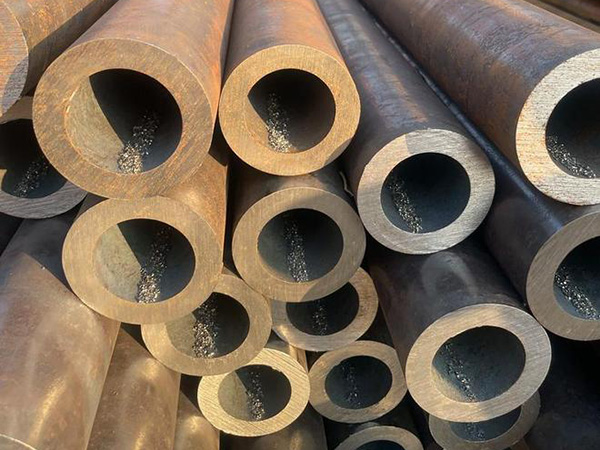
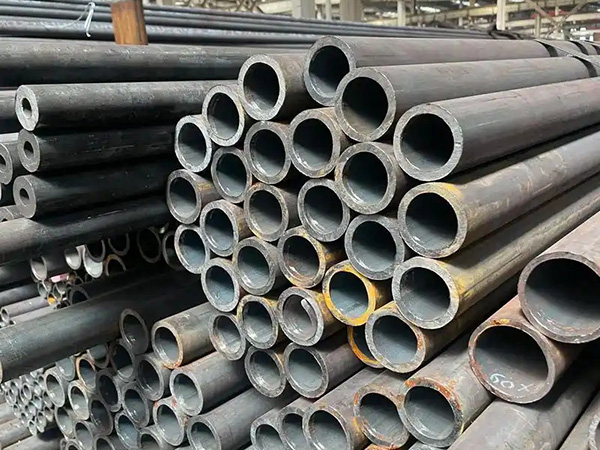
Carbon Steel Grades: The Workhorse Category
ASTM A106 for High-Temperature Service
ASTM A106 Grade B is the most widely specified seamless steel pipe grade for industrial process piping. With minimum yield strength of 35,000 PSI and minimum tensile of 60,000 PSI, it serves steam, water, and gas distribution systems operating from minus 20°F to approximately 750°F. Grade A offers lower carbon and tensile for applications requiring enhanced formability; Grade C provides higher strength with corresponding welding considerations.
A106 requires fine-grain practice in steelmaking, normalized heat treatment for heavier walls, and systematic mechanical testing. When these requirements are satisfied, the grade delivers reliable performance across the temperature range that most industrial process piping encounters. The specification's long history and widespread use mean that welding procedures, fitting availability, and engineering design data are well established—reducing specification risk and fabrication complexity.
API 5L Grades for Pipeline Applications
For pipeline transportation of oil and gas, API 5L grades provide a strength-based selection framework. Grade X42 through X52 serves low to moderate pressure transmission and gathering applications. X60 through X65 covers the majority of conventional long-distance transmission pipelines. X70 and X80 address high-pressure, large-diameter trunk lines where higher strength enables thinner walls and reduced material cost per kilometer.
Grade selection for pipeline applications follows design pressure calculations that balance material cost against wall thickness optimization. Higher grades permit thinner walls for equivalent pressure ratings—but they also require more rigorous welding procedures, tighter chemistry control, and more careful fracture control assessment. The optimal grade for a specific project depends on the intersection of pressure requirements, diameter, wall thickness economics, and the project's welding and construction capability.
Alloy Steel Grades: Extending the Temperature Envelope
When service temperatures exceed carbon steel's effective range—typically above 400°C where allowable stress begins significant derating—alloy grades per ASTM A335 extend the operational envelope. These chromium-molybdenum grades retain meaningful strength at temperatures where carbon steel has degraded substantially.
Seamless steel pipe grades in the alloy category follow a progression based on chromium content:
Grade P5 (5Cr-0.5Mo): Serves refinery and petrochemical applications to approximately 550°C, providing oxidation resistance and moderate creep strength for hot oil and gas service
Grade P11 (1.25Cr-0.5Mo): Offers an economical intermediate option for moderate elevated-temperature service, commonly used in steam and hot process lines
Grade P22 (2.25Cr-1Mo): Provides higher creep strength for sustained high-temperature service, widely used in boiler and superheater applications
Grade P91 (9Cr-1Mo-V,Nb): Delivers the highest creep strength in the common alloy family, serving modern power plant superheater and reheater piping operating at 600°C and above
Alloy grade selection depends on the specific temperature, pressure, and environment combination. Higher chromium content improves oxidation resistance as well as creep strength, making higher grades appropriate for both higher temperatures and more aggressive high-temperature environments. The cost premium for alloy grades over carbon steel—typically 40 to 120 percent depending on grade—reflects the alloy content, specialized heat treatment requirements, and more complex manufacturing process.
Low-Temperature Grades: ASTM A333
When service temperatures fall below minus 20°F, carbon steel becomes brittle—the microstructure loses ductility and Charpy impact values drop below acceptable thresholds. Seamless steel pipe grades per ASTM A333 address this through controlled chemistry and mandatory impact testing at specified temperatures.
Grade 6, the most widely used low-temperature grade, specifies killed steel with impact testing at minus 50°F. Grade 3 extends capability to minus 150°F through nickel addition. Grade 8 (9 percent nickel) serves cryogenic applications to minus 320°F. The grade selection follows directly from the minimum design temperature: specify the lowest grade whose certified impact temperature covers the application's minimum exposure condition.
Low-temperature grade selection requires attention to more than the base metal. Welding consumables and procedures must also maintain toughness at the design temperature, and post-weld heat treatment may be necessary to restore weld zone ductility. The engineering specification should address these fabrication requirements explicitly rather than leaving them to the fabricator's discretion.
Grade Selection Criteria: Matching Steel to Service
Effective grade selection follows a systematic evaluation of service conditions:
Design temperature range — minimum and maximum sustained temperatures determine whether carbon steel suffices or alloy/low-temperature grades are necessary
Design pressure — establishes minimum required yield strength and wall thickness calculation
Corrosion environment — identifies whether alloy additions are needed for resistance to specific media
Cyclic loading — fatigue-prone applications may require grades with higher toughness and more controlled chemistry
Welding requirements — higher carbon and alloy content demands more complex welding procedures
Code requirements — applicable piping codes may restrict acceptable grades for specific services
Economic optimization — higher grades reduce wall and weight but increase per-unit material cost
The selection process should document the engineering basis for each grade choice. This documentation protects against later questions during design review, construction inspection, or operational audit—and provides the rationale that supports any future material substitution requests.
Verification: Ensuring Delivered Material Matches the Specified Grade
Grade specification on the purchase order does not guarantee grade compliance on delivery. Verification requires reviewing Mill Test Reports that document actual chemistry and mechanical properties against the specified grade's requirements, conducting positive material identification at receiving inspection, and maintaining documentation that links each pipe length to its certified heat number.
For critical applications, consider third-party verification. Independent inspection agencies can witness testing at the manufacturer's facility, conduct PMI on delivered material, and review MTRs against specifications with engineering-level scrutiny. The cost of this verification—typically a small percentage of material value—protects against the much larger costs of installing non-conforming material in critical service.
Conclusion
Selecting seamless steel pipe grades requires translating service conditions into material requirements through a structured engineering process. Carbon steel grades serve the majority of industrial applications within their temperature and pressure envelope. Alloy grades extend capability into elevated-temperature service. Low-temperature grades address cryogenic and cold-climate applications. The correct grade is not the strongest or most expensive—it is the grade whose properties match the application's requirements with appropriate engineering margin and economic efficiency.
Engineers and procurement professionals who document their grade selection rationale, specify complete requirements, and verify delivered material against specifications consistently achieve reliable piping installations. The investment in specification discipline pays dividends through avoided rework, reliable long-term performance, and the engineering confidence that properly selected materials provide. For projects requiring expert guidance on grade selection, consulting with a manufacturer who understands the full range of seamless pipe specifications can help optimize the match between application requirements and material capability.
FAQ
Q: How do I determine which seamless steel pipe grade is right for my application?
A: Start with three parameters: minimum design temperature, maximum design temperature, and design pressure. These define whether carbon steel suffices or whether alloy or low-temperature grades are necessary. Then evaluate corrosion environment, cyclic loading, and applicable code requirements. Document the engineering basis for the selected grade so that design reviews and future modifications have a clear rationale to reference.
Q: What is the temperature limit for ASTM A106 Grade B seamless pipe?
A: ASTM A106 Grade B is suitable from approximately minus 20°F to about 750°F. Above 400°F, allowable stress values begin to decrease per ASME BPVC Section II tables, requiring thicker walls for equivalent pressure ratings. For sustained service above 500°C, alloy grades like ASTM A335 P11 or P22 provide better performance through superior creep resistance.
Q: When should I specify API 5L PSL 2 instead of PSL 1?
A: PSL 2 is appropriate for high-pressure transmission above 1,440 PSI, sour gas service, low-temperature service below minus 30°C, offshore pipelines, and any application where fracture control plans require documented toughness properties. PSL 2 provides tighter chemistry, mandatory impact testing, and specified strength ranges that PSL 1 does not require.
Q: Can I substitute a higher-grade pipe for a lower-grade specification?
A: Substitution requires engineering review and may not be acceptable without formal approval. Higher grades may have different weldability characteristics, different toughness behavior, and different code compliance status. The engineering basis of design should be updated to document the substitution rationale, and welding procedures must be re-qualified if the substitute grade has different chemistry or requires different preheat or post-weld heat treatment.
Q: What is the difference between ASTM A106 Grade B and API 5L Grade B?
A: While the grades share similar chemistry and mechanical property minimums, they are produced to different specifications with different testing requirements and intended applications. A106 is produced for high-temperature process piping per ASME B31.3; API 5L is produced for pipeline transportation per ASME B31.4 or B31.8. Confirm which specification the project requires before ordering, as they are not automatically interchangeable in all applications.
References
ASTM International. (2024). ASTM A106/A106M-24: Standard Specification for Seamless Carbon Steel Pipe for High-Temperature Service. West Conshohocken, PA.
American Petroleum Institute. (2024). API Spec 5L, 47th Edition: Specification for Line Pipe. Washington, DC.
ASTM International. (2024). ASTM A335/A335M-24: Standard Specification for Seamless Ferritic Alloy-Steel Pipe for High-Temperature Service. West Conshohocken, PA.
ASTM International. (2024). ASTM A333/A333M-24: Standard Specification for Seamless and Welded Steel Pipe for Low-Temperature Service. West Conshohocken, PA.
American Society of Mechanical Engineers. (2023). ASME BPVC Section II Part D: Materials Properties. New York, NY.