

Precision matters in industrial applications where tolerances determine whether a component fits, whether a seal holds, or whether a flow measurement reads accurately. For those situations, the manufacturing route matters enormously. Cold rolled seamless steel pipe delivers the combination of dimensional exactness, surface quality, and mechanical consistency that precision applications demand—characteristics that distinguish it from hot-rolled products in ways that procurement decision-makers must understand to specify correctly. This guide explains what cold rolling actually does, what it produces, and where industrial buyers put it to work.
Cold Rolling Versus Cold Drawing: Clarifying the Terms
Industry terminology sometimes creates confusion. "Cold rolled" and "cold drawn" both describe deformation below the steel's recrystallization temperature, but the mechanisms differ in practice. Cold drawing pulls tube through a stationary die—the material flows under tension, with dimensional control coming primarily from the die geometry. Cold rolling usesrotating rollers to reduce diameter and wall simultaneously, applying predominantly compressive forces that can achieve similar results with different tooling approaches.
In common procurement usage, the distinction often blurs. Many manufacturers offer products that combine both approaches—初步拉伸 followed by finishing passes that may involve rolling. The key characteristic that unites these processes is the temperature: all deformation occurs below the recrystallization threshold, which means the steel work-hardens with each pass. Multiple annealing stages between passes restore ductility to permit continued reduction without cracking.
For buyers, the practical implication is that either approach can deliver the precision tolerances and surface quality that precision applications require. What matters more than the specific tooling approach is whether the supplier can demonstrate the dimensional consistency and property reproducibility that the application demands.
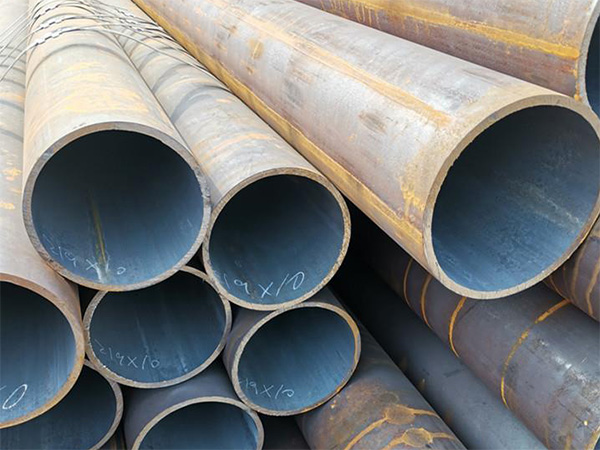
How Cold Rolling Transforms the Steel
The mechanical transformation that occurs during cold processing goes beyond simple dimensional change. As the steel deforms below its recrystallization temperature, its grain structure elongates in the direction of flow. This directional microstructure—called texture or preferred orientation—increases strength substantially in the working direction while reducing it perpendicular to the working direction. The magnitude of this effect scales with total reduction: heavier cold reductions produce more pronounced strengthening and more pronounced directional anisotropy.
Yield strength increases of thirty to sixty percent over the annealed parent condition are achievable through cold working alone, without any heat treatment or alloy addition. This work-hardening response provides a cost-effective path to elevated strength in carbon steel, reducing or eliminating the need for more expensive alloy grades in applications where the required strength falls within the range that cold work can deliver.
Between drawing or rolling passes, the material must be annealed to restore ductility for further deformation. A full anneal—heating above the critical temperature and cooling slowly—produces the softest, most ductile condition. An intermediate anneal at lower temperature may suffice between passes, restoring enough ductility for additional reductions without fully normalizing the microstructure. The specific annealing practice affects the final property balance and must be controlled to ensure consistent product across batches.
Dimensional Precision That Enables Engineering
The tolerances achievable through cold rolling represent a step change from hot-rolled production. Cold-processed seamless steel pipe manufacturer facilities targeting precision markets routinely hold outside diameter tolerances of plus or minus 0.05 to 0.10 millimeters on standard precision grades, with tighter tolerances available on special order. Wall thickness consistency of plus or minus three to five percent around the circumference and along the length is standard, compared to plus or minus ten to twelve percent for hot-rolled products.
This consistency enables engineering decisions that would be impractical with loose tolerances. A hydraulic cylinder designer can specify minimum acceptable wall with confidence that the as-delivered pipe will actually meet that minimum throughout the full length. An instrumentation engineer can specify bore dimensions that flow calculation assume without building excessive margin for tolerance uncertainty. These precision advantages translate to real cost and performance benefits when the application genuinely requires them.
Surface Quality for Functional Performance
The interior surface of properly produced cold-rolled seamless pipe is smooth, consistent, and free from the oxide scale that characterizes hot-rolled product. Standard Ra values between 0.8 and 1.6 micrometers represent routine production quality. Honed surfaces with Ra of 0.05 to 0.2 micrometers are achievable for hydraulic cylinder applications where seal life and contamination generation are critical concerns. Electropolished surfaces at Ra 0.05 to 0.1 micrometers serve pharmaceutical, food processing, and semiconductor applications where surface cleanliness determines product purity.
The functional importance of interior surface condition varies by application. In hydraulic systems, surface roughness directly influences seal wear rates, fluid contamination generation, and pressure drop across bends and fittings. In instrumentation, surface condition affects fouling tendency and sample representativeness. In sanitary service, surface finish influences cleanability and bacterial retention. Matching surface preparation to actual functional requirements prevents overspecification while ensuring adequate performance.
Material Grades in Cold Rolled Seamless Production
Carbon steel forms the backbone of cold-rolled seamless production, with standard grades including E235 and E355 per DIN standards, or ASTM A519 grades with specified yield strength ranges. The cold-working process elevates the as-received yield strength, so the supplier and buyer must agree on whether quoted strength refers to the finished cold-worked condition or the parent material before cold working. This distinction affects specification interpretation and acceptance testing.
Alloy steel grades—4140, 4130, and similar chromium-molybdenum compositions—also undergo cold finishing for applications requiring higher base strength, better hardenability, or superior fatigue resistance. The elevated strength from cold work combines with the inherent properties of these alloys to produce tubing suitable for demanding mechanical applications including hydraulic components, machine tool spindles, and aircraft structures.
Stainless steel cold-rolled seamless pipe in 304, 316, and related austenitic grades serves corrosion-resistant applications in chemical processing, pharmaceutical, food, and marine environments. The corrosion resistance of these grades complements the precision and surface quality that cold rolling provides, creating products suited to applications where both dimensional accuracy and environmental resistance are essential.
Industrial Applications That Depend on Cold Rolled Precision
Hydraulic and pneumatic power transmission represents the highest-volume precision application for cold-rolled seamless pipe. Cylinder barrels, distribution manifolds, and high-pressure piping manifolds require bores held to tight tolerances with smooth, consistent surfaces that maximize seal life and minimize contamination generation. The work-hardened strength of cold-rolled carbon steel often permits thinner walls than hot-rolled equivalents would require for the same pressure rating, reducing weight and material cost while maintaining safety margins.
Process instrumentation and analytical sampling systems rely on cold-rolled seamless tubing for pressure transmitters, sample conditioning systems, and analytical instrument connections. The dimensional consistency ensures proper fit-up of fittings and adapters, while the smooth interior surface prevents sample hang-up and contamination that would degrade measurement accuracy or system reliability.
Machine tool and mechanical engineering applications use cold-rolled seamless as bearing races, hydraulic manifold blocks, and structural precision components where the combination of strength, dimensional accuracy, and surface quality enables assembly without additional machining. The initial cost premium over hot-rolled alternatives often disappears when machining time and scrap reduction are factored into the total component cost.
Conclusion
Cold rolled seamless steel pipe fills a distinct role in the industrial tubular products landscape—delivering precision tolerances, work-hardened strength, and surface quality that hot-rolled alternatives cannot match at equivalent cost. For applications where those characteristics translate to genuine performance or fabrication advantages, cold-rolled seamless represents the correct choice despite its higher per-unit price. For applications where standard tolerances and surface quality suffice, insisting on cold-rolled precision merely adds cost without proportional benefit.
Procurement decision-makers who match product characteristics to actual application requirements—rather than defaulting to the most expensive or most precise option—consistently achieve better total cost outcomes. The cold-rolled seamless category earns its premium when the application actually needs what it delivers: tight dimensional control, smooth surfaces, and elevated strength in a pipe that installs and performs reliably over its design life.
Frequently Asked Questions
Q: What is the minimum wall thickness achievable in cold rolled seamless steel pipe?
A: Minimum achievable wall depends on diameter, material, and supplier capability, but cold-rolled products routinely achieve D/t ratios of 20:1 or higher. For very thin walls relative to diameter, specialty capillary tube manufacturing processes become more appropriate than standard cold-rolled production. Discuss specific requirements with suppliers to confirm feasibility and identify the most economical approach for the target dimensions.
Q: Does cold rolling weaken the steel's corrosion resistance?
A: Cold working does not inherently weaken corrosion resistance, but the work-hardened surface condition may differ from the annealed microstructure in localized corrosion susceptibility. For severely corrosive environments, consider ordering in a stress-relieved or fully annealed condition if the precision tolerances are achievable in that condition, or specify a corrosion-resistant alloy grade that maintains adequate corrosion resistance in the cold-worked state.
Q: How do I specify hardness requirements for cold rolled seamless pipe?
A: Specify hardness as a range—typically Rockwell B or equivalent Brinell—rather than a single value, acknowledging normal variation within material and between heats. Typical cold-rolled carbon steel hardness falls in the 75-85 HRB range, though specific values depend on grade and total reduction. The supplier's material specification should reference applicable ASTM or DIN hardness requirements and acceptance criteria.
Q: Can cold rolled seamless pipe be bent without cracking?
A: Yes, in the annealed condition cold-rolled seamless bends readily. Bending in the as-worked condition may require larger minimum radii to avoid cracking on the outer bend surface. For tight-radius bends, specify stress-relief annealing before bending or confirm minimum bend radius requirements with the supplier based on the specific wall thickness ratio and material grade.
Q: What straightness tolerances apply to cold rolled seamless pipe?
A: Precision cold-rolled seamless typically holds straightness within 1.0 millimeter per meter, compared to 3.0 millimeters per meter for standard hot-rolled production. For applications with exceptionally tight straightness requirements, specify the maximum deviation explicitly and confirm supplier capability to achieve and verify that tolerance before ordering.
References
ASTM International. (2024). ASTM A519/A519M-24: Standard Specification for Seamless Carbon and Alloy Steel Mechanical Tubing. West Conshohocken, PA.
DIN German Institute for Standardization. (2023). DIN 2391-1: Precision Seamless Steel Tubes—Technical Delivery Conditions. Berlin, Germany.
European Committee for Standardization. (2024). EN 10305-1:2024: Steel Tubes for Precision Applications—Technical Delivery Conditions. Brussels, Belgium.
Totten, G.E. (2024). Steel Heat Treatment: Metallurgy and Technologies (2nd ed.). Boca Raton, FL: CRC Press.
ASM International. (2023). Forming and Forging (Vol. 14). Materials Park, OH.