

Buyers frequently face a practical question when sourcing industrial tubular products: should the order go toward cold-drawn seamless or hot-rolled seamless? The answer rarely resolves to a simple preference—it depends on what the application actually demands. Both manufacturing routes produce genuinely seamless pipe, but the different thermal and mechanical conditions under which each is made create distinct property profiles, tolerance ranges, and cost structures. This comparison cuts through generic marketing language to examine the substantive differences that should drive specification decisions.
What Makes the Two Approaches Different
The distinction between cold drawn seamless steel pipe and hot-rolled seamless steel pipe comes down to when final dimensional reduction occurs relative to the steel's recrystallization temperature. Hot rolling finishes deformation above the recrystallization threshold, typically between 900 and 1,200 degrees Celsius. Cold drawing finishes deformation below that threshold, at room temperature or with minimal heating.
That single difference cascades into nearly every performance and quality characteristic. Working steel at elevated temperature allows large reductions in each pass because the material remains soft and ductile. But the finished pipe cools from high temperature, and its final properties reflect that cooling path. Cold drawing, by contrast, applies force to material that has already cooled, requiring more passes and more annealing stages to achieve equivalent reductions—but producing a wall with work-hardened microstructure and exceptional dimensional control.
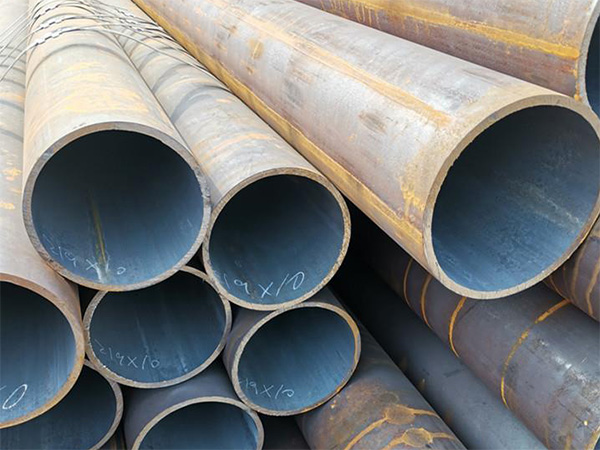
Precision and Dimensional Control
Cold-drawn seamless pipe achieves tolerances that hot-rolled products simply cannot match. Outside diameter tolerances of plus or minus 0.05 to 0.10 millimeters are routine in precision production, compared to plus or minus 0.25 to 0.75 millimeters for standard hot-rolled seamless. Wall thickness consistency follows the same pattern—cold-drawn products routinely hold plus or minus three to five percent variation across the circumference and along the length, versus plus or minus ten to twelve percent for hot-rolled equivalents.
This precision matters when the bore dimension controls flow, when clearance management determines fit-up quality, or when hydraulic sealing surfaces require consistent geometry. A manufacturer offering cold-drawn products typically targets applications where those tolerances translate to measurable performance or assembly advantages rather than merely theoretical specifications.
Surface Finish and Interior Quality
The interior surface of cold-drawn seamless pipe presents a consistently smooth bore that improves flow characteristics and reduces fouling tendency. Ra values between 0.8 and 1.6 micrometers represent standard production quality; specialty finishing can push that lower for hydraulic cylinder applications. Hot-rolled seamless interior surfaces typically run 3.2 micrometers Ra or rougher, with oxide scale from the high-temperature processing requiring removal before the pipe is suitable for precision applications.
For hydraulic and instrumentation applications where surface condition influences fluid behavior, contamination generation, or seal wear, the smoother interior of cold-drawn seamless is not merely a cosmetic advantage—it affects operational performance and component life in measurable ways.
Mechanical Properties After Processing
The work-hardening that occurs during cold drawing increases yield strength substantially compared to the annealed parent material. A tube that entered the drawing die at 35,000 PSI minimum yield may exit at 55,000 to 70,000 PSI—achieved purely through plastic deformation without heat treatment. This property elevation comes without the cost and complexity of alloy chemistry, making cold-drawn carbon steel competitive with hot-rolled alloy grades for some applications.
Hot-rolled seamless pipe achieves its mechanical properties through chemistry and heat treatment rather than work-hardening. The properties are more uniform through the wall section, which matters for applications where the pipe experiences pressure from the inside while also seeing external loads or thermal gradients. The seamless process—no weld seam, no heat-affected zone—provides consistent properties around the entire circumference in both product types.
Size Range and Practical Constraints
Hot-rolled seamless production dominates the larger diameter ranges. Commercial availability of cold-drawn seamless pipe typically caps around 60 to 75 millimeters outside diameter, though specialty manufacturers push further. Beyond those limits, cold drawing becomes impractical from both equipment and economic perspectives—the forces required to reduce very large diameters at room temperature exceed reasonable machine capacity.
For small to medium diameters where both manufacturing routes are technically feasible, the choice often comes down to whether the application requires the precision and work-hardened properties of the cold-drawn product or whether the more economical hot-rolled alternative provides adequate performance. Many industrial buyers use both product types for different product lines or service conditions within the same facility.
Cost Structure and Value Consideration
Cold-drawn seamless pipe carries a meaningful cost premium over hot-rolled equivalents—typically thirty to sixty percent higher per unit price for comparable diameter and wall combinations. That premium reflects the additional processing passes, the annealing operations between passes, the more precise tooling, and the slower production rates that cold drawing involves. The supplier must also maintain tighter quality control systems to hit the tolerances that customers ordering cold-drawn products expect.
The value case for cold-drawn seamless rests on what the application actually needs: tighter dimensional control that reduces machining allowance, smoother surfaces that improve hydraulic performance, higher strength that permits thinner walls, or the surface finish quality that instrumentation and sanitary applications require. When those requirements are real, the premium pays back through reduced fabrication cost, improved performance, or longer service intervals. When they are not, the premium is simply waste.
Selecting the Right Product for Your Application
Specification decisions should flow from documented application requirements rather than habit or generalization. A systematic approach examines each relevant parameter: design pressure and temperature, dimensional tolerance requirements, surface finish needs, mechanical loading beyond internal pressure, corrosion conditions, expected service life, and total consequence of failure. These factors collectively determine which manufacturing route provides the right balance of performance and cost.
Buyers who communicate their actual requirements to suppliers—rather than simply naming a product category—often receive specification suggestions that optimize the match between needs and offerings. A manufacturer who understands both product types can recommend the approach that serves the application most effectively, whether that turns out to be cold-drawn precision seamless or hot-rolled seamless from standard production.
Conclusion
The cold-drawn versus hot-rolled question has no universal answer because the right choice depends on what the pipe must do in service. Cold drawn seamless steel pipe delivers precision tolerances, work-hardened strength, and superior surface finish that serve demanding applications in hydraulic systems, instrumentation, and precision machinery. Hot rolled seamless steel pipe provides reliable performance for larger diameters, heavy wall sections, and applications where standard tolerances suffice at more accessible price points.
Industrial buyers who define their actual requirements clearly and discuss them with knowledgeable suppliers consistently find the optimal balance. The goal is not to prefer one manufacturing route over the other but to select the product that fits the application most economically while meeting every performance requirement that matters.
Frequently Asked Questions
Q: Does cold drawn seamless pipe always have higher strength than hot rolled seamless?
A: Yes, the work-hardening during cold drawing increases yield strength significantly—typically by 20 to 40 percent over annealed or normalized parent material. This elevated strength allows thinner walls for equivalent pressure ratings, or greater safety margins at equivalent wall. However, strength increases must be verified against applicable codes; design stress values in ASME B31.3 account for work-hardened properties in cold-drawn tubing.
Q: What is the largest diameter available in cold drawn seamless steel pipe?
A: Commercial cold-drawn seamless production typically extends to approximately 60 to 75 millimeters outside diameter in standard materials. Specialty manufacturers may produce larger sizes, but availability narrows and cost premiums grow substantially beyond the typical commercial range. For larger diameters, hot-rolled seamless or welded alternatives become the practical choices.
Q: Can cold drawn seamless pipe handle high pressure applications?
A: Yes—cold-drawn seamless pipe handles high pressure effectively, often better than hot-rolled alternatives at equivalent dimensions due to its work-hardened strength. Hydraulic systems operating at 3,000 to 5,000 PSI commonly specify cold-drawn seamless products specifically because the combination of precision bore control and elevated yield strength meets their requirements. The applicable pressure code calculations determine minimum required wall, and cold-drawn material often achieves those minimums with less wall than hot-rolled equivalents.
Q: What surface finish should I specify for hydraulic applications?
A>For hydraulic cylinder barrels and high-pressure hydraulic lines, specify honed interior surfaces with Ra values of 0.05 to 0.2 micrometers. Standard cold-drawn surfaces at Ra 0.8 to 1.6 micrometers suit lower-pressure hydraulic applications. Discuss the specific operating pressure, cycle frequency, and seal type with your supplier to confirm the appropriate finish level—over-specifying adds cost without proportional benefit in many hydraulic applications.
Q: Is cold drawn seamless pipe more expensive to weld during installation?
A: Not inherently. Both cold-drawn and hot-rolled seamless pipe weld using the same procedures and equipment. However, cold-drawn pipe in the as-drawn condition may require stress-relief annealing before or after welding to prevent distortion and ensure weld zone ductility, particularly for high-strength work-hardened grades. The fabricator should review welding procedure qualification requirements for the specific material and wall thickness involved.
References
ASTM International. (2024). ASTM A519/A519M-24: Standard Specification for Seamless Carbon and Alloy Steel Mechanical Tubing. West Conshohocken, PA.
DIN German Institute for Standardization. (2023). DIN 2391-1: Precision Seamless Steel Tubes—Technical Delivery Conditions. Berlin, Germany.
European Committee for Standardization. (2024). EN 10305-1:2024: Steel Tubes for Precision Applications—Technical Delivery Conditions. Brussels, Belgium.
ASM International. (2023). Forming and Forging (Vol. 14). Materials Park, OH.
Totten, G.E. (2024). Steel Heat Treatment: Metallurgy and Technologies (2nd ed.). Boca Raton, FL: CRC Press.