

The ASTM (now ASTM International) specification system provides the standardized quality framework that governs seamless steel pipe procurement across industrial applications worldwide. ASTM seamless steel pipe specifications—particularly A106, A53, and A333—form the reference language between buyers and manufacturers, establishing unambiguous requirements for chemistry, mechanical properties, testing, and certification that ensure consistent product quality regardless of source. This guide explains the key ASTM specifications, their applicable ranges, and the selection criteria that B2B procurement professionals need for confident material specification.
The ASTM Standardization Framework
ASTM International develops voluntary consensus standards through process involving manufacturers, users, researchers, and regulatory bodies. For seamless steel pipe, the A01 Committee on Steel, Stainless Steel, and Related Alloys manages specification development, maintenance, and revision through regular review cycles that incorporate technical advances and operational experience.
Each ASTM seamless pipe specification defines a complete product standard covering chemistry ranges, heat treatment requirements, mechanical property minimums, dimensional tolerances, examination protocols, and documentation requirements. Purchasing to an ASTM specification—rather than to vague performance requirements—eliminates ambiguity and provides legally defensible acceptance criteria if quality disputes arise.
ASTM specifications are regularly updated; the year designation in the specification number (e.g., ASTM A106-24) indicates the edition against which material was tested and certified. Projects typically specify a particular edition year; ordering against an outdated edition creates potential compliance gaps.
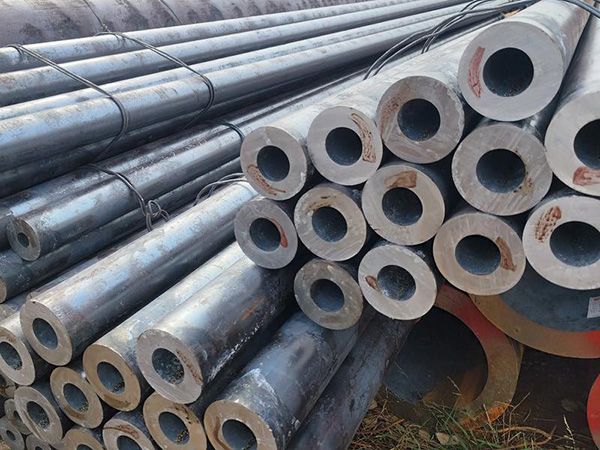
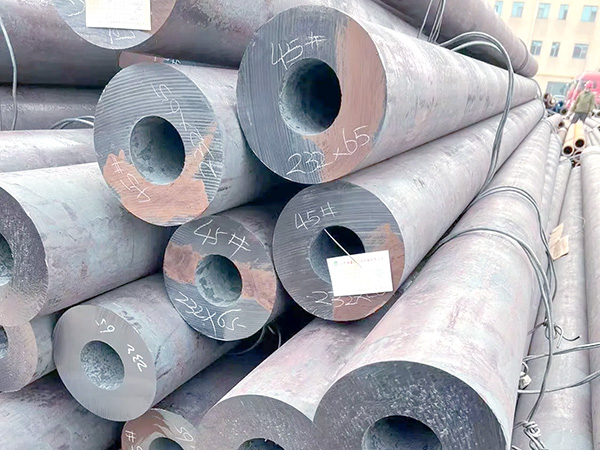
ASTM A106: High-Temperature Seamless Pipe
ASTM A106 is the definitive specification for seamless carbon steel pipe intended for high-temperature service. It covers nominal pipe sizes from NPS 1/8 through NPS 26 in four schedule categories—Standard (STD), Extra Strong (XS), Double Extra Strong (XXS), and specified wall thicknesses corresponding to Schedule 10 through Schedule 160. Grades include A106 Grade A (lower carbon, lower tensile), Grade B (the industry workhorse, moderate carbon), and Grade C (higher carbon, higher strength with corresponding fabrication limitations).
The specification's temperature range extends from -20°F to approximately 800°F for Grade B, making it suitable for steam, water, and gas distribution, process piping, and power plant utility systems across the temperature spectrum encountered in industrial facilities. Mechanical property requirements include minimum yield strength of 30,000-50,000 PSI and minimum tensile strength of 48,000-70,000 PSI depending on grade.
ASTM A106 requires fine-grain practice in steelmaking, normalized heat treatment for heavier walls, and systematic examination including tensile testing, flattening testing, and hydrostatic pressure testing. When these requirements are satisfied, ASTM seamless steel pipe per A106 delivers the reliable high-temperature performance that industrial piping systems depend upon.
ASTM A53: Standard Seamless and Welded Pipe
ASTM A53 covers seamless and welded black and hot-dipped zinc-coated steel pipe in three types—Type F (furnace-butt-welded), Type E (electric-resistance-welded) in both Grade A and Grade B, and Type S (seamless) in Grade A and Grade B. Only Type S addresses seamless products, which this guide focuses upon.
ASTM A53 Type S Grade B is frequently compared with ASTM A106 Grade B, and the two specifications share substantial overlap in chemistry, mechanical properties, and application range. Key distinctions include A53's broader size range (through NPS 26), more economical manufacturing route, and slightly wider chemistry tolerances that make it more cost-effective for non-critical service where A106's tighter specifications are not required.
A53 serves general-purpose fluid and gas transportation in mechanical and structural applications where pressure and temperature requirements fall within its rating envelope. Hot-dipped galvanizing per A53 provides atmospheric corrosion resistance for outdoor and underground service. The specification's combination of versatility and economy makes it one of the highest-volume steel pipe products in industrial procurement.
ASTM A333: Low-Temperature Seamless Pipe
ASTM A333 addresses the specialized requirements of low-temperature service, where carbon steel microstructure must retain adequate toughness to avoid brittle fracture under thermal shock or dynamic loading conditions. The specification covers nominal pipe sizes from NPS 1/8 through NPS 26, with nine grades providing graduated low-temperature capability down to -320°F depending on alloy content.
Grade 6—the most widely used grade—specifies killed steel with controlled chemistry and notch toughness requirements verified through Charpy impact testing at -50°F. Minimum average absorbed energy of 13.5 ft-lbf for standard sizes and 18 ft-lbf for small sizes provides documented toughness that design engineers rely upon for low-temperature process piping, cryogenic service, and cold-climate installations.
Higher grades (Grade 3, Grade 4, Grade 7, Grade 8, Grade 9, and Grade 11) provide specialized low-temperature capability through adjusted chemistry and heat treatment. Grade 8 achieves -150°F service; Grade 11 (alloy steel, 2.5% nickel) extends service to -320°F. Selecting the appropriate ASTM seamless steel pipe grade requires matching the specified minimum design temperature to the lowest grade certified for that temperature level.
Comparing ASTM A106, A53, and A333
The three specifications serve overlapping but distinct application domains:
ASTM A106 is specified when high-temperature service above approximately 400°F, fine-grain practice requirements, or specific project specification calling for A106 applies. A53 Type S provides equivalent performance for moderate-temperature service where A53's wider tolerances and lower cost offer procurement economy. A333 addresses the low-temperature end of the operating spectrum where impact-qualified material is mandatory.
Many projects specify multiple ASTM grades for different service sections—A333 for low-temperature process lines, A106 for high-temperature steam and hot oil, and A53 for utility and drain systems. This differentiated specification approach matches material capability to actual service conditions rather than over-specifying uniformly to the most demanding section.
Chemistry differences among the specifications are subtle but meaningful. A106 requires fine-grain killed steel with maximum carbon and manganese limits promoting weldability and toughness. A333 imposes additional restrictions for low-temperature grades, including specified nickel content for Grade 6 and alloy additions for specialized grades. These chemistry controls are the metallurgical foundation supporting the mechanical and toughness properties that each specification requires.
Heat Treatment Requirements
Heat treatment distinguishes seamless ASTM pipe performance across temperature ranges. A106 requires normalizing or full annealing for wall thicknesses exceeding specific thresholds, ensuring consistent microstructure through the wall section. These heat treatment requirements are not optional—they are essential to achieving the mechanical properties that the specification's tensile and yield requirements presuppose.
A333 imposes heat treatment requirements that increase with decreasing service temperature. Grade 6 requires normalized, normalized and tempered, or liquid-quenched and tempered condition depending on wall thickness. Higher grades with greater low-temperature capability require correspondingly more rigorous heat treatment to develop the fine, uniform microstructure that resists brittle fracture at cryogenic temperatures.
Bypass or inadequate heat treatment compromises mechanical properties and invalidates specification compliance. Mill Test Reports must document the specific heat treatment applied; accepting material with undocumented heat treatment exposes buyers to quality and liability risk disproportionate to any procurement cost advantage.
Procurement Specification Guidance
Effective ASTM seamless pipe procurement begins with complete specification development:
Identify the applicable ASTM specification and grade for each service condition
Confirm project codes and standards that mandate specific ASTM grades
Specify NPS, schedule or wall thickness, and length requirements precisely
Define end preparation (plain, beveled, or threaded) per ASME B16.25
Specify any supplementary requirements: additional NDT, impact testing beyond standard, or special inspection
Require Mill Test Reports per ASTM A530/A530M documenting chemistry, mechanics, and testing
Confirm heat number traceability from raw material through finished product
Specification completeness eliminates interpretation disputes and ensures delivered material meets the performance assumptions embedded in engineering design calculations. Ambiguous or incomplete specifications invite non-conforming material and costly rework.
Conclusion
The ASTM specification system provides ASTM seamless steel pipe buyers with standardized, universally recognized requirements that ensure consistent quality across manufacturers and geographies. A106 covers high-temperature carbon steel service; A53 serves general-purpose applications with procurement economy; A333 addresses low-temperature toughness requirements through controlled chemistry and mandatory impact testing.
Matching specification grade to service condition—rather than defaulting to the most demanding grade throughout—optimizes cost without compromising performance. Disciplined specification development, qualified supplier selection, and rigorous receiving inspection together constitute the quality assurance chain that reliable ASTM pipe procurement requires.
Frequently Asked Questions
Q: Can ASTM A53 Type S and ASTM A106 Grade B be used interchangeably?
A: They share substantial overlap and are often substitutable in moderate-temperature service, but they are not identical. A106 requires fine-grain practice, tighter chemistry controls, and more restrictive normalizing requirements for heavier walls. A106 is preferred for high-temperature steam and critical process piping; A53 is acceptable and more economical for general utility and lower-temperature service. Confirm substitution acceptability with project engineering before ordering.
Q: What is the lowest temperature that ASTM A333 covers?
A: ASTM A333 Grade 11 (2.5% nickel alloy) is certified for service to -320°F (-195°C), the lowest temperature in the A333 grade series. Grade 8 covers -150°F, Grade 6 covers -50°F, and Grades 3 and 4 provide intermediate ratings. For temperatures below -320°F, cryogenic austenitic stainless steel per ASTM A312 or aluminum alloys per ASTM B241 become appropriate alternatives.
Q: Does ASTM A106 require impact testing?
A: Standard ASTM A106 does not mandate Charpy impact testing. However, project specifications or applicable codes (such as ASME B31.3) may impose impact testing requirements for low-temperature service, cyclic loading, or severe operating conditions. When impact testing is specified, it must be negotiated with the manufacturer at order placement, as standard production may not incorporate impact testing unless specifically ordered.
Q: What heat treatment does ASTM A333 Grade 6 require?
A: ASTM A333 Grade 6 pipe must be heat treated by one of the following methods: normalized, normalized and tempered, or liquid-quenched and tempered. The applicable method depends on wall thickness—thicker walls require more rigorous heat treatment to achieve consistent through-wall microstructure. The specific heat treatment applied must be documented in Mill Test Reports as verification of specification compliance.
Q: What documentation should accompany ASTM seamless pipe deliveries?
A: ASTM A530/A530M governs documentation requirements, requiring Certificate of Compliance referencing the applicable ASTM specification and grade, along with Mill Test Reports documenting heat chemistry, tensile properties (yield, tensile, elongation), flattening test results, and hydrostatic test pressure and hold time. Heat number traceability throughout production enables linking finished product to specific heat and processing records.
References
ASTM International. (2024). ASTM A106/A106M-24: Standard Specification for Seamless Carbon Steel Pipe for High-Temperature Service. West Conshohocken, PA.
ASTM International. (2024). ASTM A53/A53M-24: Standard Specification for Pipe, Steel, Black and Hot-Dipped, Zinc-Coated, Welded and Seamless. West Conshohocken, PA.
ASTM International. (2024). ASTM A333/A333M-24: Standard Specification for Seamless and Welded Steel Pipe for Low-Temperature Service. West Conshohocken, PA.
American Society of Mechanical Engineers. (2023). ASME B31.3-2022: Process Piping. New York, NY.
ASTM International. (2024). ASTM A530/A530M-24: General Requirements for Specialized Carbon Steel and Alloy Steel Pipe. West Conshohocken, PA.