
Solenoid Valve
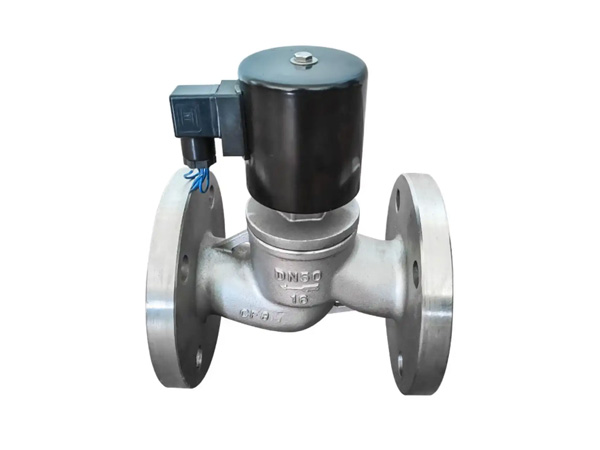
A solenoid valve is an electromechanical actuator that controls the on/off,direction,or distribution of fluids(liquid,gas,steam,etc.)via electrical signals,serving as a critical component in automated fluid systems. Core Structure Solenoid...
A solenoid valve is an electromechanical actuator that controls the on/off,direction,or distribution of fluids(liquid,gas,steam,etc.)via electrical signals,serving as a critical component in automated fluid systems.
Core Structure
Solenoid Coil:Generates a magnetic field when energized;available in AC/DC voltages(e.g.,24V DC,220V AC).
Plunger/Armature:Movable magnetic component actuated by the coil’s force.
Valve Body:Contains ports,flow passages,and valve seats;materials include brass,stainless steel,plastic.
Return Spring:Resets the plunger to the default position(normally closed/NC or normally open/NO)when de-energized.
Seals:Elastomer/PTFE components ensuring leak-proof operation.
Working Principle
When the coil is energized,a magnetic field pulls the plunger,lifting it off the valve seat to open the passage.De-energized,the spring pushes the plunger back to seal the seat,stopping flow.Most industrial valves are NC(closed at rest);NO valves open at rest.
Main Types by Actuation
Direct-Acting:Electromagnetic force directly moves the main valve core,no pressure assistance needed.Suitable for low pressure/vacuum,small orifices;fast response.
Pilot-Operated:Electromagnet controls a small pilot valve,using fluid pressure difference to drive the main valve.For high pressure,large diameters;lower power consumption,but requires minimum pressure differential to work.
Semi-Direct/Assisted-Lift:Combines direct and pilot modes;can start at zero pressure and handle high pressure,with broader application scope.
Common Port Configurations
2/2 Way:Simple on/off for one flow path.
3/2 Way:Commonly used for single-acting cylinder reversal in pneumatic systems.
4/2,5/2,5/3 Way:For more complex directional control in automation lines.