

Control Valve
A control valve is a critical final control element in industrial automation systems,designed to regulate fluid flow,pressure,temperature,and liquid level by adjusting the size of the flow passage according to signals from a controller.It p...
A control valve is a critical final control element in industrial automation systems,designed to regulate fluid flow,pressure,temperature,and liquid level by adjusting the size of the flow passage according to signals from a controller.It plays an indispensable role in modern industrial production,ensuring stable,safe,and efficient operation of various process loops across multiple sectors.Unlike ordinary on-off valves,control valves can achieve precise modulating control,positioning themselves at any point between fully open and fully closed to meet dynamic process requirements.
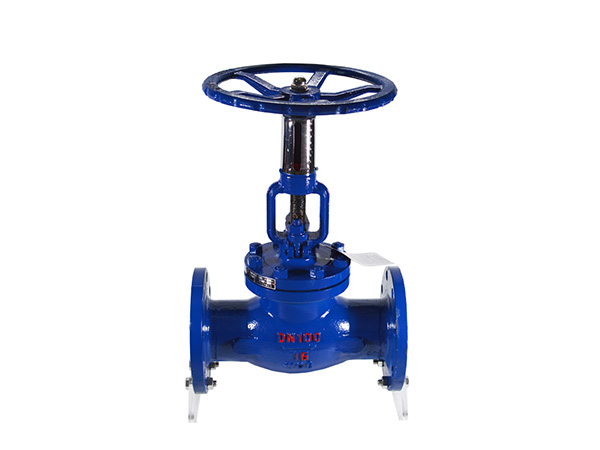
The basic structure of a control valve consists of three core components:valve body,actuator,and valve positioner.The valve body,which contains the modulating element such as a plug,ball,or butterfly,is the main part that controls fluid flow.The actuator converts electrical,pneumatic,or hydraulic signals into mechanical force to drive the valve’s movement,with pneumatic actuators being most commonly used for their simplicity and cost-effectiveness,while electric actuators are preferred for accurate positioning and remote control.The positioner ensures the valve reaches and maintains the desired opening degree,overcoming friction and wear to improve control accuracy.
Control valves are classified into various types based on different criteria.By actuation method,they are divided into pneumatic,electric,and hydraulic control valves.By structure,common types include globe valves,ball valves,butterfly valves,and diaphragm valves,each suited for specific scenarios:globe valves offer precise throttling for general applications,butterfly valves are ideal for large-diameter pipelines,and diaphragm valves are corrosion-resistant for hygienic industries like pharmaceuticals.By flow characteristics,they can be linear,equal percentage,or quick-opening,matching different process control needs.
The working principle of a control valve is straightforward:the controller measures process parameters(e.g.,pressure,temperature)and sends a signal(typically 4-20 mA electrical or 3-15 psi pneumatic)to the actuator.The actuator then adjusts the valve’s opening,changing the flow resistance and thus regulating fluid flow to maintain the set parameter value.This dynamic adjustment cycle enables automatic control of industrial processes,preventing overpressure,overheating,or other potential failures.
Widely applied in oil&gas,chemical,power generation,water treatment,and pharmaceutical industries,control valves are the"guardians"of process control.Their performance directly affects the stability and efficiency of production systems.With the development of smart technology,modern control valves are equipped with intelligent positioners and communication protocols(e.g.,HART,Profibus),enabling real-time monitoring and remote diagnosis,further enhancing their reliability and adaptability in complex industrial environments.