

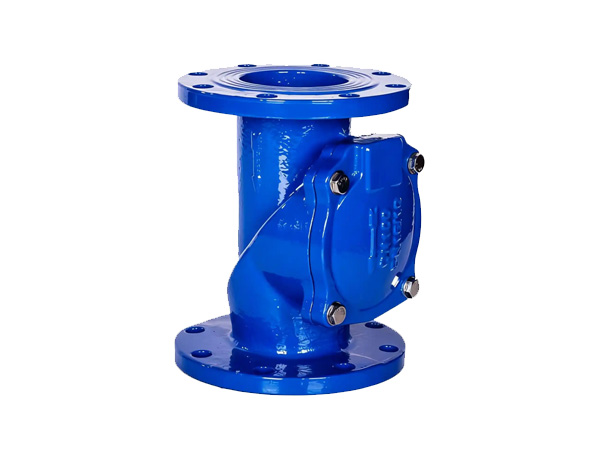
Check Valve
A check valve,also referred to as a non-return valve or one-way valve,is an automatic,control-free mechanical component engineered to permit fluid(liquid or gas)flow in a single predetermined direction while blocking reverse flow instantly....
A check valve,also referred to as a non-return valve or one-way valve,is an automatic,control-free mechanical component engineered to permit fluid(liquid or gas)flow in a single predetermined direction while blocking reverse flow instantly.It operates solely on line pressure differentials,gravity,or spring force,requiring no manual operation,electric signals,or pneumatic controls,making it a reliable and cost-effective safeguard in countless piping systems.
The core working principle relies on the concept of cracking pressure—the minimum upstream pressure needed to unseat the valve’s internal component,such as a disc,ball,or flap.When forward fluid pressure exceeds this threshold,the component moves away from its seat,allowing unobstructed flow.If flow stops or reverses,backpressure,gravity,or spring tension forces the component tightly against the seat,creating an impenetrable seal to prevent backflow,equipment damage,contamination,and water hammer.
Several standard check valve designs serve distinct industrial needs.Swing check valves feature a hinged disc that swings open under forward flow,ideal for large-diameter pipelines in water treatment and oil&gas due to low pressure drop.Lift check valves use a vertically moving piston or disc,offering exceptional sealing for high-pressure steam and clean fluid systems.Ball check valves utilize a spherical ball,perfect for low-flow,viscous fluids or systems with minor particulates.Dual-plate wafer check valves combine compactness with rapid closure,suitable for space-constrained HVAC and process plants.
Materials are selected based on fluid compatibility,temperature,and pressure.Common body materials include cast iron,carbon steel,stainless steel,and exotic alloys for corrosive chemicals,while seals use EPDM,PTFE,or metal-to-metal contact for extreme conditions.Industry standards such as API 6D,BS 1868,and ASME B16.34 ensure design,manufacturing,and performance consistency.
Check valves are omnipresent across industries.In water and wastewater systems,they protect pumps from reverse rotation during shutdown.In the oil and gas sector,they secure pipelines and compressors from hazardous backflow.They are critical in chemical processing to avoid cross-contamination,in power plants to regulate steam and condensate,and even in residential plumbing and automotive fuel lines.
Proper sizing,installation orientation,and selection of cracking pressure are vital to avoid issues like chatter,incomplete closure,or excessive pressure drop.With their simple design,minimal maintenance requirements,and unmatched ability to enhance system safety and efficiency,check valves remain an indispensable cornerstone of modern fluid control infrastructure.