

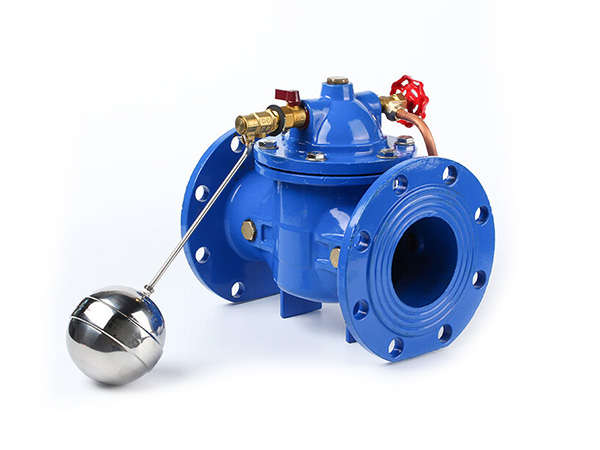
Ball Valve
A ball valve is a quarter‑turn rotary valve that uses a hollow,perforated,pivoting ball to control the flow of liquids,gases,and semi‑solid media.It is one of the most widely used valve types in industrial,commercial,and residential flu...
A ball valve is a quarter‑turn rotary valve that uses a hollow,perforated,pivoting ball to control the flow of liquids,gases,and semi‑solid media.It is one of the most widely used valve types in industrial,commercial,and residential fluid systems due to its simple structure,reliable sealing,fast operation,and long service life.By rotating the ball 90 degrees,the valve can fully open or close the flow path,making it ideal for on‑off service rather than precise throttling control.
The basic working principle is straightforward.Inside the valve body,a spherical ball with a central bore is mounted between two seats.When the valve handle or actuator aligns the bore with the pipeline,fluid passes freely.When rotated perpendicular to the flow direction,the solid side of the ball blocks the passage,creating a tight seal to stop flow completely.This quarter‑turn mechanism allows for quick operation,reducing the time required to start or shut down a system.
Ball valves are available in several common designs to suit different pressure,temperature,and installation requirements.Full‑port ball valves feature a bore diameter equal to the pipeline,minimizing flow resistance and pressure loss,making them suitable for high‑flow and clean media applications.Reduced‑port valves have a smaller bore,offering a more compact and economical solution for general‑purpose systems.Trunnion‑mounted ball valves are designed for high‑pressure and large‑diameter pipelines,with additional support to prevent ball deformation under extreme conditions.Floating ball valves,by contrast,are lightweight and cost‑effective,widely used in medium‑pressure piping systems.
Materials are carefully selected based on the operating environment and medium compatibility.Valve bodies are commonly manufactured from brass,cast iron,carbon steel,stainless steel,and PVC.The ball and seats are typically made of stainless steel,brass,PTFE,RPTFE,or other reinforced polymers to ensure tight sealing and resistance to wear,corrosion,and high temperatures.This material versatility allows ball valves to perform reliably in water supply,oil and gas,chemical processing,power generation,HVAC,and marine applications.
Compared with other valve types,ball valves offer distinct advantages.They provide excellent bubble‑tight sealing,low torque operation,and resistance to water hammer and vibration.They are also less prone to clogging,even in systems with suspended particles or viscous fluids.Maintenance requirements are minimal due to their simple internal structure,and many models support inline repair without full removal from the pipeline.
Proper selection depends on pressure class,temperature range,pipe size,connection type(flanged,threaded,welded,or socket),and medium characteristics.Incorrect selection may lead to premature wear,leakage,or restricted flow.With their strong adaptability,stable performance,and cost efficiency,ball valves have become essential components in modern fluid control systems,ensuring safe,efficient,and dependable operation across countless industrial and daily utility applications.