

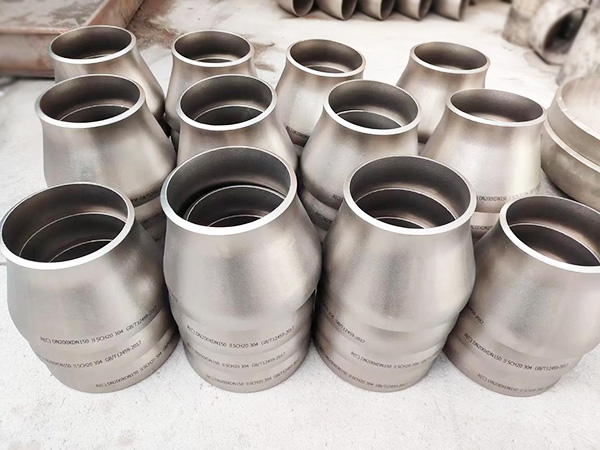
Pipe Fitting Reducer
A pipe fitting reducer is an essential component in piping systems,specifically designed to connect two sections of pipes with different nominal diameters,enabling a smooth and efficient transition between larger and smaller pipe sizes.Unli...
A pipe fitting reducer is an essential component in piping systems,specifically designed to connect two sections of pipes with different nominal diameters,enabling a smooth and efficient transition between larger and smaller pipe sizes.Unlike reducing pipes,which are integral pipe sections with diameter changes,pipe fitting reducers are standalone fittings that offer flexibility in installation and maintenance,making them widely used in various industrial,commercial,and residential applications.Their primary function is to adjust the flow rate,reduce pressure drop,and ensure compatibility between different pipe components,while minimizing turbulence and fluid resistance in the system.
Pipe fitting reducers are categorized into two main types based on their structural design:concentric reducers and eccentric reducers,each tailored to specific installation requirements and fluid characteristics.Concentric reducers feature a symmetrical,tapered design where the centerlines of the two ends are perfectly aligned.This design ensures uniform fluid flow,minimizes pressure loss,and is ideal for vertical piping systems,gas pipelines,and applications where flow balance is a priority.The smooth,symmetrical transition of concentric reducers also makes them suitable for systems handling gases,steam,and clean liquids,as they prevent fluid stagnation and reduce the risk of corrosion.
Eccentric reducers,on the other hand,have offset centerlines,with one side of the fitting remaining flat(parallel)to the pipe wall.This unique design is specifically engineered to prevent the formation of air pockets or liquid accumulation in horizontal pipelines,which can cause cavitation,corrosion,or blockages.Eccentric reducers are commonly used in horizontal liquid pipelines,such as those carrying water,oil,or chemicals,where removing air or vapor pockets is critical to maintaining system efficiency and longevity.They are also preferred in applications where the fitting needs to align with other pipe components or equipment,such as pumps,valves,or tanks.
The selection of materials for pipe fitting reducers depends on several factors,including the type of fluid being transported,operating pressure and temperature,and environmental conditions.Common materials include carbon steel,stainless steel,alloy steel,PVC,CPVC,copper,and ductile iron.Carbon steel reducers are widely used in industrial applications due to their durability and cost-effectiveness,while stainless steel reducers are preferred for corrosive environments,such as chemical processing or marine applications.Plastic reducers,such as PVC and CPVC,are suitable for low-pressure,low-temperature systems,including residential plumbing and water treatment facilities.
Pipe fitting reducers play a vital role in a wide range of industries,including oil and gas,petrochemical,water supply and drainage,power generation,HVAC,fire protection,and food and beverage processing.In oil and gas pipelines,they are used to connect different pipe sections in wellheads,refineries,and transmission lines.In water treatment plants,they help adjust pipe sizes to match pumps and filters,ensuring efficient water flow.In HVAC systems,reducers connect ductwork and piping,optimizing airflow and fluid circulation.
Proper installation of pipe fitting reducers is crucial to ensure system integrity and performance.They should be installed with the correct orientation—concentric reducers in vertical lines and eccentric reducers in horizontal lines with the flat side facing up for liquid systems to prevent air pockets.Additionally,proper sealing and alignment are essential to avoid leaks,which can lead to system failure or safety hazards.Regular inspection and maintenance of reducers are also recommended to check for corrosion,wear,or damage,ensuring long-term reliability and efficiency.