

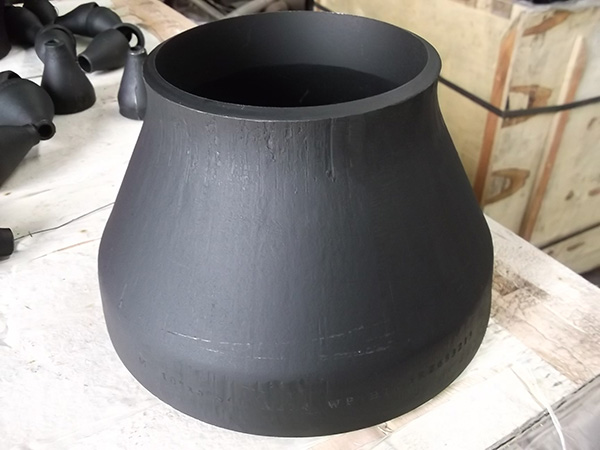
Carbon Steel Reducer
A carbon steel reducer is a widely used pipe fitting designed to connect pipelines of different diameters, manufactured primarily from carbon steel materials such as ASTM A234 WPB, Q235, 20#, and 16Mn. It is typically produced through seaml...
A carbon steel reducer is a widely used pipe fitting designed to connect pipelines of different diameters, manufactured primarily from carbon steel materials such as ASTM A234 WPB, Q235, 20#, and 16Mn. It is typically produced through seamless hot forming, cold pressing, or butt-welding processes, and is classified into concentric reducers and eccentric reducers to meet different pipeline layout requirements.
Carbon steel reducers are favored in industrial piping systems for their high strength, good toughness, excellent weldability, and cost-effective performance. They can withstand medium pressure, high pressure, and moderate temperature conditions, making them suitable for conveying water, oil, gas, steam, and various non-corrosive industrial media. The uniform wall thickness and stable mechanical properties ensure reliable operation under long-term working stress, thermal expansion and contraction, and fluid impact.
Manufactured in strict compliance with international standards including ASME B16.9, DIN 2605, EN 10253, and GB/T 12459, carbon steel reducers feature precise dimensions, smooth transition surfaces, and minimal fluid resistance. The concentric type is commonly used in vertical pipelines and gas systems to maintain centered flow and reduce pressure loss, while the eccentric type is applied in horizontal liquid pipelines to prevent air accumulation and ensure stable fluid delivery.
With easy installation, strong pressure-bearing capacity, and long service life, carbon steel reducers are extensively applied in petroleum refining, natural gas transmission, power generation, chemical engineering, municipal engineering, shipbuilding, and general industrial pipelines. They provide safe, efficient, and economical diameter-changing connections, supporting the stable operation of various piping systems and serving as one of the most essential pipe fittings in modern industrial construction.