

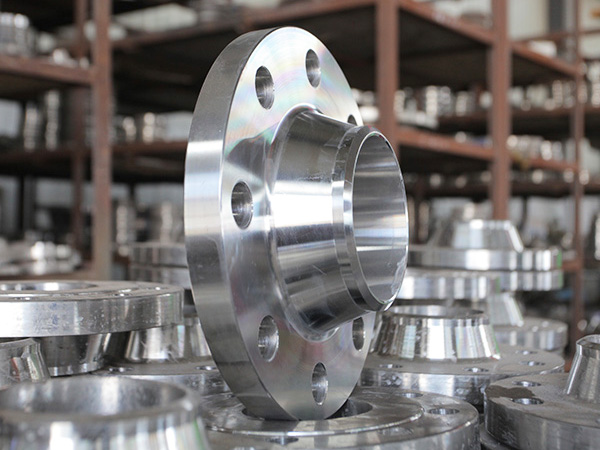
Pipe Flange
A pipe flange is a key mechanical component specially designed for connecting pipes, valves, pressure vessels, pumps, and other equipment in piping systems. It is usually a disc‑shaped part with evenly distributed bolt holes around it. Wh...
A pipe flange is a key mechanical component specially designed for connecting pipes, valves, pressure vessels, pumps, and other equipment in piping systems. It is usually a disc‑shaped part with evenly distributed bolt holes around it. When paired with gaskets and bolts, it forms a detachable and highly sealed connection, making pipeline installation, maintenance, and replacement more convenient and efficient.
Pipe flanges are produced in various standard structural types to adapt to different working conditions, including weld neck flanges, slip‑on flanges, blind flanges, socket weld flanges, lap joint flanges, and threaded flanges. They are commonly made from carbon steel, stainless steel, alloy steel, and other materials, and manufactured in strict accordance with international standards such as ASME B16.5, ASME B16.47, DIN, JIS, EN, and GB/T 9119. This ensures stable pressure resistance, accurate dimensions, and reliable matching with pipes of different specifications.
In terms of performance, pipe flanges feature strong pressure bearing capacity, excellent sealing performance, and high structural rigidity. Properly matched gaskets, such as spiral wound gaskets, non‑metallic flat gaskets, and metal ring gaskets, further improve sealing reliability under high temperature, high pressure, or corrosive media. Weld neck flanges are widely used in harsh conditions such as petrochemical and power plants, while slip‑on and threaded flanges are more suitable for medium‑ and low‑pressure pipelines due to their easy installation and cost‑effectiveness.
Blind pipe flanges are mainly used to seal pipe ends for pressure testing and system shutdown. With their strong versatility and easy maintenance, pipe flanges are widely applied in oil and gas transmission, chemical engineering, electric power, metallurgy, shipbuilding, municipal water supply, and industrial process pipelines. They provide safe, stable, and flexible connections, and have become one of the most essential and commonly used components in modern industrial piping systems.