

Most industrial buyers have experienced the gap between what a carbon steel seamless pipe supplier promises and what they actually deliver. The specification looks right on paper, the price looks competitive, and then the material arrives with documentation problems, dimensional deviations, or delivery delays that throw project schedules off track. Closing that gap requires moving beyond transactional procurement toward supplier relationship management built on systematic qualification. This guide provides the practical evaluation framework that industrial buyers need to select suppliers who perform consistently when it matters most.
Distinguish Between Manufacturers and Distributors
The first structural distinction to make is whether the supplier operates their own manufacturing capability or trades material sourced from mills. Both models have legitimate roles, but they carry different risk profiles and service characteristics that buyers must understand.
A manufacturer with in-house production controls the entire value chain: steel sourcing, billet preparation, tube production, heat treatment, and testing. This vertical integration provides better traceability, faster problem resolution when issues arise, and more consistent quality because fewer handoffs exist between processes. Manufacturers typically offer more customization capability and better access to technical specialists who understand how their own production processes affect product characteristics.
A distributor trades in material sourced from multiple mills—domestic and international—and provides inventory management, logistics, and order consolidation services. Distributors add value through their ability to bundle multiple product types, maintain stock for rapid release, and source materials that no single mill produces. For commodity-grade products with readily available alternatives, distributors often provide the most efficient procurement path. For demanding specifications or specialized requirements, the distributor model introduces additional complexity and risk that buyers must evaluate carefully.
Verify the Certifications That Actually Matter
Certification claims require verification, not assumption. ISO 9001 registration represents the baseline quality management expectation—organizations serious about quality invest in this third-party validation. Request the certificate and verify it through the registrar's directory rather than accepting a copy at face value, as expired or lapsed certificates occasionally appear in supplier marketing materials.
For petroleum and gas industry applications, API 5L monogram licensing through the American Petroleum Institute indicates that the supplier has passed API's manufacturing audit and is authorized to apply the monogram to compliant product. This authorization is not automatic or permanent—it requires ongoing compliance with API requirements that are verified through periodic surveillance audits. A supplier claiming API 5L capability should be able to produce current documentation.
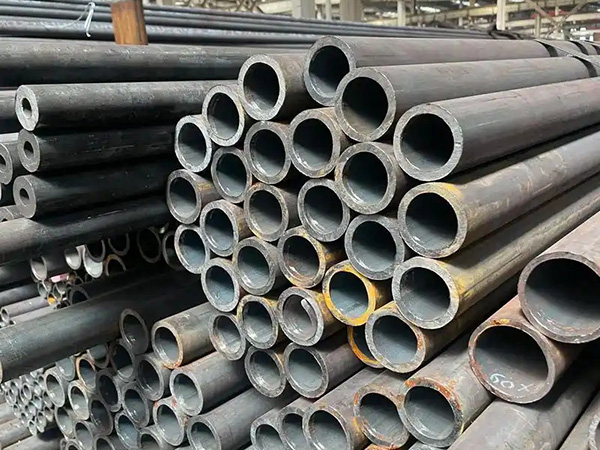
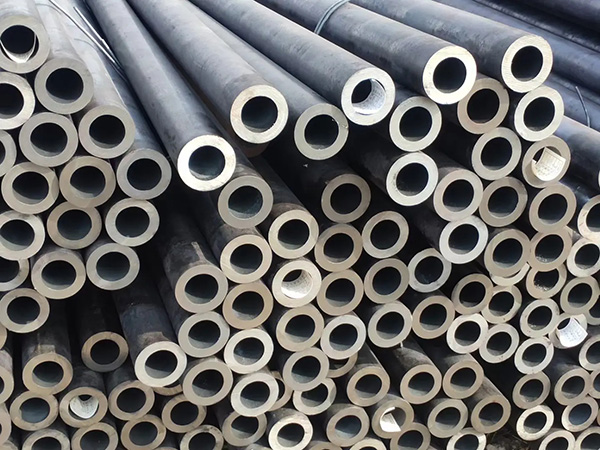
Mill Test Report quality reveals much about a supplier's operational discipline. A credible carbon steel seamless pipe supplier provides MTRs that document heat chemistry with actual rather than typical values, mechanical properties including yield, tensile, and elongation, heat treatment parameters, and hydrostatic test results. MTRs that omit critical information or include only minimum-pass values without context suggest quality practices that may not support reliable specification compliance.
Assess Lead Time Reality Versus Promise
Lead time commitments are easy to make and easy to break. A supplier quoting four-week delivery on material that requires eight weeks to produce creates procurement planning errors that cascade through project schedules. Understanding the actual supply chain behind a supplier's commitment matters more than the number on the quote.
For seamless products, the critical path typically runs through manufacturing—production scheduling, heat treatment queues, testing capacity, and finishing operations. A manufacturer running near full capacity may quote availability that reflects optimistic rather than realistic scheduling. A distributor holding inventory can often release from stock faster than production-based suppliers, but inventory depth varies with market conditions and may not cover all sizes or grades.
Buyers with demanding schedules should discuss lead time contingencies upfront: what happens if production or shipping delays occur, what notification practices the supplier follows when problems emerge, and whether expedited production or air freight options exist for urgent requirements. A supplier with nothing to offer beyond optimistic lead time promises may not have the operational discipline or customer service orientation that reliable supply requires.
Evaluate Technical Support and Problem Resolution
Specification questions, material substitution inquiries, and problem resolution require technical engagement beyond order processing. A supplier who provides knowledgeable technical contacts—who understand metallurgy, applicable codes, and the supplier's own product characteristics—adds value beyond the transaction itself. A supplier who routes all inquiries through customer service representatives with no technical background creates friction that slows decision-making and increases error risk.
When quality issues arise—and they inevitably do at some point—the supplier's response pattern reveals their actual commitment to customer success. A supplier who accepts responsibility, investigates root cause, implements corrective action, and communicates findings transparently builds the kind of trust that sustains long-term relationships. A supplier who deflects, delays, or disputes legitimate concerns creates a pattern that buyers should recognize and avoid before committing significant volume.
Request examples of how the supplier has handled specification questions or quality concerns for comparable customers. The answers reveal operational culture that is difficult to assess through certifications and capability statements alone. A supplier who can articulate specific cases where they helped customers navigate challenges demonstrates the kind of experience that solves problems before they become crises.
Check References From Comparable Applications
Reference checks provide the ground truth that marketing materials cannot convey. Request references from customers operating in similar industries with comparable specification requirements. A supplier who has successfully served petrochemical refineries, power generation facilities, or mining operations has demonstrated the capability to meet demanding application requirements under real-world conditions.
During reference conversations, ask specifically about documentation practices, delivery reliability, problem resolution responsiveness, and whether the supplier actually delivered what they promised or required ongoing negotiation to close specification gaps. References who volunteer concerns about any of these dimensions deserve serious weight—buyers rarely criticize suppliers without cause, and a reference willing to raise issues suggests a supplier who values honest feedback over managed impressions.
Beyond direct references, look for publicly available information: industry press coverage, customer testimonials on the supplier's own materials, participation in industry associations, and any regulatory or safety record information that applies. A supplier with no discernible industry presence and no verifiable track record requires more due diligence before significant order commitment than one with established reputation and documented experience.
Build Qualification Into Ongoing Procurement Practice
Supplier qualification should not be a one-time event but an ongoing practice that tracks actual performance against expectations over time. Track on-time delivery rates, MTR quality and completeness, specification compliance at receiving inspection, and problem frequency and resolution speed. Periodic reviews—quarterly for active suppliers, annually for transactional relationships—keep performance visible and create opportunities to address concerns before they escalate.
Maintain qualified backup suppliers for critical product categories so that procurement is never wholly dependent on a single source. Diversification reduces supply risk and gives the primary supplier healthy competition that motivates continued performance. The cost of qualifying an alternative supplier before urgent need always costs less than the procurement constraints that single-source dependence creates.
Conclusion
Selecting a carbon steel seamless pipe supplier requires evaluating manufacturing capability, quality system maturity, documentation practices, lead time reliability, and problem resolution orientation. The buyer who invests in systematic qualification before placing significant orders consistently achieves better outcomes than one who treats every procurement as a standalone transaction.
The goal is not to find the cheapest supplier but to find the supplier whose capabilities, practices, and commercial orientation align with the buyer's application requirements and operational expectations. That alignment creates the kind of supply partnership that performs reliably through market cycles, production challenges, and the inevitable moments when problems require collaborative resolution.
Frequently Asked Questions
Q: Should I prefer a carbon steel seamless pipe supplier who manufactures their own product?
A: Manufacturing provides better traceability, faster problem resolution, and more customization capability, but may not offer the inventory depth or multi-product sourcing that distributors provide. The choice depends on application criticality, specification complexity, and volume requirements. For demanding applications, manufacturing sources often provide better long-term value despite potentially higher unit prices.
Q: What Mill Test Report elements should a reliable supplier provide?
A: MTRs should document actual heat chemistry (not typical values), mechanical properties (yield, tensile, elongation), heat treatment parameters and cycle, and hydrostatic test results with pressure and hold time. Heat number traceability linking finished pipe to specific melt records is essential for most industrial applications. Incomplete MTRs signal quality practices that may not support specification compliance.
Q: How can I verify that a supplier actually holds the certifications they claim?
A: Request current certificates and verify independently through the issuing organization's public directories. ISO 9001 certificates can be verified through the ISO registrar; API monogram licenses through the API website. Expired or lapsed certificates sometimes appear in marketing materials—independent verification protects against this risk.
Q: What questions should I ask during supplier reference checks?
A: Ask about actual delivery performance versus promised schedules, MTR quality and completeness, problem resolution experience, and whether the supplier delivered material that actually met specifications or required negotiation. Reference answers that reveal consistent patterns—in either direction—deserve serious weight in the qualification decision.
Q: How many qualified suppliers should I maintain for critical pipe categories?
A: Maintain at least two qualified suppliers for critical product categories to avoid single-source dependency. Even if one supplier is preferred, having a backup that is pre-qualified reduces supply risk and maintains competitive pressure that motivates continued performance. Qualification investment before urgent need costs far less than supply disruption during a critical project phase.
References
ISO. (2024). ISO 9001:2015 Quality Management Systems—Requirements. Geneva, Switzerland.
American Petroleum Institute. (2024). API Spec 5L, 47th Edition: Specification for Line Pipe. Washington, DC.
ASTM International. (2024). ASTM A106/A106M-24: Standard Specification for Seamless Carbon Steel Pipe for High-Temperature Service. West Conshohocken, PA.
Juran, J.M. & De Feo, J.A. (2022). Juran's Quality Handbook: The Complete Guide to Performance Excellence (7th ed.). New York, NY: McGraw-Hill Education.
ASTM International. (2024). ASTM A530/A530M-24: General Requirements for Specialized Carbon Steel and Alloy Steel Pipe. West Conshohocken, PA.