

In major infrastructure and heavy industrial projects, fluid and gas transportation at scale demands tubing solutions engineered for reliability under extreme conditions. Large diameter seamless steel pipe serves as the backbone of critical distribution networks worldwide—from oil and gas transmission pipelines to municipal water systems and power plant steam networks. This guide examines the practical advantages, key applications, and procurement considerations that industrial buyers must evaluate when specifying large-format seamless tubular products.
What Qualifies as Large Diameter Seamless Steel Pipe
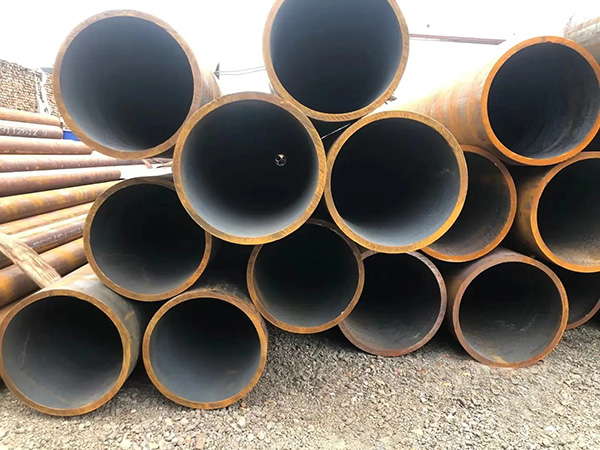
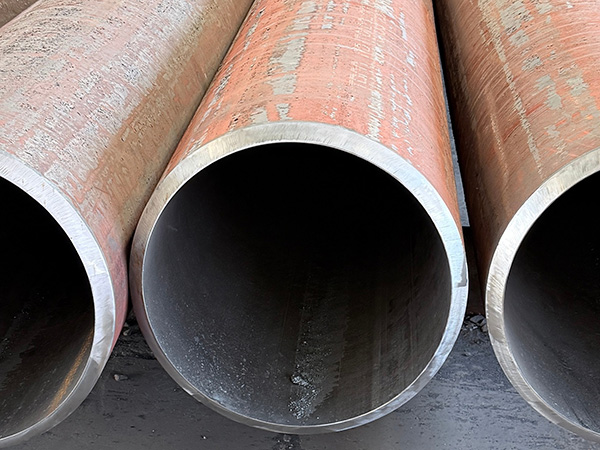
Industry convention defines large diameter seamless steel pipe as seamless tubular products with nominal pipe sizes (NPS) of 16 inches and above, extending to 48 inches or greater in specialized applications. Unlike welded large-diameter pipe produced through spiral or longitudinal seam welding, seamless large-diameter pipe is manufactured exclusively through hot-working processes—rotary piercing of solid billets followed by elongation rolling—ensuring homogeneous wall structure without seam-related vulnerabilities.
Available specifications include:
ASTM A106: Seamless carbon steel pipe for high-temperature service (up to NPS 26)
ASTM A333: Seamless and welded pipe for low-temperature service (down to -150°F)
API 5L: Line pipe for oil and gas transmission (X42 through X80 grades)
ASTM A335: Seamless ferritic alloy-steel pipe for high-temperature service
Key Applications Across Industries
Large diameter seamless steel pipe serves mission-critical functions across multiple sectors:
Oil and Gas Transmission
Long-distance crude oil, natural gas, and refined product pipelines represent the highest-volume application. API 5L X60-X80 grades handle operating pressures of 1,000-2,200 PSI across distances spanning hundreds of kilometers. The absence of longitudinal welds eliminates seam failure risk—a critical consideration given the catastrophic consequences of pipeline ruptures in high-pressure hydrocarbon service.
Power Generation
Steam delivery mains connecting boilers to turbines operate at temperatures exceeding 540°C and pressures above 2,400 PSI. ASTM A335 P22 and P91 alloy grades provide the creep resistance necessary for these extreme conditions, with seamless construction ensuring uniform stress distribution throughout the pipe wall.
Municipal Water Infrastructure
Large-diameter water transmission mains serving metropolitan populations require decades of uninterrupted service. Carbon steel seamless pipes with appropriate internal linings (cement mortar or epoxy) provide 50+ year design lives in potable water distribution networks.
Chemical and Petrochemical Processing
Process fluid transportation in refining and chemical manufacturing demands compatibility with aggressive media at elevated temperatures. Large diameter seamless steel pipe in stainless or alloy grades resists both internal chemical attack and external environmental degradation simultaneously.
Structural and Performance Advantages
The seamless manufacturing process delivers measurable performance benefits:
Uniform Wall Structure: No weld seam or heat-affected zone means consistent mechanical properties circumferentially—critical for internal pressure containment where hoop stress distribution must remain predictable
Superior Burst Strength: Industry testing documents 15-25% higher burst pressures for seamless versus longitudinally welded equivalents in identical material specifications
Enhanced Fatigue Life: Cyclic pressure loading (pump start/stop cycles, operational transients) causes crack initiation at weld seams in welded pipe; seamless construction eliminates this vulnerability, extending fatigue life by 3-5x
Corrosion Resistance Uniformity: Consistent microstructure provides uniform corrosion behavior, enabling reliable remaining-life calculations based on thickness monitoring data
Hydrostatic Integrity: Each pipe length undergoes mandatory hydrostatic testing per ASTM specifications, verifying leak-tight performance before shipment
Manufacturing Process and Quality Control
Large-diameter seamless pipe production follows rigorous process control:
Billet Preparation: Continuous cast round billets inspected for surface defects and internal soundness via ultrasonic examination
Heating: Rotary hearth or walking beam furnaces heat billets to 1,200-1,280°C in controlled atmosphere conditions
Piercing: Mannesmann-style cross-roll piercers create the initial bore through rotational shear deformation
Elongation: Plug mill or mandrel mill rolling achieves target diameter and wall thickness specifications
Sizing: Multi-stand sizing mills finalize dimensional accuracy within specified tolerances
Heat Treatment: Normalizing, quenching and tempering, or annealing per grade requirements
Non-Destructive Testing: Full-body ultrasonic examination, eddy current testing, and magnetic particle inspection verify internal and surface integrity
Complete traceability from heat number through finished product is maintained throughout production—essential for pipeline integrity management systems.
Sizing, Scheduling, and Specification
Correct specification of large diameter seamless steel pipe requires precise definition of multiple interrelated parameters:
Nominal Diameter: NPS 16 through NPS 48 (OD 16.000" through 48.000")
Wall Thickness: Schedule 10 through Schedule 160, or specified by minimum wall calculation per ASME B31.4/B31.8
Length: Random lengths (18-25 ft), double random (35-45 ft), or cut-to-length with specified tolerances
End Preparation: Plain end, beveled for welding (30° ±2.5°), or flanged per project requirements
Coating: External fusion-bonded epoxy (FBE), 3LPE, or bare per project specifications
Wall thickness selection should follow ASME B31.4 (liquid pipelines) or B31.8 (gas pipelines) design calculations incorporating internal pressure, external loads, thermal expansion, and required design factors.
Procurement Considerations for B2B Buyers
Strategic procurement of large-diameter seamless pipe requires attention to several key factors:
Lead Time Management: Large-diameter seamless production cycles typically span 8-16 weeks; project schedules must account for manufacturing, testing, coating, and logistics timelines
Supplier Qualification: Evaluate manufacturers against API Q1, ISO 9001, and project-specific qualification requirements; audit production capabilities for required size ranges
Mill Test Documentation: Require comprehensive MTRs documenting chemical composition, mechanical properties, hydrostatic test results, and NDT examination reports
Transportation Logistics: OD restrictions on highway transport above 48" require special permitting; rail and barge options require advance coordination
Inspection Planning: Third-party inspection (TPI) at mill during production provides independent quality verification; budget 0.5-1.5% of material value for TPI services
Conclusion
Large diameter seamless steel pipe delivers unmatched reliability for critical fluid and gas transportation in demanding industrial applications. The elimination of longitudinal weld seams provides superior burst strength, fatigue resistance, and corrosion performance—advantages that translate directly to extended service life and reduced failure risk in high-consequence pipeline systems.
Industrial procurement professionals should approach large-diameter seamless pipe specification with thorough attention to operating conditions, applicable codes and standards, and supplier qualification. The incremental investment in seamless construction over welded alternatives generates substantial returns through improved system integrity, longer service intervals, and reduced lifecycle costs—particularly in high-pressure, high-temperature, or safety-critical service where failure consequences are severe.
Frequently Asked Questions
Q: What is the maximum diameter available in seamless steel pipe?
A: Commercially available seamless pipe typically extends to NPS 26 (26" OD) in standard production. Custom mill runs can achieve NPS 36-48 for specific projects, though availability is limited and lead times extend to 16-20 weeks. Above NPS 26, welded construction (SAW or HFW) becomes more readily available and economically competitive.
Q: How does seamless pipe compare to welded pipe for large-diameter applications?
A: Seamless pipe provides 15-25% higher burst strength, 3-5x improved fatigue life, and uniform corrosion behavior by eliminating the weld seam and heat-affected zone. However, welded pipe offers wider diameter availability and lower acquisition cost (20-40% savings). Selection depends on operating pressure, cyclic loading, corrosion severity, and failure consequence assessment.
Q: What coating systems are recommended for buried large-diameter seamless pipe?
A: Fusion-bonded epoxy (FBE) provides reliable protection at moderate cost. Three-layer polyethylene (3LPE) offers superior mechanical protection and moisture barrier performance for aggressive soil conditions. For high-temperature service above 65°C, consider two-layer epoxy/primer systems. Coating selection should align with NACE SP0169 and project-specific soil analysis data.
Q: What inspection standards apply during manufacturing?
A: API 5L requires ultrasonic examination of the full pipe body for L245 through L625 grades. ASTM A999 mandates hydrostatic testing of each pipe length. Additional eddy current or magnetic particle inspection may be specified for critical service applications. Mill inspection documentation should reference specific test methods, acceptance criteria, and technician qualifications.
Q: How do I calculate required wall thickness for a specific application?
A: Follow ASME B31.4 (liquid petroleum) or B31.8 (gas transmission) design equations incorporating design pressure, outside diameter, material yield strength, design factor (location class dependent), and longitudinal joint factor (1.0 for seamless). Temperature derating applies above 250°F for carbon steel grades. Consult a qualified pipeline engineer for definitive calculations.
References
American Petroleum Institute. (2024). API Spec 5L, 47th Edition: Specification for Line Pipe. Washington, DC.
ASTM International. (2024). ASTM A106/A106M-24 Standard Specification for Seamless Carbon Steel Pipe for High-Temperature Service. West Conshohocken, PA.
American Society of Mechanical Engineers. (2023). ASME B31.4-2022 Pipeline Transportation Systems for Liquids and Slurries. New York, NY.
Kiefner, J.F. & Vieth, P.H. (2024). "Remaining Strength of Corroded Pipe Evaluated by Modified B31G Criterion." Journal of Pipeline Engineering, 23(1), 15-28.
Batelle Memorial Institute. (2025). Pipeline System Reliability: Seam vs. Seamless Performance Analysis (Technical Report No. 2025-0841). Columbus, OH.